
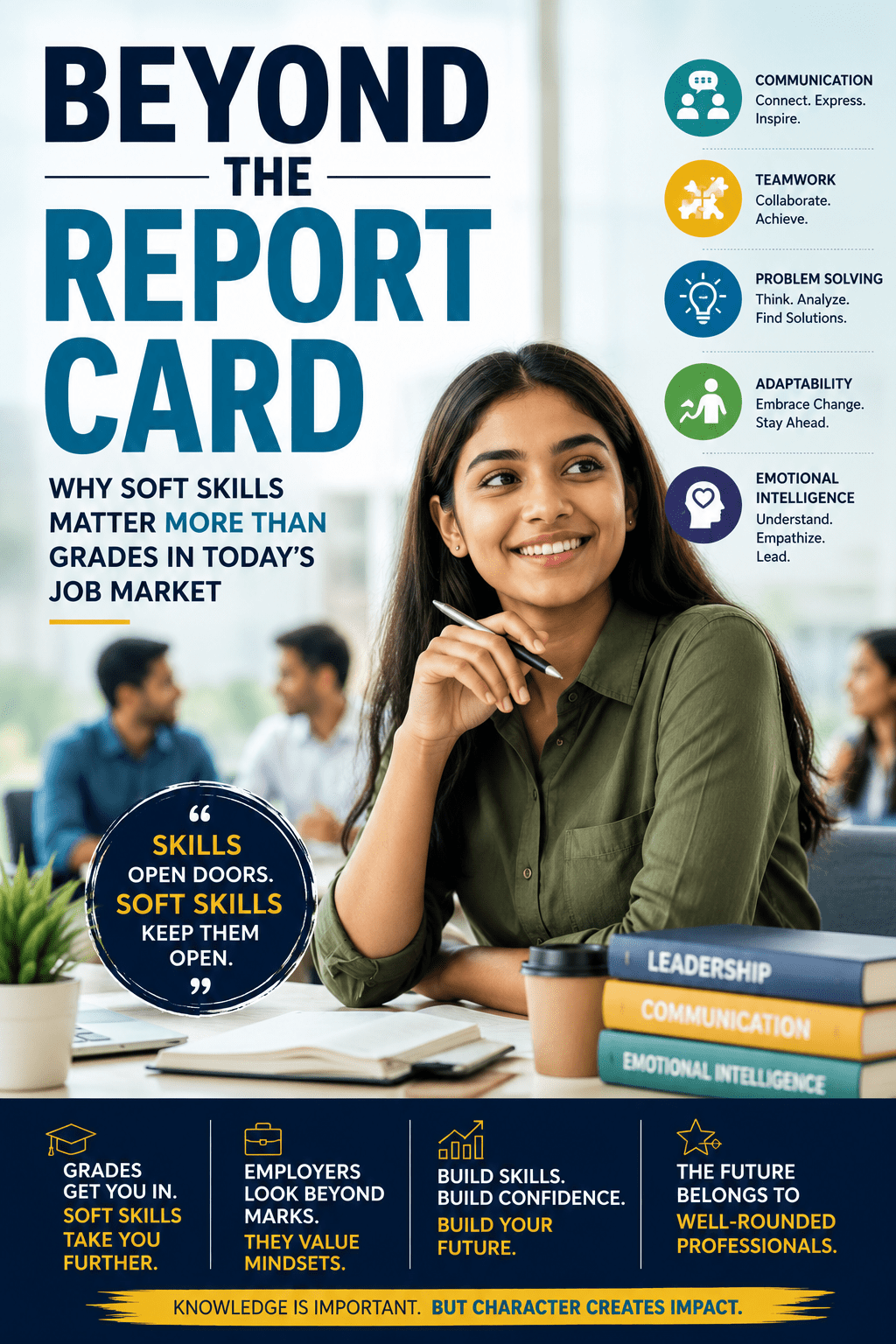
For generations, academic success was often seen as the ultimate path to career achievement.
Good grades meant better opportunities, stronger job prospects, and a promising future. Students were taught to focus on examinations, academic rankings, and impressive qualifications.
But in today’s rapidly evolving world, employers are beginning to ask a different question.
Can this person communicate well? Can they adapt? Solve problems? Work with others?
In 2026, success in the workplace is increasingly shaped by something many classrooms once overlooked.
Soft skills.
While academic knowledge remains important, businesses are realising that technical expertise alone is no longer enough. In an increasingly competitive and technology driven world, human skills are becoming more valuable than ever.
What Exactly Are Soft Skills?
Soft skills refer to personal qualities and interpersonal abilities that influence how people work and interact with others.
Unlike technical skills, which can often be taught through textbooks or training programs, soft skills shape behaviour, communication, teamwork, and emotional intelligence.
Some of the most valued soft skills today include:
- Communication skills
- Problem solving abilities
- Teamwork and collaboration
- Adaptability and flexibility
- Leadership qualities
- Time management
- Emotional intelligence
- Critical thinking
These are the skills that often determine how effectively someone performs in real workplace environments.
After all, knowledge may help someone secure a position.
But people skills often determine how far they go.
Why Employers Are Prioritising Soft Skills
The workplace has changed dramatically.
Modern businesses no longer operate in rigid environments where employees simply follow instructions. Today’s organisations require collaboration, innovation, and constant adaptation.
An employee may possess exceptional qualifications, but if they struggle to communicate, manage conflict, or work within teams, challenges quickly arise.
Employers increasingly value individuals who can think creatively, adapt to change, and work effectively with different personalities.
This is especially important in industries shaped by rapid technological advancement.
As automation and artificial intelligence continue to handle repetitive tasks, uniquely human qualities are becoming even more valuable.
Machines may process information faster.
But empathy, leadership, communication, and emotional understanding remain deeply human strengths.
Why Grades Alone Are No Longer Enough
This does not mean grades no longer matter.
Academic achievement still demonstrates discipline, commitment, and subject knowledge. Strong educational foundations remain important in many professions.
However, excellent grades do not always guarantee workplace success.
A student may excel academically but struggle with confidence, teamwork, or communication in professional settings.
Meanwhile, someone with average grades but strong interpersonal skills may thrive in leadership roles, customer interaction, and collaborative environments.
Increasingly, employers are looking for balance.
They want candidates who bring both knowledge and human capability.
The ideal employee is often someone who understands the work and knows how to work with people.
The Growing Importance of Emotional Intelligence
One of the most valuable workplace skills today is emotional intelligence.
This refers to the ability to understand emotions, manage relationships, communicate effectively, and respond thoughtfully in different situations.
In workplaces where teamwork and collaboration matter, emotional intelligence can significantly influence professional success.
Leaders with strong emotional awareness often build healthier work environments, stronger relationships, and better performing teams.
In many cases, emotional intelligence can matter just as much as technical expertise.
Are Schools and Universities Keeping Up?
This shift raises an important question.
Are education systems preparing students for the realities of modern workplaces?
Many schools and universities still place heavy emphasis on examinations and academic performance. While education remains essential, some experts argue that institutions should also place greater focus on communication, leadership, teamwork, and practical problem solving.
Presentation skills, collaboration projects, internships, and creative thinking exercises are increasingly becoming valuable parts of education.
Preparing students for careers may require more than teaching content.
It may require teaching confidence, adaptability, and resilience too.
Final Thoughts
Good grades still matter.
But in today’s changing job market, they may no longer tell the full story.
Businesses increasingly seek individuals who can communicate, collaborate, adapt, and lead in meaningful ways. As technology continues reshaping industries, human centred skills are becoming even more valuable.
Perhaps the future of success lies not in choosing between grades and soft skills.
But in understanding that true career growth often comes from combining both.
Because sometimes, what matters most cannot always be measured on a report card.