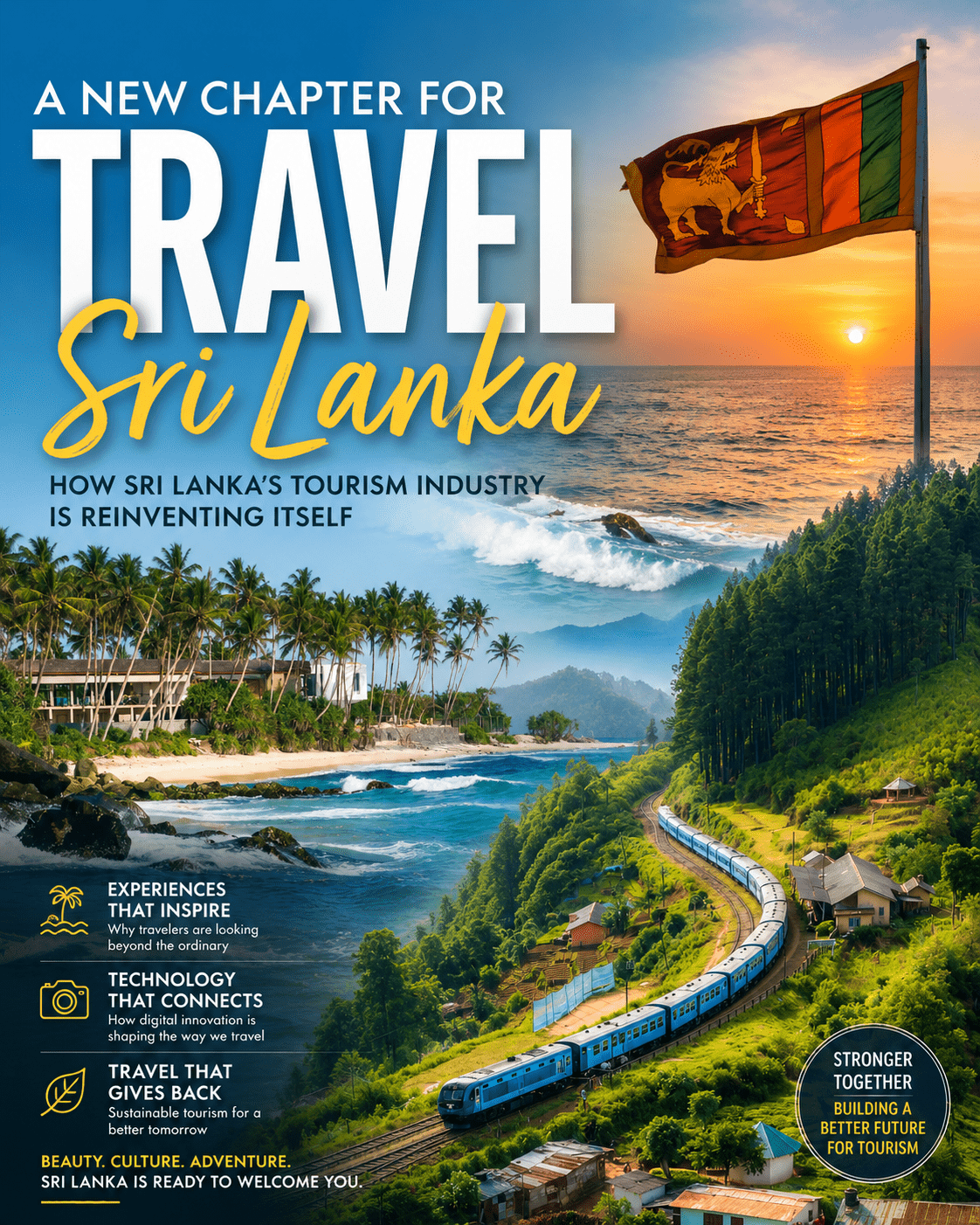
For decades, Sri Lanka has been known as a destination blessed with extraordinary beauty.
Golden beaches, misty mountains, ancient cities, wildlife safaris, rich culture, and warm hospitality have long made the island attractive to travellers from around the world. Yet like many global industries, tourism in Sri Lanka has faced moments of uncertainty, disruption, and reinvention.
Today, however, something promising is unfolding.
Sri Lanka’s tourism industry is quietly transforming itself, embracing new trends, technologies, and traveller expectations in ways that could shape a stronger future.
The question is no longer whether tourism can recover.
It is how Sri Lanka is choosing to evolve.
A Shift in What Travellers Want
Modern travellers are no longer looking only for luxury hotels or crowded tourist attractions.
In 2026, experiences matter more than ever.
People increasingly seek meaningful travel, authentic local culture, wellness experiences, sustainability, and personalised adventures. Tourists want to feel connected to the places they visit rather than simply checking destinations off a list.
This shift is creating new opportunities for Sri Lanka.
Instead of depending solely on traditional tourism hotspots, smaller towns, eco destinations, cultural experiences, and local businesses are beginning to attract attention.
Travellers are increasingly drawn to experiences such as village tourism, surfing communities, wildlife encounters, tea estate visits, wellness retreats, and authentic Sri Lankan cuisine.
The definition of tourism is expanding.
The Rise of Experiential Tourism
Sri Lanka’s tourism industry is slowly moving beyond traditional sightseeing.
Today, many visitors want immersive experiences.
Rather than simply visiting a tea plantation, tourists want to learn how tea is made. Instead of only staying at beach resorts, they seek boutique stays, eco lodges, and unique cultural experiences.
Adventure tourism is also growing.
Surfing in the south, hiking trails in hill country, wildlife safaris, whale watching, and wellness focused travel are attracting travellers looking for something more memorable.
In many ways, Sri Lanka’s greatest strength may lie in its diversity.
Few destinations offer beaches, mountains, wildlife, history, and cultural richness within such short travel distances.
Technology Is Reshaping Tourism
Technology is also playing an increasingly important role.
Travellers today discover destinations through social media, online reviews, travel creators, and digital recommendations.
A single viral video showcasing Sri Lanka’s scenic landscapes or hidden cafés can suddenly attract global attention.
Hotels, tour operators, and travel businesses are increasingly investing in digital marketing, online booking systems, virtual experiences, and stronger social media presence to stay competitive.
Tourism is no longer driven only by brochures.
It is shaped by digital storytelling.
Sustainability Is Becoming More Important
Another major shift involves sustainable travel.
Modern tourists are becoming more conscious of environmental impact and responsible tourism.
This means businesses are being encouraged to adopt eco friendly practices, reduce waste, support local communities, and protect natural resources.
For Sri Lanka, sustainability could become a powerful competitive advantage.
Protecting beaches, wildlife, forests, and cultural heritage may not only preserve beauty for future generations but also strengthen long term tourism growth.
Opportunities and Challenges Ahead
Despite growing optimism, challenges remain.
Infrastructure development, transportation improvements, global competition, and economic stability continue to influence tourism performance.
Consistency also matters. Visitors increasingly expect seamless experiences, quality service, and digital convenience.
Yet the opportunities remain significant.
Sri Lanka continues to hold something many destinations cannot easily replicate. Diversity, authenticity, and emotional richness.
For an island filled with stories, landscapes, and culture, the potential remains remarkably strong.
Final Thoughts
Sri Lanka’s tourism industry is no longer simply rebuilding.
It is reinventing itself.
The future of travel appears to favour destinations offering authenticity, experiences, sustainability, and emotional connection. Fortunately, these are qualities Sri Lanka naturally possesses.
As traveller expectations evolve, the island has an opportunity not only to attract visitors but to create unforgettable experiences that inspire them to return.
The next chapter of Sri Lankan tourism may not simply be about recovery.
It may be about transformation.