
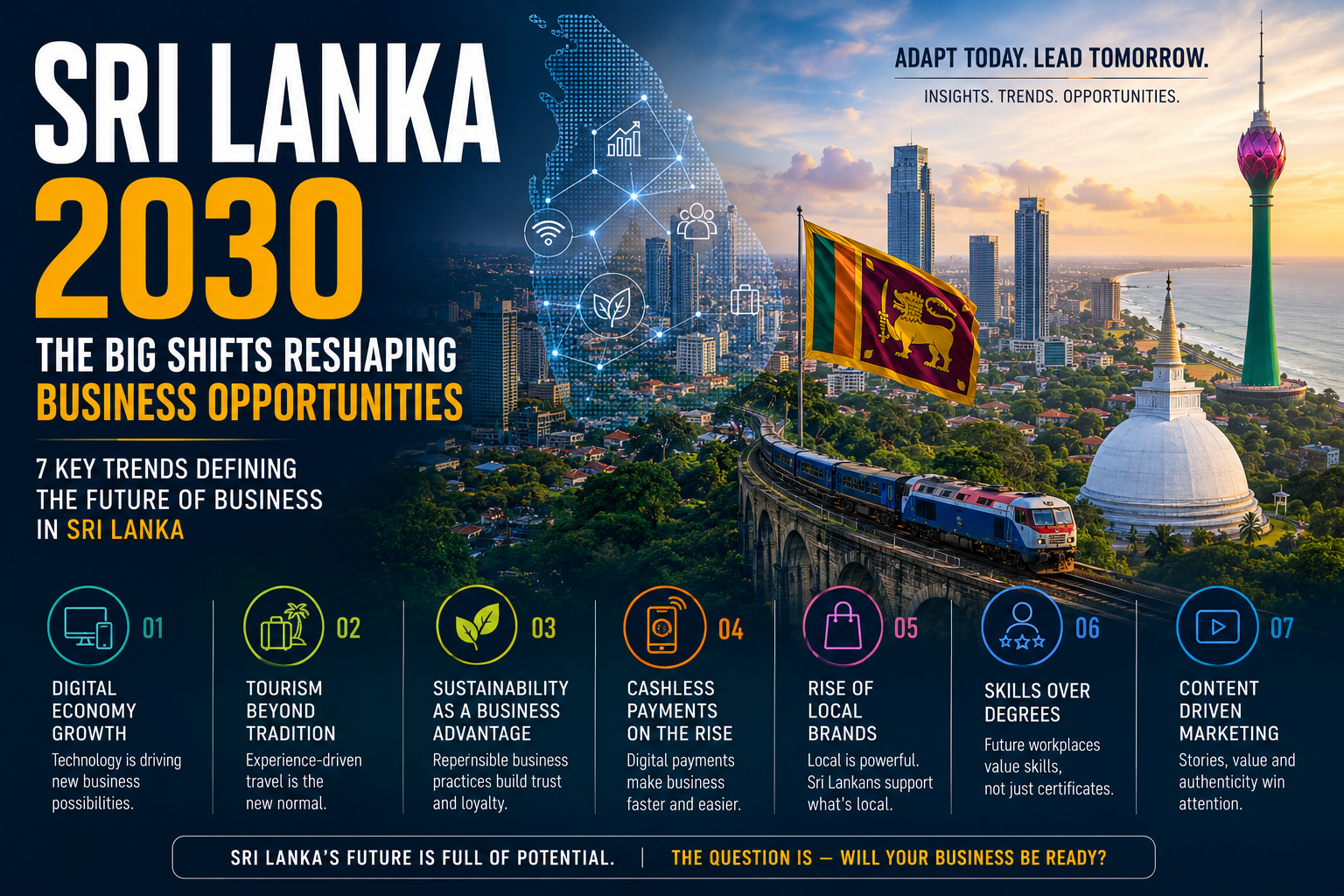
Sri Lanka is changing — and so is the way businesses grow, compete, and survive. The businesses paying attention today may be the ones leading tomorrow.
The future of Sri Lanka is being shaped by digital transformation, changing consumer habits, sustainability, tourism recovery, and global economic shifts. For businesses, this means one thing: adapting is no longer optional.
Whether you run a startup, SME, retail brand, or corporate business, understanding where Sri Lanka is headed can help you spot opportunities before everyone else does.
Here are the key future trends reshaping Sri Lanka’s business landscape — and why they matter.
1. Sri Lanka’s Digital Economy Will Continue to Grow
The future of business in Sri Lanka is digital.
From online shopping and digital payments to app-based services and AI-powered marketing, businesses are increasingly moving online. Consumers now expect convenience, speed, and digital accessibility.
What once felt “extra” is becoming expected.
Why This Matters
Businesses that are easy to find online often have an advantage.
Customers increasingly expect:
- Online ordering
- Fast customer service
- Mobile-friendly experiences
- Digital payment options
Sri Lankan Example
Small local brands selling clothing, food, and beauty products through Instagram, TikTok, and websites are growing faster than businesses relying only on physical stores.
Actionable Insight
If your business still lacks a strong online presence, now is the time to invest.
2. Tourism Will Evolve Beyond Traditional Travel
Tourism remains one of Sri Lanka’s strongest industries — but future travellers want more than hotels and beaches.
Modern tourists are looking for:
- Wellness experiences
- Eco-tourism
- Cultural experiences
- Local food experiences
- Remote work-friendly stays
Opportunity for Businesses
Restaurants, boutique hotels, travel startups, wellness brands, and local creators can all benefit.
Example
Destinations like southern coastal towns and hill-country experiences are increasingly attracting experience-driven travellers rather than traditional package tourists.
Businesses that create memorable experiences may stand out more.
3. Sustainability Will Become More Important
Customers are becoming more conscious of how businesses operate.
From plastic reduction to ethical sourcing, sustainability is becoming a serious business conversation in Sri Lanka.
Future consumers may choose brands not just for price — but for values.
Small Business-Friendly Ideas
- Use eco-friendly packaging
- Reduce unnecessary waste
- Support local suppliers
- Communicate sustainability efforts honestly
Even simple changes can improve brand trust.
4. Cashless Payments Will Become More Common
Sri Lanka is steadily moving toward digital finance.
QR payments, mobile banking, digital wallets, and online transactions are becoming increasingly normal — especially among younger consumers.
Businesses that adapt early may create smoother customer experiences.
Why It Matters
Convenience influences buying decisions.
If customers can pay quickly and easily, they’re more likely to return.
Actionable Tip
Offer multiple payment options instead of relying only on cash.
5. Local Brands Will Continue to Rise
Sri Lankan consumers are increasingly supporting local businesses.
People are becoming more interested in:
- Locally made products
- Small businesses
- Sri Lankan fashion and beauty brands
- Homegrown food and beverage companies
This shift creates exciting opportunities for entrepreneurs.
Example
Many Sri Lankan lifestyle brands have built strong customer communities simply by creating authentic local products and maintaining strong social media engagement.
Being local is becoming a competitive advantage.
6. Skills-Based Hiring Will Increase
The future workplace may care less about degrees alone and more about skills.
Companies increasingly value:
- Digital literacy
- Marketing skills
- Data analysis
- Communication
- Adaptability
Businesses are looking for people who can solve problems and learn quickly.
What Businesses Can Do
Invest in employee training and upskilling instead of relying only on traditional hiring methods.
The workforce is evolving — and businesses must evolve with it.
7. Content-Driven Marketing Will Dominate
Traditional advertising is no longer enough.
Customers want businesses that educate, entertain, or inspire.
Short-form videos, behind-the-scenes content, storytelling, and relatable brand personalities are becoming powerful marketing tools.
Sri Lankan Example
Many small businesses in Sri Lanka are gaining customers through TikTok videos and relatable Instagram content rather than expensive ads.
Attention is the new currency.
The Bottom Line
Sri Lanka’s future presents challenges — but also major opportunities.
Businesses that embrace digital transformation, understand changing customer behaviour, adopt sustainability, and stay flexible may find themselves ahead of the curve.
The future won’t wait. The businesses willing to adapt today are often the ones that grow tomorrow.