Every great city has a defining decade.
For Singapore, it was the period that transformed a small island into a global business hub. For Dubai, it was the years that turned a desert city into an international destination for investment and innovation.
For Colombo, that defining decade may be happening right now.
As Sri Lanka continues its economic recovery and focuses on attracting investment, Colombo is undergoing significant changes that could reshape the country’s business landscape for years to come. New developments, infrastructure projects, digital transformation initiatives, and growing investor interest are creating opportunities that many believe could define the city’s future.
The question is no longer whether Colombo will change.
The question is how businesses, investors, and entrepreneurs can position themselves to benefit from that transformation.
A New Chapter for Colombo
Over the last decade, Colombo has evolved beyond being simply Sri Lanka’s commercial capital.
It is increasingly positioning itself as a regional hub for finance, technology, tourism, and international business.
Modern office spaces, mixed-use developments, luxury hotels, digital infrastructure improvements, and large-scale urban projects are gradually changing the city’s skyline and economic potential.
The goal is clear: create a business environment capable of attracting both local and international investment.
The Rise of Smart Business Districts
The future city is not just about buildings.
It is about connectivity.
Modern business districts around the world are being designed to support innovation, collaboration, and digital-first operations. Colombo is beginning to embrace similar principles.
Businesses increasingly seek locations that offer:
- High-speed digital infrastructure
- Modern office facilities
- Access to skilled talent
- Proximity to financial institutions
- Strong transport connectivity
As these requirements grow, the demand for premium commercial spaces is likely to increase.
For property developers and investors, this creates significant opportunities.
Real Estate Beyond Traditional Thinking
Historically, Sri Lankan real estate investment focused heavily on residential properties.
However, the next wave of growth may come from diversified property segments.
These include:
- Commercial office spaces
- Mixed-use developments
- Co-working hubs
- Hospitality projects
- Student accommodation
- Technology parks
- Logistics and warehousing facilities
As business activity evolves, so do property requirements.
Investors who understand these shifts may be better positioned to capitalize on future demand.
Technology Will Shape the City
Technology is becoming a major factor in urban development.
Artificial intelligence, smart infrastructure, digital payments, data analytics, and connected services are increasingly influencing how cities operate.
Future-ready cities prioritize efficiency, sustainability, and convenience.
Businesses that integrate technology into their operations may enjoy competitive advantages as customer expectations continue to evolve.
From smart retail experiences to AI-driven customer service and digital commerce, Colombo’s future business environment is likely to become increasingly technology-driven.
Tourism and Hospitality Opportunities
Sri Lanka’s tourism industry continues to demonstrate strong long-term potential.
As visitor arrivals grow, Colombo serves as the primary gateway for international travelers.
This creates opportunities across multiple sectors:
- Hotels and serviced apartments
- Restaurants and entertainment venues
- Event and conference facilities
- Luxury retail
- Transportation services
- Experience-based tourism
Business travelers, investors, and tourists all contribute to a growing ecosystem of economic activity.
The hospitality sector remains one of the most promising areas for future investment.
Why Investors Are Paying Attention
Investors typically look for three things:
Growth.
Stability.
Opportunity.
While challenges remain, Sri Lanka’s strategic location, educated workforce, improving digital adoption, and growing focus on innovation continue to attract attention from both local and international investors.
As economic conditions stabilize and confidence improves, sectors connected to urban development may experience significant growth.
Those who enter emerging opportunities early often benefit the most.
The Entrepreneur’s Advantage
Large corporations are not the only beneficiaries of Colombo’s transformation.
Entrepreneurs can also identify opportunities arising from changing consumer behavior and urban development.
As cities modernize, demand increases for:
- Digital services
- Business consultancy
- Marketing and branding
- Property technology solutions
- Event management
- Financial technology
- Sustainability-focused businesses
The entrepreneurs who solve tomorrow’s urban challenges may become tomorrow’s business leaders.
Looking Toward 2030
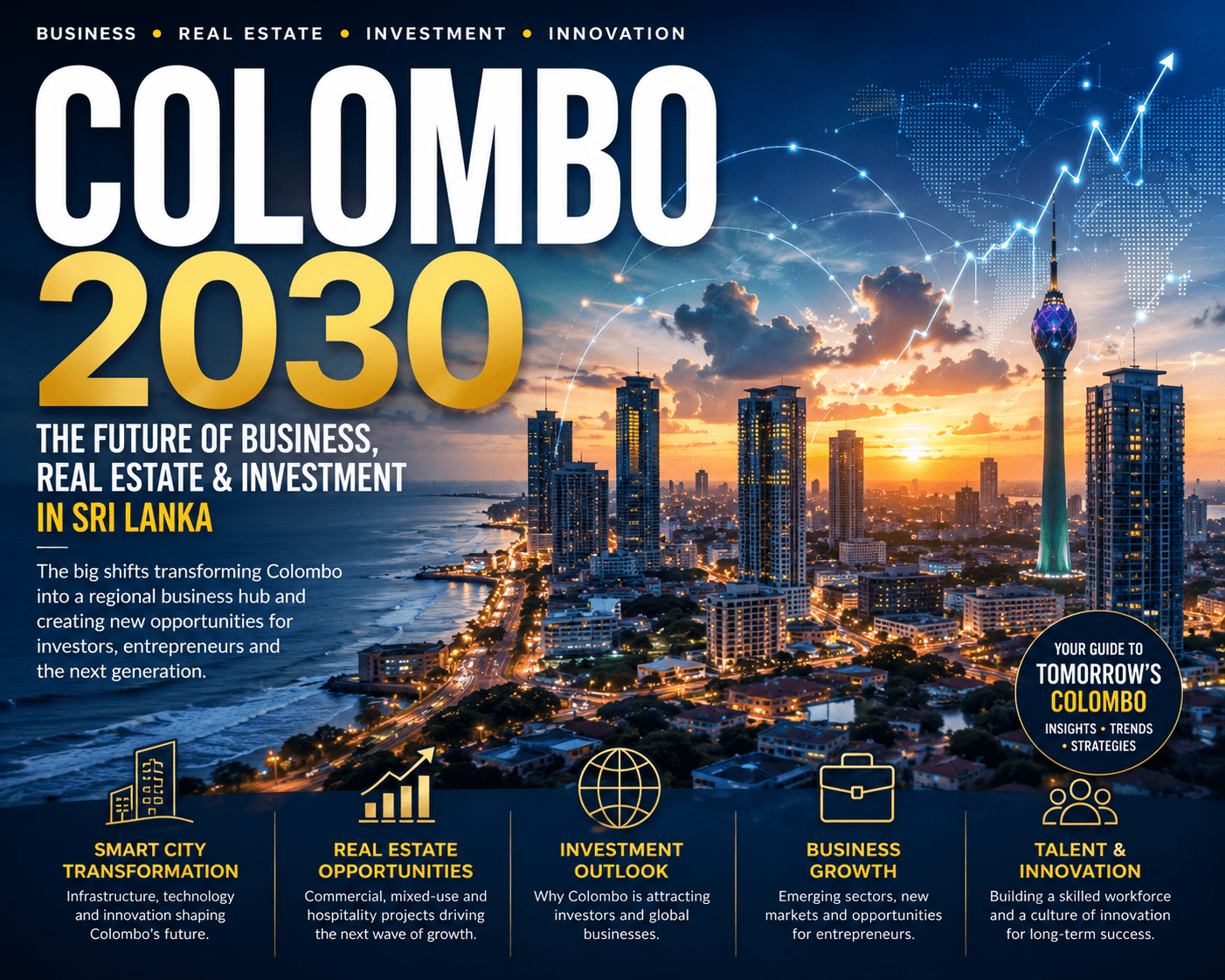
The Colombo of 2030 may look very different from the Colombo of today.
The skyline may be taller.
The economy may be more digital.
The business ecosystem may be more connected to global markets.
Most importantly, the opportunities available to investors, businesses, and entrepreneurs may be significantly greater.
No one can predict the future with certainty.
But one thing is clear: cities that invest in innovation, infrastructure, and talent tend to attract growth.
For Colombo, the next few years may determine whether it becomes one of South Asia’s most exciting business destinations.
For businesses and investors, the time to prepare is now.