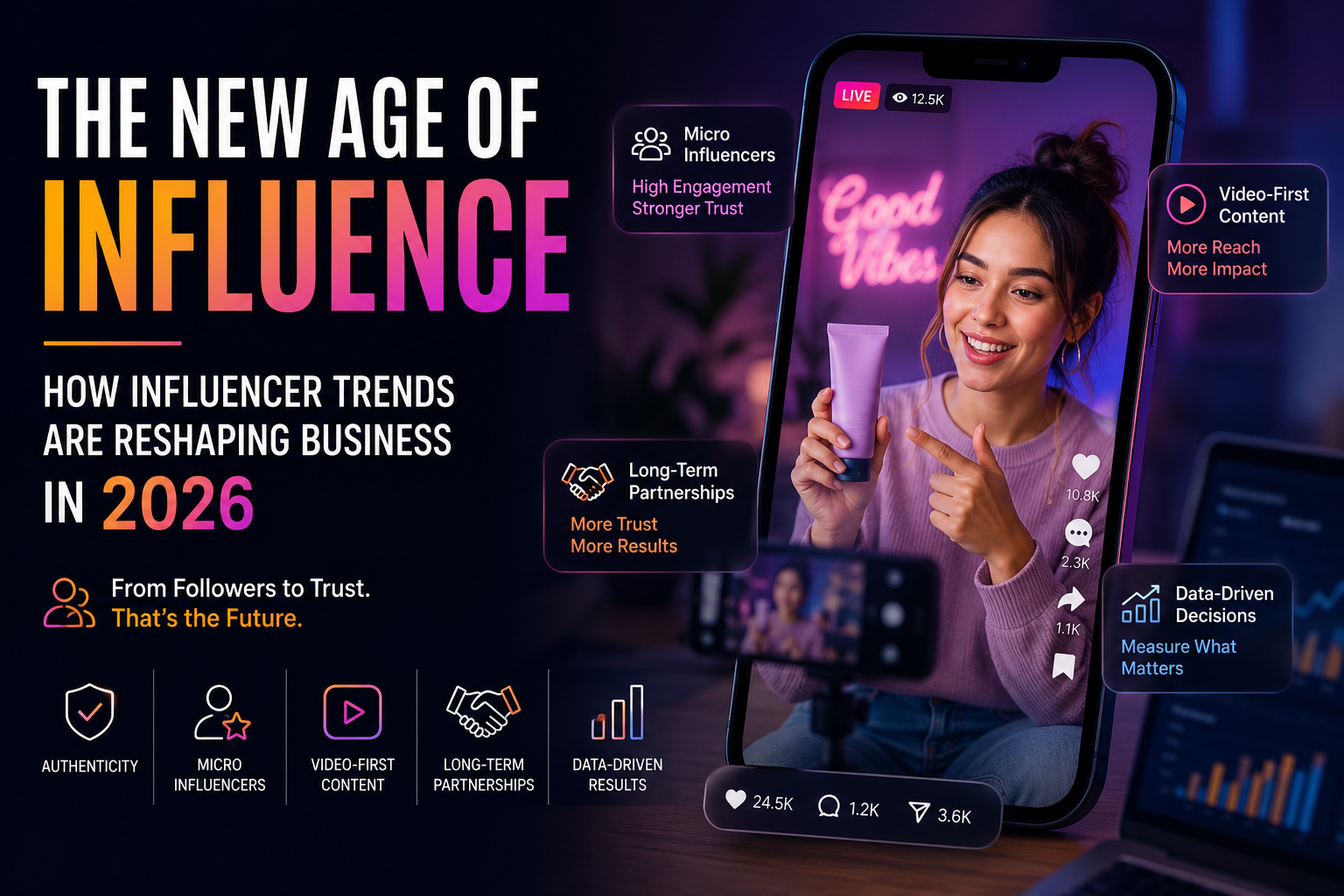
Influencer marketing is changing fast — and businesses that still think it’s only about celebrities posting selfies may already be falling behind.
A few years ago, brands chased influencers with the biggest follower counts. Today? Businesses are becoming smarter.
Consumers want authenticity, trust, and recommendations that feel real. Meanwhile, platforms, algorithms, and audience behaviour continue to evolve.
For businesses in Sri Lanka and beyond, influencer marketing is no longer just a trend — it’s becoming a serious business strategy.
Here are the biggest influencer trends shaping the future of marketing — and what businesses can learn from them.
1. Micro-Influencers Are Becoming More Powerful
Big follower counts don’t always mean better results.
Businesses are increasingly working with micro-influencers — creators with smaller but highly engaged audiences.
Why?
Because audiences often trust smaller creators more. Their recommendations feel personal and genuine rather than overly promotional.
Why This Matters
Micro-influencers often:
- Have stronger engagement
- Build closer communities
- Feel more relatable
- Deliver better trust levels
Sri Lankan Example
A local skincare or fashion brand may see better results working with a Sri Lankan lifestyle creator with 20,000 engaged followers than a celebrity with hundreds of thousands of passive viewers.
Sometimes, smaller influence creates bigger impact.
2. Authentic Content Is Winning
Perfectly edited influencer posts are slowly losing their magic.
Audiences increasingly prefer:
- Honest reviews
- Day-in-the-life content
- Behind-the-scenes moments
- Real experiences
People want recommendations that feel genuine.
Actionable Tip
Instead of controlling every influencer post, give creators more freedom to speak naturally about your brand.
Authenticity performs better than scripted marketing.
3. Video-First Influence Is Taking Over
Short-form video continues to dominate.
Platforms like Instagram Reels, TikTok, and YouTube Shorts are changing how consumers discover products and services.
Influencers are increasingly becoming storytellers rather than promoters.
Why Businesses Should Care
Video content:
- Feels more engaging
- Builds faster trust
- Explains products better
- Reaches wider audiences
A simple 30-second product experience can sometimes outperform expensive advertising campaigns.
4. Long-Term Partnerships Will Replace One-Off Promotions
Businesses are moving away from random influencer collaborations.
Instead, brands increasingly prefer long-term partnerships that feel more believable.
When followers repeatedly see an influencer using a product naturally over time, trust increases.
Example
A Sri Lankan café partnering with a food creator for several months may build stronger credibility than a single sponsored post.
Consistency matters.
5. Niche Creators Are Becoming More Valuable
The future of influencer marketing is becoming more targeted.
Instead of broad audiences, brands are looking for creators in specific categories like:
- Fitness
- Beauty
- Food
- Technology
- Parenting
- Business
- Travel
Why?
Because niche audiences often convert better.
A tech creator discussing laptops may influence purchase decisions more effectively than a general lifestyle influencer.
Business Tip
Choose influencers based on audience relevance — not popularity alone.
6. Trust Will Become the Biggest Currency
Consumers are becoming more aware of paid promotions.
They can quickly spot when influencers recommend products they don’t actually use.
The future belongs to influencers who maintain trust with their audiences.
And businesses?
They’ll need to prioritise credibility over quick visibility.
Ask Yourself:
- Does this creator genuinely fit our brand?
- Would their audience actually care about our product?
- Does this partnership feel authentic?
Trust builds loyalty.
7. Influencer Marketing Will Become More Data-Driven
Businesses are starting to measure influencer success more carefully.
It’s no longer just about likes and views.
Brands increasingly track:
- Website visits
- Sales conversions
- Engagement quality
- Customer retention
- Audience demographics
Smarter businesses are treating influencer marketing like a real investment — not guesswork.
The Bottom Line
The future of influencer marketing is becoming more authentic, targeted, and relationship-driven.
Businesses chasing vanity metrics may struggle. But brands that focus on trust, relevant creators, and meaningful partnerships are more likely to win customer attention.
The biggest lesson?
Influence isn’t about being famous anymore.
It’s about being trusted.