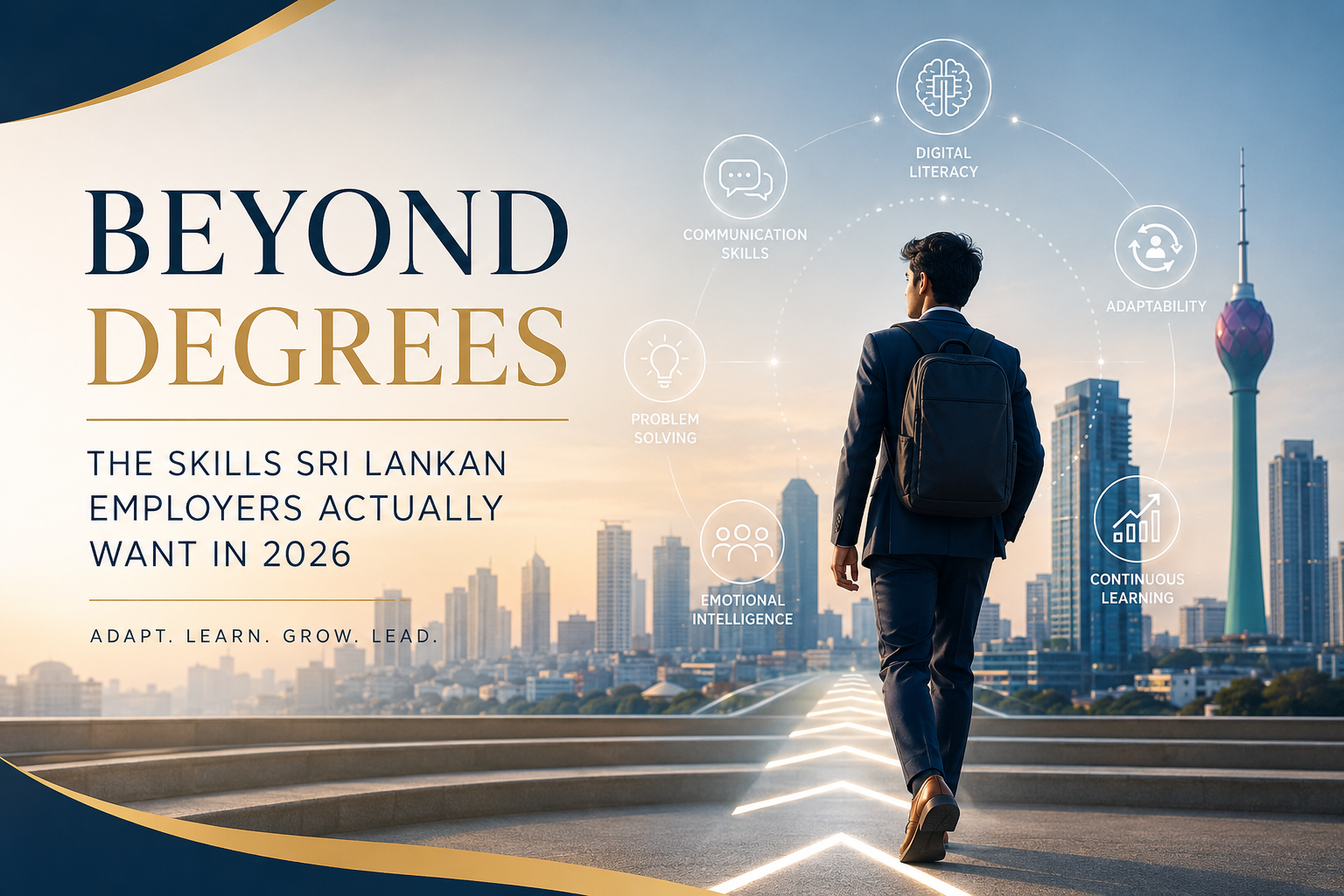
In a world where industries are changing faster than university syllabuses, one big question is shaping the future of work: Are degrees still enough?
For years, academic qualifications were the golden ticket to landing a stable job. But in 2026, employers — both in Sri Lanka and globally — are shifting their focus. A degree still matters, yes, but companies are increasingly hiring people based on skills, adaptability, and practical thinking rather than certificates alone.
From tech startups in Colombo to multinational firms and even traditional industries, businesses are looking for professionals who can think, communicate, and evolve.
So, what exactly are employers searching for in 2026?
Why the Job Market Is Changing
The workplace is no longer what it was five years ago.
Artificial intelligence, automation, remote work, and digital transformation have changed how companies operate. Businesses now need employees who can learn quickly, solve problems, and keep up with fast-moving industries.
This shift means educational institutions are under pressure too. Degrees alone no longer guarantee employability — real-world skills matter more than ever.
For Sri Lankan graduates entering the workforce, this creates both a challenge and an opportunity.
1. Digital Literacy Is No Longer Optional
You don’t need to be a software engineer to understand technology anymore.
In 2026, employers expect candidates to be comfortable using digital tools, whether it’s data dashboards, AI-powered software, digital marketing platforms, or collaborative tools like project management systems.
Why It Matters
Even traditional industries like banking, hospitality, healthcare, and retail are becoming increasingly digital.
For example, many Sri Lankan businesses now rely on:
- Digital payments
- Online customer service systems
- AI-assisted analytics
- Social media marketing
- E-commerce platforms
Employees who understand digital workflows instantly become more valuable.
Actionable Tip
Students and young professionals should consider short certifications in:
- Digital marketing
- Data analytics
- AI tools for business
- Excel and business intelligence tools
- Cybersecurity basics
Sometimes, a short online course can add more practical value than another certificate on paper.
2. Communication Skills Are Becoming a Superpower
One surprising trend? Employers say communication is one of the hardest skills to find.
Many candidates have qualifications but struggle to:
- Present ideas clearly
- Write professional emails
- Speak confidently in meetings
- Work with teams
In Sri Lanka’s growing global business environment, strong English communication is becoming especially important.
The Business Reality
Companies want employees who can communicate with international clients, collaborate remotely, and explain ideas effectively.
Someone with average technical knowledge but excellent communication skills may often outperform someone with higher qualifications but poor people skills.
3. Problem-Solving Beats Memorization
The era of memorizing textbook answers is fading.
Businesses now value people who can think critically and solve unexpected challenges.
Employers are asking:
Can this person think independently?
Can they adapt under pressure?
Can they find practical solutions?
This is especially important in industries facing rapid disruption.
Sri Lankan Example
A marketing executive today isn’t just expected to “follow instructions.” They may need to:
- Analyze customer behavior
- Adjust campaigns quickly
- Use analytics tools
- Respond to market changes in real time
The same applies to IT, business, healthcare, logistics, and finance.
4. Emotional Intelligence Is Quietly Winning
Technical skills can get someone hired.
Emotional intelligence often determines who gets promoted.
Employers increasingly value people who can:
Handle pressure calmly
Fast-paced work environments require emotional resilience.
Work well with others
Team collaboration is essential in hybrid workplaces.
Understand customers and colleagues
Empathy helps businesses build stronger teams and better customer experiences.
In simple terms: being smart matters, but being emotionally aware matters too.
5. Adaptability Is the New Career Insurance
If the past few years taught businesses anything, it’s this:
Things change quickly.
The people who succeed are often the ones willing to learn new skills and embrace change.
A graduate in one field may end up thriving in another industry completely.
In 2026, employers are prioritizing people who show:
- Curiosity
- Flexibility
- A willingness to learn
- Growth mindset
What This Means for Students
Instead of asking:
“What degree should I get?”
A better question may be:
“What problems can I solve?”
That mindset shift changes everything.
Are Universities Still Important?
Absolutely.
Degrees still matter — especially in fields like medicine, law, engineering, and academia.
But employers are increasingly seeing degrees as a foundation, not the full package.
The strongest candidates in 2026 are combining:
Education + Skills + Experience + Adaptability
That combination creates real employability.
The Future of Education in Sri Lanka
Sri Lanka’s education system is gradually evolving, with more students turning toward:
- Professional diplomas
- Industry certifications
- Internship experience
- Online learning platforms
- Skill-based education
Universities and institutions that blend theory with practical exposure will likely produce graduates who are better prepared for modern workplaces.
Final Thoughts
The workplace of 2026 is rewarding people who can learn, adapt, communicate, and solve problems.
Degrees still open doors — but skills are increasingly deciding who walks through them.
For students, graduates, and professionals in Sri Lanka, the message is clear:
Your qualification may get attention, but your skills will build your career.