The Ceylon Motor Traders’ Association (CMTA) has called on the government to introduce and maintain stable, predictable policies for the automobile sector, saying consistent tax and duty structures are essential for businesses to plan for the long term and attract foreign investment.
Former CMTA Chairman Charaka Perera said successive governments had altered the tax and duty structures governing the motor industry almost every year, creating significant volatility for businesses and consumers.
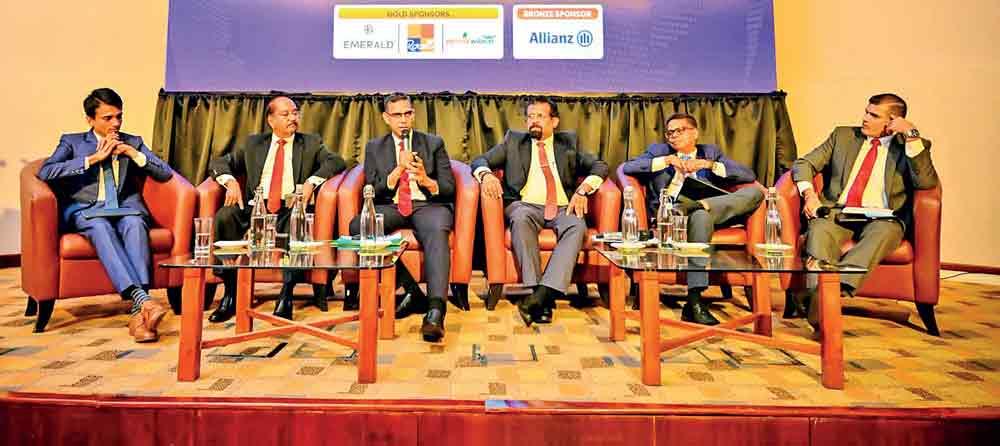
“This is quite evident if you look back 10 to 12 years, and that has created volatility and instability for the trade where we all operate,” Perera said at a media briefing held in Colombo last week.
He pointed to several changes made to vehicle duties over the past decade as evidence of the policy uncertainty facing the sector.
“In 2014, the duty on hybrids and EVs was drastically reduced, which created a heavy influx of EVs into the country when the market was not ready. In 2015, to counter that, the duty was reduced for petrol vehicles. Then in 2016, the duty was increased on hybrids and EVs, because the influx was too heavy,” he explained.
“In 2018, the whole duty system was changed from value-based to capacity-based. In 2019, due to the influx of high-end, expensive or low-capacity vehicles in a larger context, a luxury tax was introduced. And in mid-May this year, another 50 percent surcharge was imposed on vehicles for just three months, up to August 15.”
Perera said the frequent changes to the duty structure had affected both the motor trade and consumer demand, making it difficult for companies to forecast sales, manage inventory and plan imports.
“Likewise, almost every year, there were changes to the duty structure, which impacted the motor trade and the demand that existed for vehicles,” he said.
“This type of volatility and instability creates uncertainty in the minds of the consumer. When the consumer’s mind is uncertain, obviously, it impacts the sale. Companies operating in this trade find it very difficult to project sales and orders, which creates overstocking or sometimes a rush of imports, just to take advantage of duty changes,” he added.
LTV changes add to uncertainty
Perera also highlighted fluctuations in the loan-to-value (LTV) ratio as another factor affecting vehicle affordability and demand.
The LTV ratio determines the proportion of a vehicle’s value that can be financed through a loan, making it a key factor in determining purchasing power in the automobile market.
“The loan component was about 50 percent of the vehicle value in early 2025. In July, it went up to 60 percent. Then in November, it came down to 50 percent again. And in May this year, it went down further to 40 percent,” Perera said.
He noted that a lower LTV ratio reduces affordability for consumers, while frequent changes make it more difficult for businesses to anticipate market demand.
“So this again creates a reduction in affordability when the LTV ratio goes down. When you couple the LTV ratio fluctuation and the duty fluctuation, it creates a lot of volatility,” he said.
“Thus, we urge the government to support long-term stability of the industry, mainly through duty and other related taxes, where corporates can really plan their businesses for the long run,” he added.
Authorised importers call for a level playing field
The CMTA also raised concerns over the market share held by authorised brand-new vehicle importers, which form the association’s membership.
According to the association, authorised brand-new vehicle importers accounted for only 30 percent of all vehicles imported during the previous year and up to July 2026, while the remaining 70 percent entered the country through other import channels.
Jawahar Ganesh, Group Managing Director of Associated Motorways Ltd, a subsidiary of Dubai-based Al-Futtaim Group, said the structure created an uneven competitive environment for authorised distributors.
“My view as an outside investor is that there has to be a level playing field and the right market. This is the only market where I have seen only 30 percent held by normal business and the rest through other channels. I didn’t see that happen in any part of the world where I have worked,” Ganesh said.
He claimed that around 30,000 Nissan and Suzuki vehicles had entered Sri Lanka through channels outside the authorised distribution network since the market reopened, adding that this also represented a significant loss of potential government revenue.
“About 30,000 Nissan and Suzuki vehicles have entered Sri Lanka through channels outside the authorised distribution network after the market opened. The revenue leakage for the government here too is substantial,” he said.
Ganesh said a larger and more predictable market would allow authorised distributors to make longer-term commitments and increase investment.
“With a better market, we can plan for a longer term. We have committed payments. We will invest more. Our intention is to do that, but the market size has to be there. The market size is artificially lowered due to the policy,” he said.
He also stressed that policy consistency was as important as broader political stability.
“I do believe the government is taking good action towards political stability, but policy stability is very important,” Ganesh said.
Founded in 1919 and affiliated with the Ceylon Chamber of Commerce, the CMTA is one of Sri Lanka’s oldest trade associations. It represents major global automotive manufacturers operating in Sri Lanka through their local franchise holders, and continues to advocate for policies aimed at supporting a sustainable and predictable automotive market.
Image Disclaimer: Images used in this article are the property of their respective copyright holders and rightful owners. No ownership is claimed over the images.