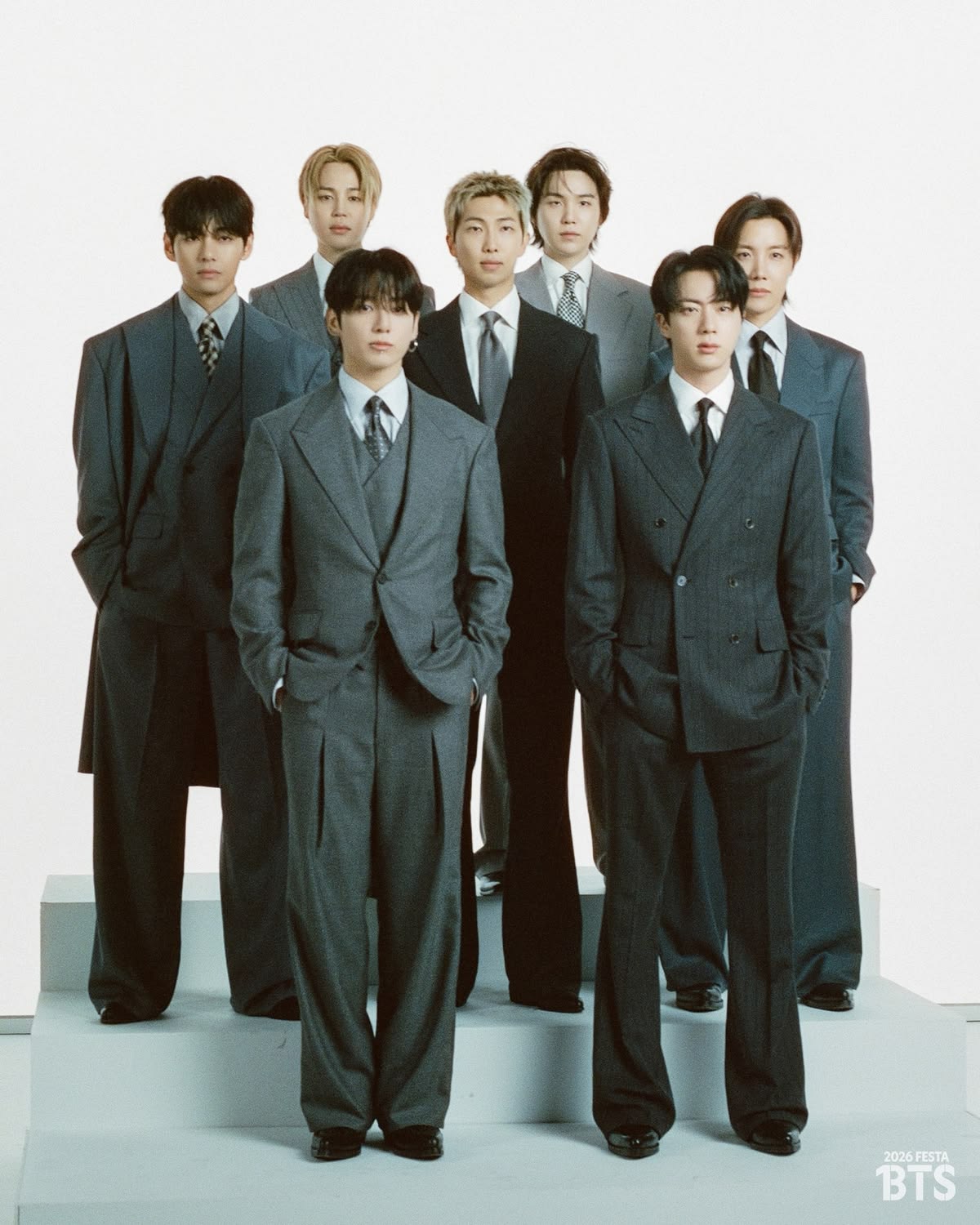
A South Korean financial services company, NH Securities, has coined a new term — “Bangtan-nomics” — to describe the global phenomenon that BTS has become.
The term combines “Bangtan”, derived from BTS’s Korean name Bangtan Sonyeondan, and “Economics”.
According to NH Securities, the spending habits of BTS fans typically begin with online fan engagement. This interest then grows into spending on music streaming services, album purchases, and official merchandise.
Over time, fan consumption expands to include Korean beauty products, food, fashion, and eventually tourism.
In a report released in May, the company stated that 84% of the global BTS ARMY fanbase consists of young people. As these fans grow older and gain greater earning and spending power, they are expected to contribute significantly to South Korea’s economy by traveling to the country and participating in tourism-related activities.
NH Securities predicts that by 2040, BTS could contribute approximately 0.35% annually to South Korea’s Gross Domestic Product (GDP).
Based on South Korea’s nominal GDP in 2024, this would amount to nearly US$6.58 billion in economic value.
South Korean media reports suggest that early evidence supporting the concept of “Bangtan-nomics” is already visible.
For example, foreign fans who attended BTS’s comeback concert in April reportedly stayed in South Korea longer than average tourists and spent more money during their visits.
This trend was also supported by a 2019 study conducted by Professor Pyun Ju Hyun, an expert in international business and economics at Korea University.
The research found that BTS concerts held in South Korea have attracted large numbers of international visitors, generating additional economic activity and consumer spending throughout the country.
Furthermore, a survey conducted among foreign fans who attended BTS concerts in Seoul revealed that 98% of respondents intended to return to Seoul within the next five years.
While it is reasonable to expect BTS and the broader “Hallyu” (Korean Wave) to contribute to South Korea’s economic growth, experts caution that various practical factors could influence whether this trend continues exactly as projected. Nevertheless, they emphasize that “Bangtan-nomics” is far from being a purely imaginary concept.
Commenting on the subject, Jonathan McClory, Managing Partner of Sanctuary Counsel and a specialist in soft power, stated that BTS, alongside South Korea’s film industry, television productions, beauty sector, and food culture, could provide the country with lasting economic influence.
He further described BTS as “a highly successful component of a highly successful ecosystem.”