Visa has reinforced its commitment to supporting the growth of Sri Lanka’s small and medium enterprise (SME) sector by supporting Scale Up 2.0, the National SME Forum 2026 organised by The Ceylon Chamber of Commerce.
The forum brought together SME owners, entrepreneurs, policymakers, financial institutions, corporates, investors and development partners to explore practical approaches to strengthening Sri Lanka’s SME ecosystem and enabling businesses to scale with greater confidence.
Held under the theme ‘Connected. Competitive. Ready to Grow’, Scale Up 2.0 focused on helping Sri Lankan SMEs access new markets, build stronger business networks, enhance competitiveness and prepare for sustainable long-term growth.
The forum featured discussions covering market access and value-chain integration, standards and certification, investment readiness, the scaling of mid-sized businesses and digital innovation. Visa supported the event as Platinum Partner.
Representing Visa, Visa Country Manager Sri Lanka and Maldives Avanthi Colombage highlighted the growing importance of technology, digital commerce and secure payments infrastructure in helping SMEs improve operational efficiency, reach wider markets and participate more confidently in the global economy.
“SMEs are at the heart of Sri Lanka’s economic resilience and future growth. Across industries, we are seeing SMEs become more ambitious, more digitally aware and more connected to opportunities beyond their immediate markets. And their next phase of growth will be shaped by how effectively they adopt digital tools to scale, compete and access new opportunities. At Visa, we are committed to supporting this growth through innovative payment solutions, ecosystem partnerships, financial literacy and digital capability-building initiatives that help small businesses operate faster, reach further and compete with greater confidence,” Colombage said.
She also highlighted several trends shaping the future of SMEs, including growing demand for simpler business solutions, seamless digital experiences, easier access to working capital and reliable cross-border payment capabilities. She noted that Sri Lanka’s SME sector is becoming increasingly diverse, with businesses operating across retail, tourism, technology, exports and the creator economy, creating demand for solutions tailored to different operating models and growth ambitions.
As more Sri Lankan SMEs look beyond domestic markets, the ability to buy, sell and transact across borders is becoming increasingly important. Digital commerce and globally connected payment infrastructure can help businesses reach customers and suppliers beyond their immediate markets while enabling faster, simpler and more transparent transactions.
Colombage added that SMEs are increasingly looking beyond individual financial products and seeking long-term partners that understand their needs and can support them throughout their growth journey.
“SMEs are benefitted by partners like Visa who can help them pay and be paid with ease and security. When we help a small business accept a payment, reach a new customer, access a new market or operate more efficiently, we are enabling much more than a transaction. We are enabling opportunity for SMEs to flourish,” she said.
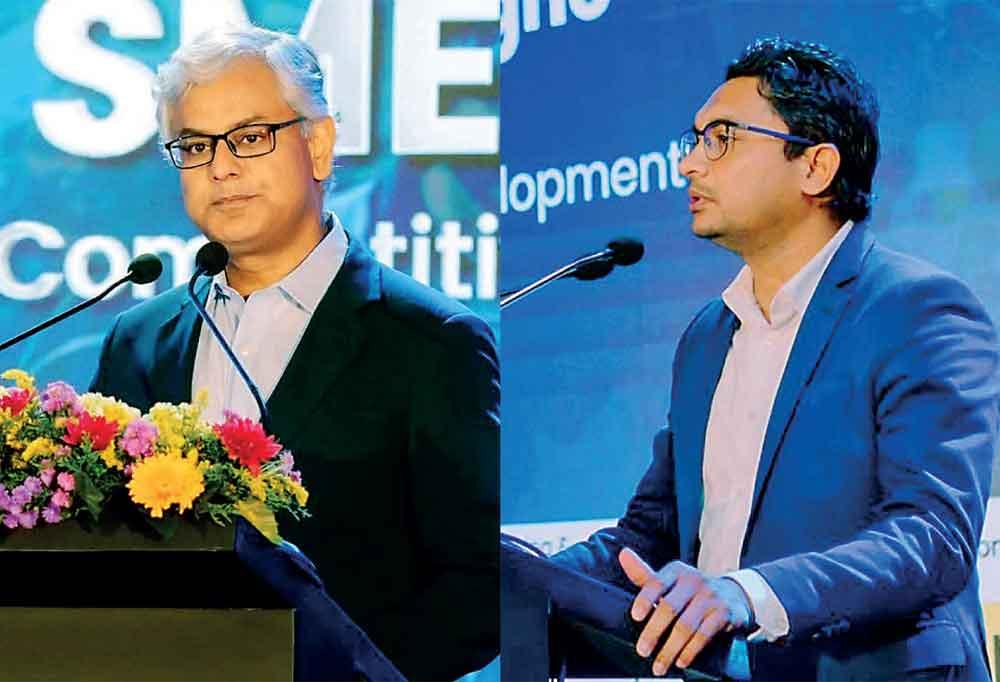
The Ceylon Chamber of Commerce Chairperson Krishan Balendra said, “Scale Up 2.0 was designed to move the SME conversation from aspiration to action. Sri Lanka’s entrepreneurs need stronger linkages to markets, finance, technology, standards and strategic partnerships if they are to grow with confidence and compete beyond traditional boundaries. As The Ceylon Chamber of Commerce, we are committed to creating platforms that bring the right stakeholders together and help SMEs access the knowledge, networks and opportunities required to scale sustainably.”
Industries and Entrepreneurship Development Deputy Minister Chathuranga Abeysinghe said, “Sri Lanka’s SME sector holds immense potential to become one of the strongest drivers of inclusive growth, exports, innovation and employment. There is a significant untapped economic opportunity waiting to be unlocked across local and global markets but realising it will require future-ready businesses, stronger digital adoption, improved access to finance and closer collaboration across government, industry, payments and development partners. Our focus is to create the enabling environment for SMEs to compete, scale and contribute meaningfully to the country’s next phase of economic growth.”
Image Disclaimer: Images used in this article are the property of their respective copyright holders and rightful owners. No ownership is claimed over the images.