The music industry is facing an uncomfortable question: what should happen when the technology threatening traditional music creation also becomes too powerful to ignore?
Artificial intelligence-generated music has moved rapidly from an experimental novelty to a growing commercial industry. AI platforms such as Suno are allowing people with little or no formal musical training to create complete songs, while major record companies are simultaneously challenging these companies in court and exploring partnerships with them.
Few examples capture this complicated relationship better than Suno.
The AI music generator has faced legal action from major record companies accused of using copyrighted recordings to train its systems. Yet one of those same companies, Warner Music Group, has since entered into a partnership with Suno, signalling a significant change in how parts of the music industry are approaching artificial intelligence.
At the centre of this emerging debate is a much simpler question: can AI become another creative tool without undermining the people whose work helped build the music industry in the first place?
From comedian to unexpected music success
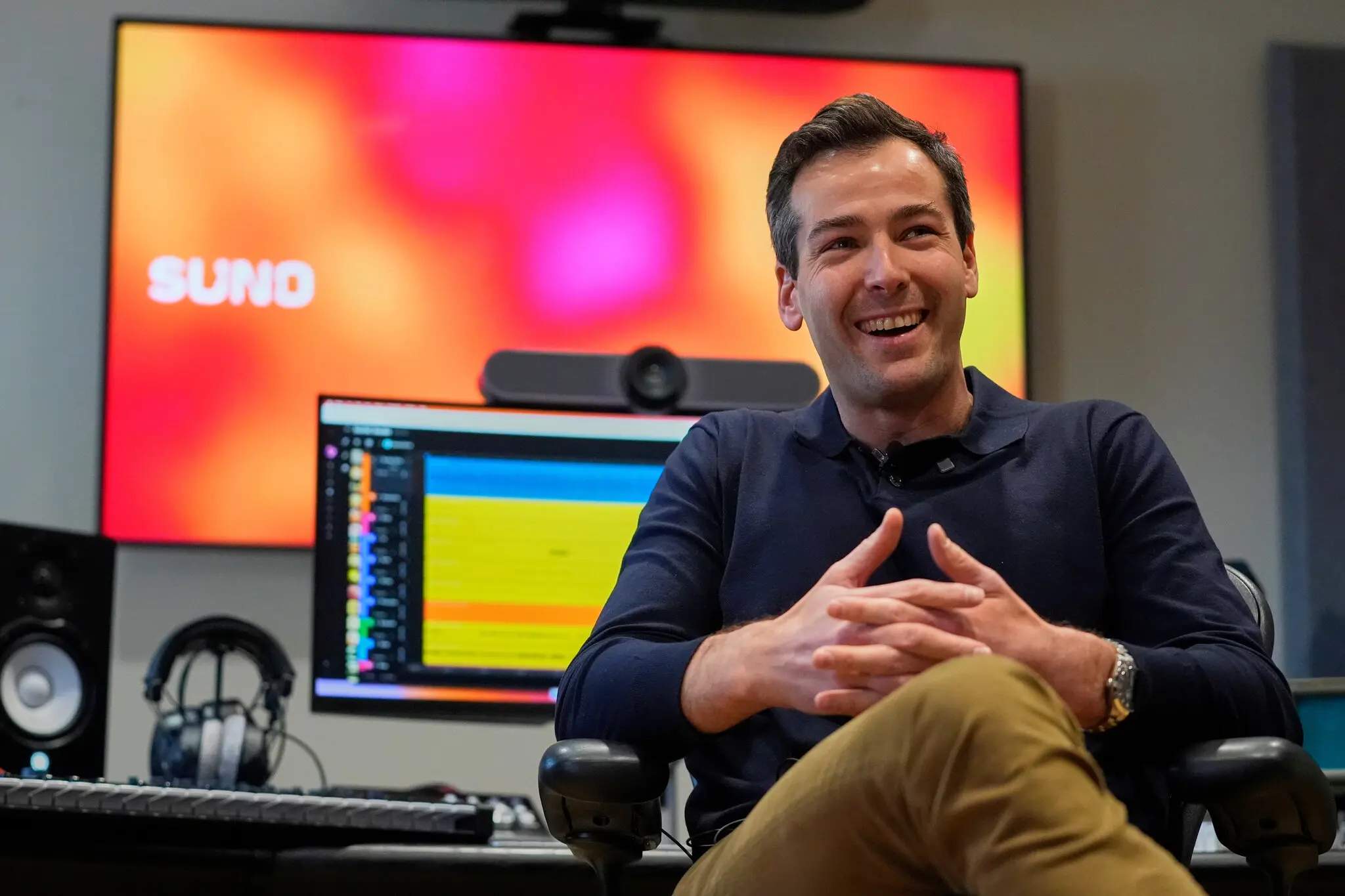
Bill Stiteler never set out to become a recording artist.
The 37-year-old comedian began experimenting with Suno by creating humorous “walk-up songs” for Major League Baseball players. The concept was designed more for laughs than commercial success, but the clips attracted attention on Instagram and encouraged him to experiment further.
His breakthrough came when he applied the same comedic approach to travel.
Stiteler created The Puerto Rico Song, an AI-assisted track celebrating — and poking fun at — the island. The song went far beyond a social media joke, accumulating nearly 20 million streams on Spotify and millions of views on YouTube.
The unexpected popularity eventually caught the attention of Puerto Rico’s tourism authorities. In June, the tourism board brought Stiteler to the island to film a music video for the song.
The comedian has since created dozens of similar tracks about destinations ranging from well-known locations to smaller American cities such as Altoona, Pennsylvania, Morgantown, West Virginia, and Manchester, New Hampshire.
Stiteler writes the lyrics, while Suno handles the musical production. He has jokingly described his creations as “pseudomusic” and himself as a “fartist” rather than a conventional musician.
His experience highlights one of AI music’s biggest attractions: the technology allows people without years of musical training to turn ideas into finished songs.
Suno’s rapid rise
Suno was founded in Cambridge, Massachusetts, in 2022 and has quickly become one of the biggest names in AI-generated music.
The company says more than 100 million people have used its platform to create music. Users collectively generate a huge volume of material, while approximately two million subscribers pay for advanced features costing as much as $30 per month.
The company’s growth reflects a broader explosion in AI-generated music. Around a dozen AI-created songs have already appeared on Billboard charts, while Deezer has reported that AI-generated tracks account for roughly half of the music uploaded to its service.
Suno is not alone. Competitors include Udio, Riffusion and ElevenLabs, but Suno has emerged as the leading player, raising roughly $1 billion from investors and reaching a reported valuation of $5.4 billion.
As the technology becomes more accessible, the distinction between amateur creator, producer and musician is becoming increasingly blurred.
The copyright battle
The industry’s biggest concern, however, is not whether AI can make music. It is how AI companies obtained the material used to train their systems.
Major record companies have accused AI music generators of using copyrighted recordings without permission.
In 2024, the Recording Industry Association of America sued Suno on behalf of major music companies including Sony Music Publishing, Universal Music Group and Warner Music Group. The lawsuit alleged that copyrighted recordings had been used to train Suno’s AI models without authorization.
A similar legal battle developed around Udio, another AI music-generation platform.
The disputes have placed AI companies and record labels on opposite sides of a rapidly evolving copyright debate. Artists and industry groups argue that technology companies should not be able to profit from creative works without compensating the people who produced them.
AI companies, meanwhile, have defended their technology and the training of their models.
The disagreement is becoming increasingly important as AI-generated music moves into the mainstream and begins competing for listeners, streams and commercial opportunities.
Warner changes its strategy
Perhaps the most striking development is what happened next.
Warner Music Group, which had been involved in legal action against Suno, later chose to work with the company.
Under their partnership, participating Warner artists can opt in to allow their names, likenesses, voices and compositions to be used in AI-generated music. Suno is also developing a licensed AI model trained on Warner’s catalogue.
The agreement represents a significant shift from confrontation toward cooperation.
For Warner, the strategy is not simply about accepting AI. It is about having a role in determining how the technology develops and ensuring that artists and songwriters can potentially benefit from the new market.
The company has not disclosed the financial terms of the agreement, leaving questions about exactly how participating artists will be compensated and how the arrangement will work as AI-generated music grows.
Suno has also reached a similar licensing agreement with BMG.
For record companies, partnerships like these could provide a path toward monetising AI rather than attempting to stop it altogether.
Not everyone wants a seat at the table
The music industry’s response remains far from unified.
While Warner has chosen collaboration, independent music platform Bandcamp has taken a much harder line, announcing a ban on AI-generated music.
The disagreement reflects a deeper philosophical divide.
Supporters of AI argue that music has always evolved alongside technology. Recording equipment, synthesizers, digital production and sampling all changed the way musicians created music. AI, they argue, should be viewed as another tool.
Critics see a crucial difference. They worry that AI systems can replicate creative characteristics and generate enormous quantities of music without adequately compensating the human artists whose work helped make the technology possible.
The question of authenticity is equally complicated.
If a listener enjoys a song, does it matter whether the track was created entirely by humans, generated by AI or produced through a combination of both?
Some industry analysts believe the audience’s response will ultimately matter more than the production method. Others point out that although enormous quantities of AI music are being created, relatively little of it is actually attracting sustained listener attention.
Human musicians are still part of the story
Stiteler’s own experience offers an interesting twist.
After he sold the rights to The Puerto Rico Song, its new owners, Universal-owned Xploded Music, commissioned a version produced entirely by human musicians.
The human remake is now available on Spotify, while Stiteler continues to showcase the original AI-generated version on Instagram.
Rather than seeing the remake as a replacement for his original creation, Stiteler has embraced it. The song that began as an experiment with AI has effectively travelled through two creative worlds — first machine-generated and later performed by human musicians.
That may offer a glimpse into where the industry is heading.
AI does not necessarily have to mean humans versus machines. It could instead create a new production model in which people provide the ideas, lyrics, direction and creative identity while AI handles some of the technical work.
The next chapter of music
The AI music industry is still young, and many of its biggest questions remain unresolved.
Copyright rules are still being tested. Artists are demanding greater control over their voices and identities. Record labels are searching for sustainable licensing models, while streaming platforms are deciding how AI-generated content should be identified and distributed.
At the same time, millions of people are already experimenting with the technology.
The debate is therefore no longer about whether AI will enter the music industry. It already has.
The real battle will be over who controls the technology, who owns the resulting music and, most importantly, who gets paid when artificial intelligence turns creativity into a commercial product.
For an industry that has repeatedly reinvented itself through technological change, AI may become its biggest transformation yet.
Image Disclaimer: Images used in this article are the property of their respective copyright holders and rightful owners. No ownership is claimed over the images.