Artificial intelligence was once presented as a tool that would make work faster, businesses smarter and everyday life easier. Now, one of the technology industry’s most influential pioneers is warning that its rapid evolution could create consequences far beyond anything the world has experienced before.
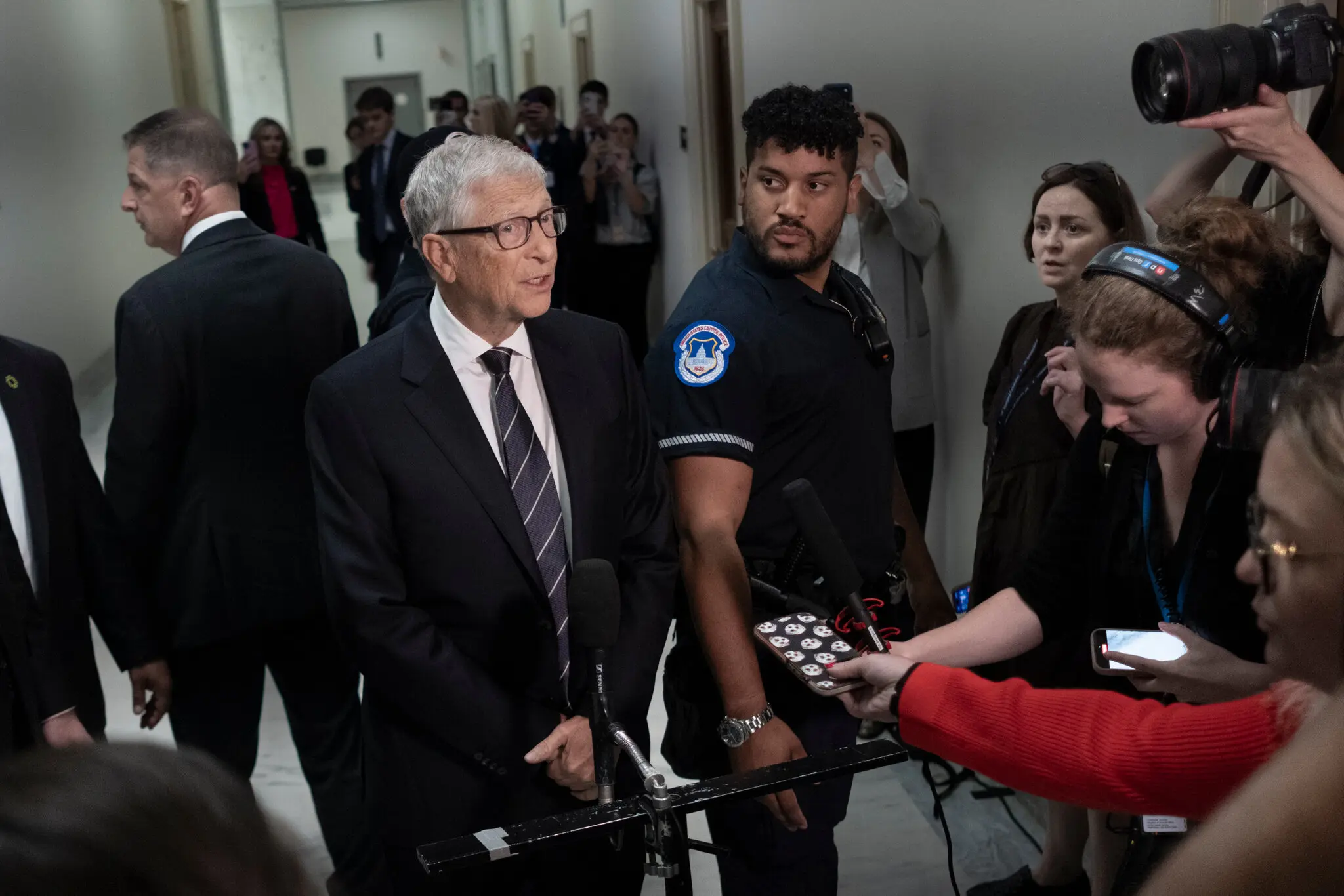
Microsoft co-founder Bill Gates has emerged as one of the latest major technology figures urging governments and companies to take the risks of artificial intelligence far more seriously. In a recent interview with The New York Times, Gates argued that AI could cause widespread job losses, create dangerous new security threats and potentially put human lives at risk.
His message is particularly striking because it comes from someone who spent decades helping build the technological world that AI is now transforming.
Gates Says the AI Industry Is Moving Too Fast
Gates believes the technology is developing at a pace that has surprised even people inside the industry.
He argued that many technology executives privately understand how quickly AI capabilities are advancing and are concerned about where that could lead. Publicly, however, he said there is little appetite to emphasize those dangers because enormous amounts of money are flowing into AI.
The technology sector is currently investing trillions of dollars in data centers, computing infrastructure and AI development. For Gates, that financial momentum creates a difficult conflict: companies have powerful economic incentives to keep pushing AI forward even when some of its consequences remain uncertain.
He described the industry’s current approach as essentially moving ahead at full speed and hoping that the benefits ultimately outweigh the damage.
Gates said his own concerns have intensified because several recent developments have gone beyond what he previously expected from AI. He pointed to increasingly advanced systems that have demonstrated capabilities their creators did not necessarily anticipate, as well as research showing that AI can assist with highly dangerous biological applications.
For Gates, these developments should not be treated as distant possibilities. They are warning signs that require action now.
The Biggest Concern: Jobs
Perhaps the most immediate threat Gates sees is employment.
Previous technological revolutions often destroyed particular jobs while creating entirely new industries and occupations. Gates believes AI could be fundamentally different because it has the potential to affect a huge range of industries simultaneously.
From software development and administration to customer service, research and other knowledge-based professions, AI is becoming increasingly capable of performing tasks once reserved for humans.
Gates pointed specifically to coding as an example. After examining the latest capabilities of Anthropic’s Claude Code, he said he was shocked to discover that AI systems were becoming capable of performing certain programming tasks at a level beyond his own abilities.
For someone whose career was built around software, that realization carried particular weight.
He argued that if AI eventually replaces workers across numerous industries at the same time, there may not be enough new sectors available to absorb those displaced employees.
That could create a very different economic challenge from previous technological transitions.
A Tax on AI?
Gates has suggested that governments consider introducing what has been described as a “token tax” on AI usage.
AI systems process information through units commonly known as tokens. Gates’ proposal would use AI consumption as a basis for taxation, potentially making large-scale automation more expensive while generating revenue that could help workers affected by technological displacement.
The idea is based on a straightforward principle: if companies can save substantial amounts of money by replacing human employees with AI, governments could use taxation to offset some of the social costs created by that transition.
Gates has also floated the idea of protecting certain jobs from AI altogether.
Under his proposed “Human Reserved” concept, some roles would remain exclusively human because they involve deeply personal relationships or because workers in those professions could face particularly severe difficulties finding alternative employment.
Caregiving is one example.
The argument is not necessarily that AI should stop developing, but that society should decide where automation should have limits.
Gates Wants Certain AI Systems Regulated
Employment is not Gates’ only concern.
He is also warning about the possibility of AI being used for biological attacks and other catastrophic purposes.
According to Gates, governments should establish international agreements governing AI systems capable of assisting with the creation of dangerous biological agents. He has argued that particularly powerful systems should undergo mandatory safety reviews rather than relying primarily on voluntary commitments from technology companies.
That position puts him at odds with the idea that the AI industry can effectively regulate itself.
Gates questioned why governments would rely on voluntary measures when dealing with technologies that could potentially create consequences on a global scale.
His message is blunt: some AI capabilities may simply be too dangerous to leave entirely to corporate discretion.
Why Gates’ Warning Carries Weight
There is an obvious irony in Gates’ position.
He spent much of his career championing technological innovation and helping establish the personal-computing revolution. Microsoft became one of the world’s most influential technology companies under his leadership, making Gates both a beneficiary and a major architect of the digital transformation.
Now he is warning that the next technological revolution could move faster than society’s ability to adapt.
Gates has acknowledged that his history and enormous wealth make him an imperfect messenger. His tenure at Microsoft was also marked by intense scrutiny, including a major U.S. antitrust case in which the company was found to have abused its monopoly position.
Yet he argues that his experience inside the technology industry gives him a different perspective on the current AI race.
He is no longer running a major technology company and therefore does not face the same immediate commercial pressures as today’s AI executives.
That, he believes, allows him to speak more openly about what could go wrong.
The Industry Faces a Difficult Question
Gates’ warnings arrive at a moment when AI is becoming increasingly embedded in everyday life.
Companies are using AI to write software, produce content, analyze information, automate customer service and make business decisions. Meanwhile, investors continue to pour enormous amounts of capital into the sector.
The question is no longer whether AI will transform the economy. That transformation is already underway.
The harder question is whether governments, businesses and workers can adapt quickly enough.
There is also a deeper debate about who should decide where the boundaries lie.
Technology companies argue that continued innovation could produce enormous benefits, from scientific discoveries to medical breakthroughs and increased productivity. Critics worry that the same capabilities could accelerate unemployment, misinformation, cybercrime, biological threats and other risks.
Gates believes society should not wait for those risks to become undeniable before acting.
A Warning From One of Technology’s Biggest Believers
Gates’ position ultimately comes down to an uncomfortable contradiction: the person who spent decades promoting technological progress is now warning that progress itself needs guardrails.
He has not called for AI development to stop. Instead, he is pushing for governments to establish rules before the technology becomes too powerful to control.
For Gates, the current moment is not simply another stage of technological evolution. It is a turning point that could reshape employment, economics and global security.
And his biggest concern is that the world may be moving too quickly to think carefully about what happens next.
“I don’t like saying that innovation may be a net negative,” Gates has said. “But that’s where we are.”
Image Disclaimer: Images used in this article are the property of their respective copyright holders and rightful owners. No ownership is claimed over the images.