Book Review
Some books entertain.
Some books educate.
A rare few fundamentally change the way readers see the world.
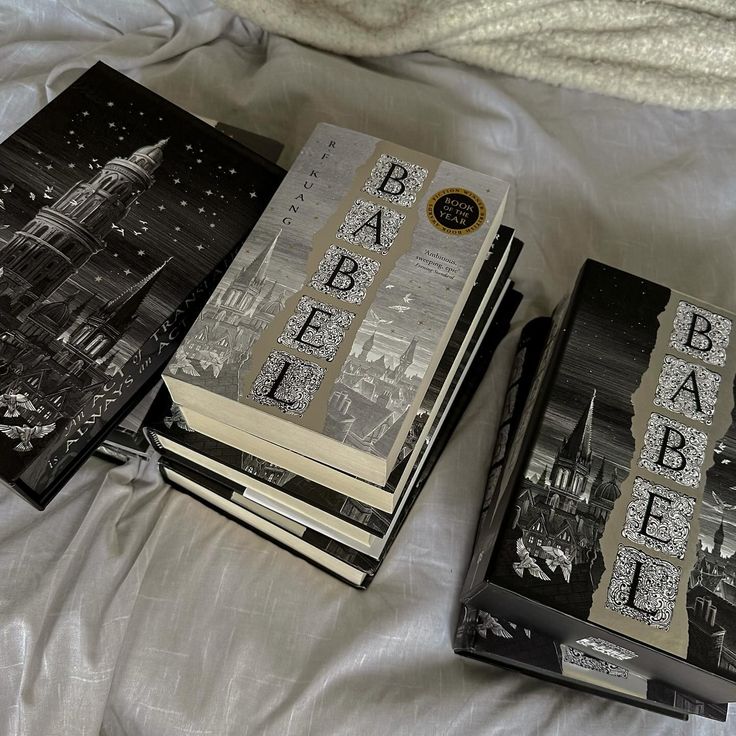
Babel: Or the Necessity of Violence: An Arcane History of the Oxford Translators’ Revolution by R.F. Kuang belongs firmly in the third category.
Widely regarded as one of the most important works of modern speculative fiction, Babel is not merely a fantasy novel. It is an intellectual achievement, a political statement, a historical reflection, and a breathtaking examination of language itself. In a literary landscape often crowded with predictable plots and familiar tropes, Kuang delivers a work that feels astonishingly original.
Set in an alternative nineteenth-century Britain, the story follows Robin Swift, a gifted orphan from Canton who is brought to England and enrolled at Oxford University’s prestigious Royal Institute of Translation—known simply as Babel.
At first glance, Babel appears to be a dream.
Ancient halls. Academic brilliance. The pursuit of knowledge.
Yet beneath its grandeur lies a darker truth.
In Kuang’s world, translation is not merely communication—it is magic. Through the subtle differences between languages, silver bars are imbued with extraordinary power, fueling Britain’s economic growth, technological advancement, and imperial dominance.
What begins as an academic journey slowly evolves into a profound moral conflict.
Robin and his fellow scholars must confront an uncomfortable question:
Can knowledge remain neutral when it serves systems of oppression?
This question lies at the heart of the novel and elevates Babel far beyond traditional fantasy.
A Celebration of Language
Few novels have ever treated language with such reverence.
Kuang transforms translation into something almost sacred. Every word, every phrase, and every linguistic nuance carries meaning beyond its surface definition. The novel explores how language shapes identity, influences power structures, and determines whose stories are remembered—and whose are erased.
Readers who love literature, linguistics, history, philosophy, politics, or culture will find themselves captivated by the depth of research and intellectual sophistication woven throughout the narrative.
Yet despite its academic richness, Babel never feels inaccessible.
Kuang possesses the remarkable ability to make complex ideas emotionally compelling, transforming theoretical debates into deeply human struggles.
A Powerful Examination of Empire
At its core, Babel is a novel about empire.
It explores the machinery of colonialism not through battlefields and political speeches, but through classrooms, libraries, translation desks, and institutions of knowledge.
The brilliance of Kuang’s writing lies in her refusal to simplify history.
There are no easy villains.
No simplistic heroes.
Instead, readers encounter characters caught between gratitude and resistance, opportunity and exploitation, belonging and exclusion.
The result is a story that feels both historically grounded and profoundly relevant to contemporary discussions surrounding globalization, cultural identity, privilege, and power.
Characters That Feel Deeply Human
Robin Swift stands among the most memorable protagonists in contemporary fiction.
His journey is not merely physical or academic—it is psychological and moral.
Alongside an unforgettable cast of fellow students from diverse backgrounds, Robin navigates friendship, loyalty, ambition, injustice, and sacrifice.
Every major character embodies different responses to systems of power, making the novel’s conflicts feel intensely personal rather than purely ideological.
The emotional weight of these relationships ensures that Babel resonates long after the final page.
Why Babel Became a Global Phenomenon
The extraordinary success of Babel is no accident.
The novel became a #1 New York Times Bestseller and rapidly established itself as one of the defining works of modern fantasy literature. Critics praised its originality, intellectual depth, historical insight, and emotional power. Readers embraced it not only as a compelling story but as a book that challenges assumptions and sparks meaningful conversation.
Its influence extended well beyond the fantasy genre, earning recognition from major literary publications and appearing on numerous “Best Books of the Year” lists. Amazon, NPR, The Washington Post, Barnes & Noble, and Kirkus Reviews all recognized Babel among the standout books of its year.
Major Awards and Recognition
The novel’s critical acclaim was matched by an impressive collection of awards and honors.
Awards Won by Babel:
• Nebula Award for Best Novel (2022 Winner) – one of the most prestigious honors in speculative fiction.
• Locus Award for Best Fantasy Novel (2023 Winner) – recognizing excellence in fantasy literature.
• British Book Award – Fiction Book of the Year (2023 Winner) – one of the United Kingdom’s most respected literary awards.
• Alex Award (2023 Winner) – recognizing books written for adults that have special appeal to young adults.
• Blackwell’s Book of the Year (2022 Winner).
In addition, Babel was shortlisted, nominated, or recognized by numerous other major literary organizations and publications, further cementing its place among the defining novels of the decade.
Why Everyone Should Read Babel
In an age dominated by short attention spans and surface-level content, Babel reminds readers of what literature can achieve at its highest level.
It entertains without sacrificing intelligence.
It challenges without preaching.
It educates without becoming a textbook.
Most importantly, it forces readers to examine how language, knowledge, institutions, and power shape the societies we inhabit.
Whether you are a student, academic, entrepreneur, policymaker, business leader, or simply a passionate reader, Babel offers insights that extend far beyond fiction.
This is not merely a book to be consumed.
It is a book to be experienced.
Final Verdict
★★★★★ (5/5)
R.F. Kuang has crafted a modern masterpiece—an extraordinary blend of fantasy, history, politics, and philosophy that stands among the most significant literary achievements of the twenty-first century.
Babel is intelligent without being arrogant, powerful without being melodramatic, and ambitious without losing its humanity.
It is the kind of novel that reminds us why great books matter.
Years from now, readers will still be discussing Babel—not because it followed literary trends, but because it transcended them.
A rare masterpiece.
A profound reading experience.
And undoubtedly one of the most important novels of our generation.