Dustin Thao’s devastatingly beautiful novel turns an impossible phone call into an unforgettable meditation on love, grief, memory and the courage to finally say goodbye.
Imagine losing the person you love most.
Imagine knowing there will never be another conversation, another laugh, another ordinary afternoon together.
Then imagine calling their phone simply to hear their voicemail-
and they answer.
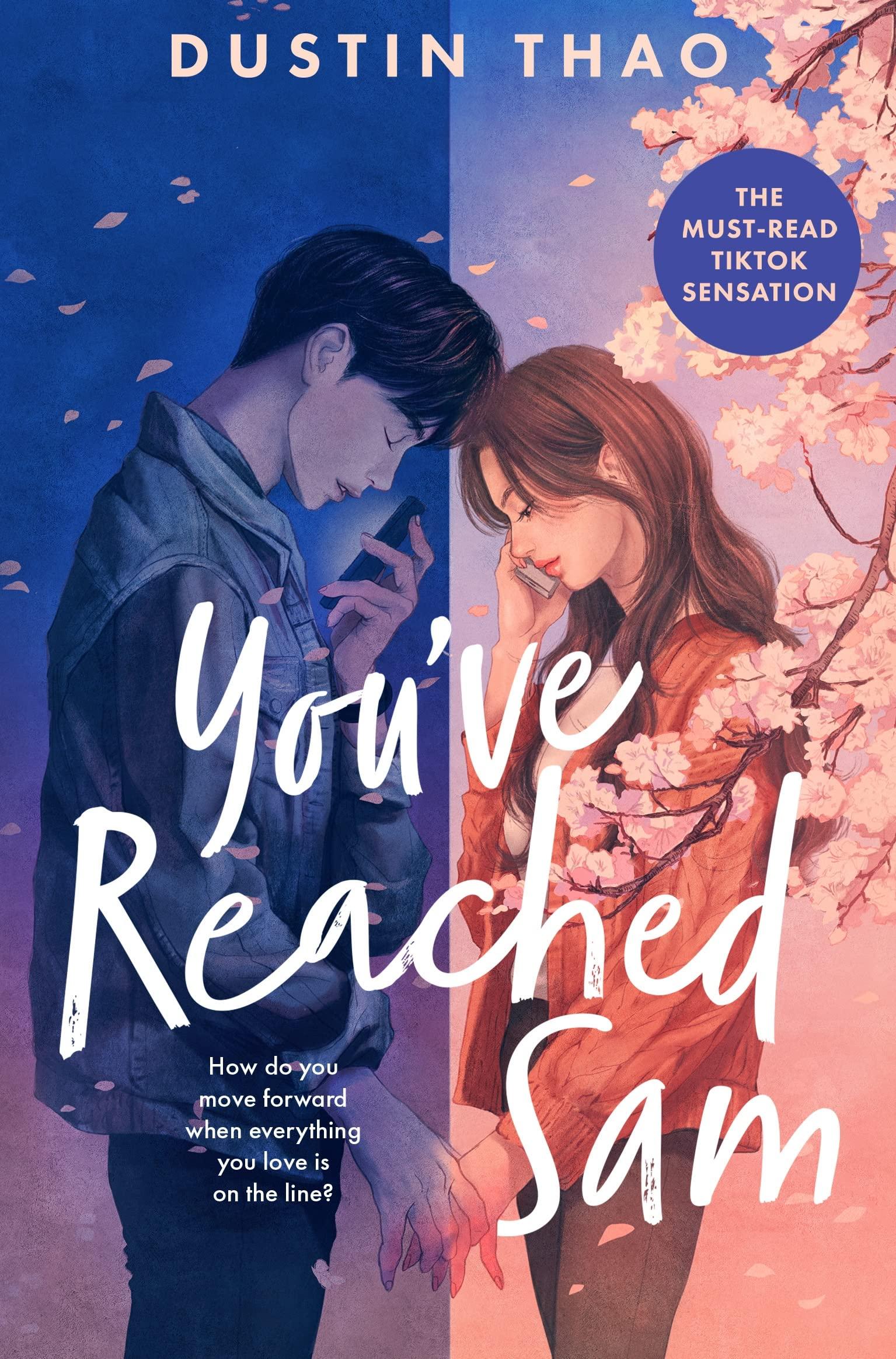
That irresistible, heartbreaking premise sits at the centre of You’ve Reached Sam, the bestselling debut novel by Dustin Thao.
Published in 2021, the novel arrived quietly compared with the enormous fantasy franchises and celebrity-driven releases surrounding it. Yet readers found it, recommended it, cried over it, quoted it, and passed it from one broken heart to another.
Soon, You’ve Reached Sam had become something much larger than a young-adult romance.
It became one of those rare books readers seem almost compelled to give to someone else.
Not because it provides an easy story about love.
But because it understands something far more difficult:
Sometimes loving someone also means learning how to live after losing them.
One Phone Call Changes Everything
Seventeen-year-old Julie Clarke had imagined an entire future with her boyfriend, Sam Obayashi.
Graduation.
College.
Leaving their small town.
A life waiting somewhere beyond adolescence.
Then Sam dies.
Suddenly, every future Julie had constructed disappears with him.
Unable to confront the magnitude of her grief, she begins withdrawing from the people around her. She avoids Sam’s funeral. She throws away possessions that remind her of him. She desperately attempts to remove the evidence of a life they were supposed to share.
But grief is rarely something that can simply be discarded.
One evening, desperate to hear Sam’s voice again, Julie calls his mobile phone expecting nothing more than voicemail.
Sam answers.
What follows is the novel’s extraordinary emotional premise: Julie has somehow been given another opportunity to speak with the boy she lost.
There are no simple explanations.
There are no elaborate scientific rules.
There is simply a telephone connection between life and death and the terrifying knowledge that it cannot continue forever.
The question therefore changes.
It is no longer whether Julie can speak to Sam again.
It becomes:
How do you say goodbye when you have already discovered how unbearable goodbye can be?
Dustin Thao: The Author Behind the Heartbreak
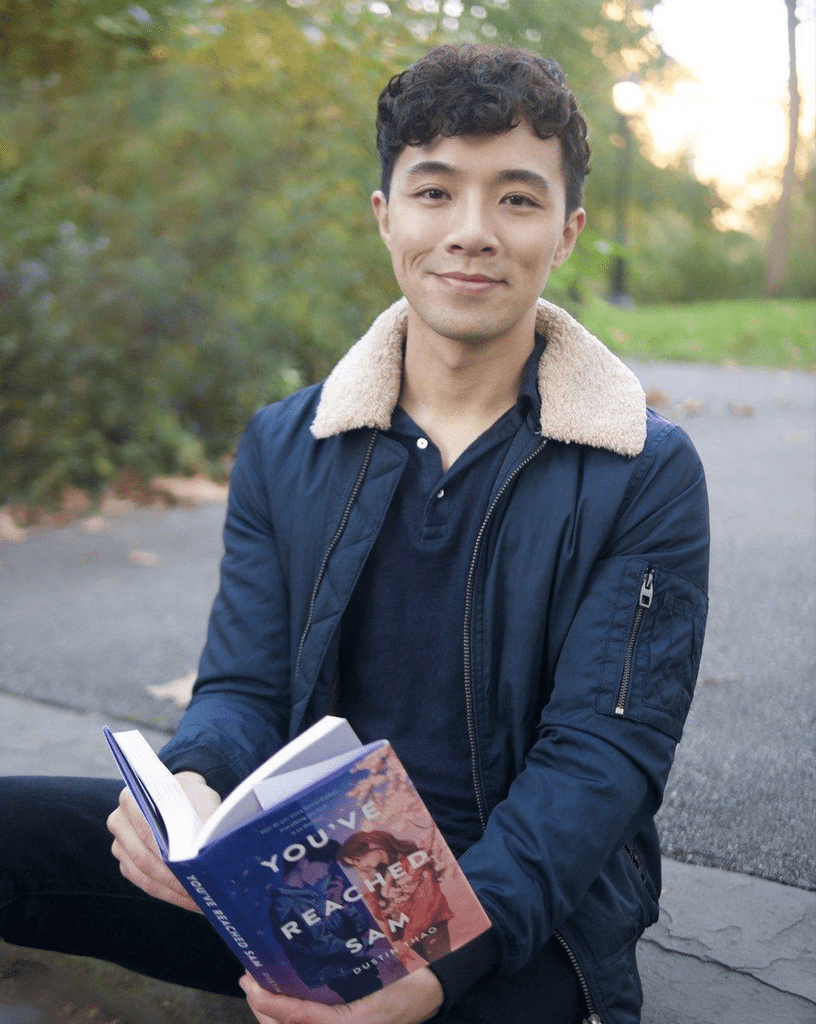
Dustin Thao emerged onto the international literary scene with You’ve Reached Sam, his debut novel.
An American writer of Vietnamese heritage, Thao studied political science before pursuing creative writing, eventually earning an MFA from Northwestern University.
His storytelling is distinguished by emotional restraint.
Rather than transforming grief into melodrama, Thao allows sorrow to exist in ordinary moments a photograph, an unanswered message, a familiar place, a memory that arrives unexpectedly.
That subtlety matters.
Grief is rarely dramatic every second of every day. Sometimes it appears in silence. Sometimes it is triggered by something insignificant. Sometimes it is simply the realization that the person you desperately want to tell something to is no longer there.
Thao captures these moments with remarkable tenderness.
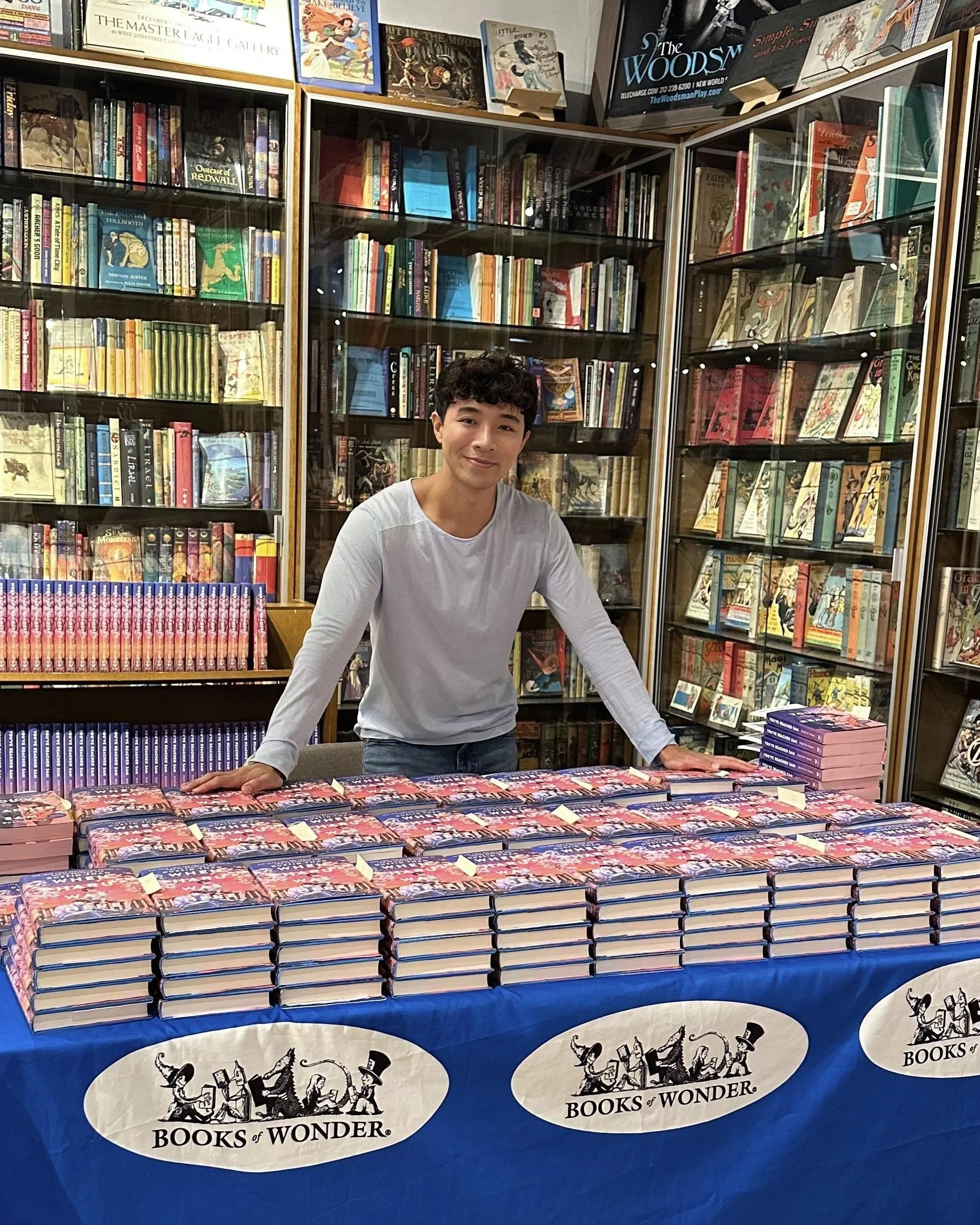
Following You’ve Reached Sam, he continued exploring love, memory and emotional connection through his later novel When Haru Was Here, further establishing himself as a distinctive contemporary voice in young-adult fiction.
This Isn’t Really a Book About Talking to the Dead
The supernatural telephone call may be the novel’s hook.
But it is not its heart.
At its core, You’ve Reached Sam is about grief.
Julie initially believes that speaking to Sam again is exactly what she needs.
And who could blame her?
Most people who have lost someone have probably imagined the impossible bargain: one more conversation, one more hour, one final opportunity to say everything left unsaid.
But Thao gradually introduces a painful contradiction.
What if being able to speak to someone who has died prevents you from accepting that they are gone?
What initially appears to be a miracle slowly becomes emotionally complicated.
Julie must choose between preserving her connection to the past and participating in the life that continues around her.
That tension gives the novel its emotional maturity.
The story does not suggest that moving forward means forgetting.
Instead, it asks whether memory can become something we carry rather than somewhere we remain trapped.
Why You’ve Reached Sam Became So Famous
The novel’s rise was powered significantly by readers themselves.
Its striking blue cover became instantly recognisable across BookTok, Bookstagram and online reading communities, while emotionally devastated reader reactions encouraged countless others to discover the story.
But viral popularity alone cannot sustain a book.
The reason You’ve Reached Sam endured is considerably more human.
Its premise is almost universally understandable.
Most people have someone they would call again if the impossible suddenly became possible.
A parent.
A sibling.
A friend.
A partner.
Someone whose number may still exist in a phone even though they no longer can answer it.
That idea gives the novel an emotional reach extending far beyond its teenage protagonists.
It may be marketed as young-adult fiction, but the question at its centre belongs to everyone:
If someone you loved could answer one final call, what would you say?
Awards, Honours and Literary Recognition
You’ve Reached Sam became a New York Times bestseller and received substantial recognition from readers, booksellers and young-adult literary communities.
Among its notable honours and distinctions, the novel became a Goodreads Choice Awards nominee for Best Young Adult Fantasy & Science Fiction, while its commercial success established Dustin Thao as an internationally recognised debut author.
The novel has also appeared on recommended-reading and young-adult selections and has been translated for readers internationally.
It is worth making an important distinction: You’ve Reached Sam has not accumulated a large collection of jury-awarded literary prizes.
Its reputation has instead been built predominantly through commercial success, reader response and extraordinary online word of mouth.
And in this particular case, that feels appropriate.
This is a book whose greatest recognition has come from the people emotionally affected by reading it.
What About a TV Series or Movie?
Given the cinematic nature of its premise, it is hardly surprising that readers frequently imagine You’ve Reached Sam as a film or television series.
A mysterious telephone connection.
A devastating romance.
Flashbacks to happier moments.
A protagonist caught between memory and reality.
The story almost seems designed for the screen.
However, readers should be careful with adaptation claims circulating online.
There is currently no released television series featuring actors as Julie Clarke, Sam Obayashi and the novel’s other characters, meaning there are no television cast performances or acting awards to report.
Likewise, until an adaptation, cast and production schedule are formally announced by authoritative industry or publisher sources, speculative casting and fan-created adaptation information should not be presented as fact.
For now, Julie and Sam remain where readers first fell in love with them:
on the page.
Why You Should Read It
Read You’ve Reached Sam if you have ever missed someone.
Read it if you have ever replayed an old conversation and wished you had said something differently.
Read it if you have ever discovered that moving forward can feel disturbingly similar to leaving someone behind.
And read it if you appreciate books that favour emotional sincerity over complicated plotting.
This is not a perfect novel.
Some readers may wish for greater exploration of its supernatural premise, while others may find Julie frustrating during parts of her grieving process.
But perhaps that frustration is intentional.
Grief does not always make people likeable.
It makes them human.
And You’ve Reached Sam understands that beautifully.
FINAL VERDICT
⭐⭐⭐⭐½ – 4.5/5
You’ve Reached Sam is tender, melancholic and emotionally disarming.
Its greatest accomplishment is not making readers cry although for many, it certainly will.
Its greatest accomplishment is transforming an impossible fantasy into a painfully recognisable truth.
Most of us will never receive another telephone call from someone we have lost.
There will be no supernatural second chance.
No perfect final conversation.
No opportunity to rewrite the goodbye.
And perhaps that is precisely why the novel matters.
It reminds us to speak while people can still hear us.
To love while they are still here.
To say the things we keep postponing.
Because sometimes the most painful words are not the ones we said.
They are the ones we thought we would have time to say later.
📖 BOOK QUOTE OF THE WEEK
“If the ending is this painful, I don’t know if this was worth it.”
And perhaps that is the question at the centre of every great love story.
If loving someone eventually means risking the pain of losing them, was loving them worth it at all?
You’ve Reached Sam spends an entire novel quietly giving us its answer.
Yes.