BOOK OF THE WEEK
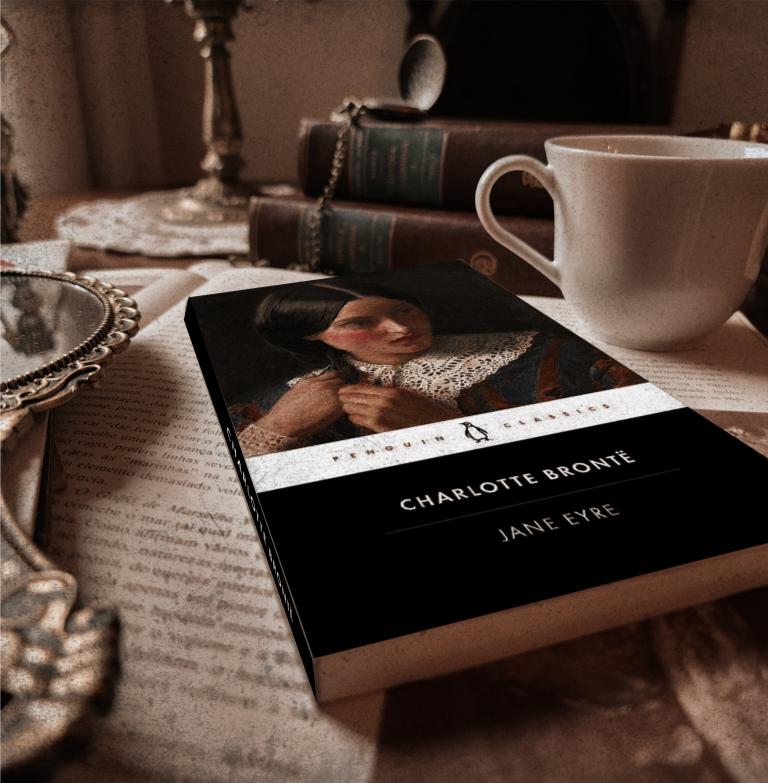
|A mysterious mansion, a dangerously complicated romance, a devastating secret and one of literature’s most fiercely independent heroines. More than 175 years after its publication, why does Jane Eyre still command our attention?
There are literary heroines who are remembered because of whom they loved.
Jane Eyre is remembered because she refused to lose herself in the process of loving someone else.
When Charlotte Brontë published Jane Eyre in 1847, Victorian society offered women remarkably little freedom over their education, finances, careers and personal lives. Into that world arrived Jane: orphaned, poor, socially insignificant and conventionally unremarkable yet utterly unwilling to believe that any of those circumstances made her less worthy than the people surrounding her.
Nearly two centuries later, Jane Eyre remains one of the most celebrated novels in English literature. It is simultaneously a Gothic mystery, a romance, a coming-of-age story and a remarkably intimate examination of independence, morality, class, faith and female identity.
But perhaps its enduring appeal can be reduced to one extraordinary question:
Can you love someone completely without surrendering yourself to them?
✒️ CHARLOTTE BRONTË: THE WOMAN BEHIND JANE EYRE

Charlotte Brontë was born in 1816 in Thornton, Yorkshire, and grew up in the now-famous Brontë family at Haworth. Together with her sisters Emily Brontë, author of Wuthering Heights, and Anne Brontë, author of The Tenant of Wildfell Hall, Charlotte became part of one of the most extraordinary literary families in history.
Yet when Jane Eyre: An Autobiography first appeared on 16 October 1847, readers did not see Charlotte Brontë’s name on its title page.
They saw Currer Bell.
Charlotte, Emily and Anne initially published as Currer, Ellis and Acton Bell respectively, adopting deliberately ambiguous names partly because female writers faced considerable prejudice in the nineteenth-century literary establishment.
Charlotte’s own experiences influenced elements of Jane’s world. She had attended boarding school, worked as a governess and understood intimately the uncomfortable social position occupied by educated women who possessed intelligence but little money or independence.
Charlotte died in 1855 at only 38 years old.
Her life was short.
Her literary afterlife has been anything but.
🕯️ THE STORY: FROM AN UNWANTED ORPHAN TO THORNFIELD HALL


Jane’s childhood offers little reason for optimism.
Orphaned and dependent upon relatives who treat her with cruelty, she grows up in the Reed household constantly reminded that she is unwanted. She is eventually sent to the harsh Lowood School, where deprivation, rigid discipline and personal tragedy shape her understanding of the world.
Yet hardship does not extinguish Jane’s personality.
It sharpens it.
As a young woman, she leaves Lowood and accepts employment as a governess at Thornfield Hall, where she is responsible for educating a young girl named Adèle.
There she encounters the estate’s enigmatic owner:
Edward Fairfax Rochester.
Rochester is wealthy, experienced, intelligent, temperamental and secretive. Jane possesses virtually none of his social advantages.
Yet when they speak, Jane refuses to behave as though wealth makes Rochester intellectually superior.
Their conversations become verbal duels.
The duels become fascination.
And fascination gradually becomes love.
Unfortunately, Thornfield has been keeping a secret.
A very large one.
🏰 THORNFIELD HALL: WHERE ROMANCE BECOMES GOTHIC


This is where Jane Eyre becomes deliciously dark.
There are shadowy corridors.
Locked rooms.
Strange laughter in the night.
Unexplained fires.
Secrets concealed behind doors.
And the unsettling feeling that Thornfield itself knows considerably more than Jane does.
Brontë masterfully blends romance with the traditions of Gothic literature. The mansion is not simply a location—it almost behaves like another character.
Its locked rooms represent concealed truths.
Its darkness reflects uncertainty.
Its fires suggest passions that cannot remain contained.
The Gothic atmosphere makes Jane Eyre considerably more compelling than a conventional Victorian courtship novel. Even readers who know the famous revelation at Thornfield can still feel the tension Brontë creates as Jane moves closer to discovering it.
And once the truth finally emerges, Jane faces the decision upon which the entire novel ultimately rests.
Does she choose the man she desperately loves?
Or the principles that allow her to respect herself?
👩 WHY JANE EYRE WAS SUCH A REVOLUTIONARY HEROINE


Jane does something deceptively radical:
she insists that her inner life matters.
She is neither wealthy nor glamorous. She has no powerful family capable of defending her and little social authority of her own.
Nevertheless, Jane refuses to accept that social position determines human worth.
She wants love passionately but not desperately enough to abandon her moral convictions.
She wants Rochester but she also wants herself.
That distinction is central to understanding the novel.
Jane’s independence is not presented as emotional coldness. She feels enormously. She desires. She suffers. She becomes angry, jealous, frightened and lonely.
Her strength comes from experiencing those emotions without allowing them to erase her identity.
For a heroine created in 1847, that was remarkable.
For readers in 2026, it remains remarkably relatable.
🏆 EVERY AWARD JANE EYRE WON – THE SURPRISING ANSWER
None.
And that is not an indication that the novel was overlooked.
Jane Eyre was published in 1847, long before the modern literary-prize culture existed. Therefore, it did not and realistically could not win the Booker Prize, Pulitzer Prize, National Book Award or the other major honours we associate with celebrated books today.
For perspective, the Pulitzer Prizes began in 1917, while the Booker Prize was established in 1969 more than a century after Jane Eyre appeared.
So there is no legitimate list of literary awards won by the original novel.
And perhaps Jane Eyre demonstrates why awards should never be the sole measurement of literature.
Thousands of novels have won prizes and gradually disappeared from public consciousness.
Jane Eyre won none.
Yet more than 175 years later, people are still buying it, studying it, debating it, adapting it and falling in love with or arguing about its characters.
Longevity became its trophy.
🌍 WHY IS JANE EYRE STILL SO FAMOUS?

Its reputation cannot be attributed to one thing.
First, Jane herself was an extraordinary literary creation: a woman narrating her own desires, anger, morality and ambitions with startling emotional intimacy.
Second, the novel combines genres exceptionally well. Readers receive romance, mystery, psychological drama, social criticism and Gothic horror within the same story.
Third, Jane and Rochester became one of literature’s most recognisable relationships. Their complicated dynamic influenced generations of romantic fiction and continues to inspire debate.
And finally, Jane Eyre contains something every enduring novel requires:
questions that survive the society that originally produced them.
What makes two people equal?
Can love survive without trust?
Should forgiveness have limits?
Is financial independence necessary for personal independence?
Can we love a flawed person without excusing their behaviour?
And how much should anyone sacrifice for a relationship?
Those questions were compelling in 1847.
They have not stopped being compelling.
❤️ JANE & ROCHESTER: GREAT LOVE STORY OR GIANT RED FLAG?

This is where reading Jane Eyre in the twenty-first century becomes particularly entertaining.
Rochester has all the ingredients of the classic brooding romantic hero: intelligence, mystery, wealth, emotional damage and a house containing considerably more drama than any sensible person should tolerate.
He is also deeply problematic.
There is a significant imbalance of wealth, age, experience and authority between him and Jane. He conceals enormously consequential information from her, attempts manipulation and makes choices that contemporary readers are entirely justified in questioning.
So should we still call Jane Eyre a great romance?
Perhaps but not because Rochester is an ideal man.
The more compelling reason is that Jane refuses to make him the centre of her moral universe.
When love conflicts with her fundamental principles, she is prepared to walk away even when doing so devastates her.
That changes the meaning of the romance.
The novel does not simply ask whether Rochester deserves Jane.
It asks whether Jane can love Rochester while continuing to belong to herself.
🎬 FROM PAGE TO SCREEN: WHY FILMMAKERS KEEP RETURNING TO JANE EYRE


Few nineteenth-century novels have enjoyed such an extensive life beyond the page.
Jane Eyre has inspired numerous film, television, stage and radio adaptations, with each generation seemingly discovering its own Jane and Rochester.
Among the best-known modern interpretations is the atmospheric 2011 film, directed by Cary Joji Fukunaga, starring Mia Wasikowska as Jane Eyre and Michael Fassbender as Edward Rochester, with Judi Dench appearing as Mrs Fairfax.
The 2006 BBC adaptation, starring Ruth Wilson as Jane and Toby Stephens as Rochester, also became a particularly admired interpretation among viewers.
Earlier adaptations stretch much further back through cinema and television history.
Why does the story adapt so naturally?
Because Jane Eyre is remarkably cinematic.
A windswept landscape.
An isolated mansion.
A forbidden romance.
Candlelit corridors.
Fire.
Secrets.
And two enormously complicated people attempting to understand one another.
Brontë was writing before cinema existed, yet she created imagery filmmakers have been borrowing ever since.
📚 WHY SHOULD YOU READ JANE EYRE TODAY?

Do not read Jane Eyre merely because someone told you it is an important classic.
Read it because it is genuinely interesting.
Read it for Thornfield’s mystery.
Read it for Jane and Rochester’s extraordinary conversations.
Read it for the Gothic atmosphere.
Read it for a heroine who refuses to confuse romance with surrender.
And read it because encountering older literature allows us to see how dramatically society has changed and, sometimes, how surprisingly little human emotion has changed with it.
The novel also rewards critical reading.
Its treatment of Bertha Mason, colonialism, race and mental illness has generated important modern criticism. Jean Rhys’s celebrated later novel Wide Sargasso Sea would famously reimagine the story surrounding Rochester’s first wife from a radically different perspective.
That is another sign of Jane Eyre’s importance.
Great books do not necessarily give us ideas we must unquestioningly accept.
Sometimes they give successive generations something worth arguing with.
⭐ THE VERDICT – IS IT ACTUALLY WORTH THE HYPE?

⭐⭐⭐⭐☆ 4/5
Not five.
Being a classic should not automatically guarantee a perfect rating.
Parts of Jane Eyre are magnificent. The psychological characterisation is exceptional, Thornfield remains wonderfully atmospheric and Jane possesses one of the strongest narrative voices in nineteenth-century fiction.
But contemporary readers may find sections slow. Some religious and philosophical passages are considerably denser than the central Thornfield storyline. Rochester’s behaviour can be difficult to romanticise, while aspects of Bertha Mason’s portrayal deserve serious modern criticism.
So why four stars?
Because almost two centuries later, the novel still works.
Jane still feels alive.
Thornfield still feels unsettling.
Rochester still causes arguments.
The revelation still matters.
And the central conflict between love and self-respect remains extraordinarily relevant.
A book that can provoke that much conversation after nearly 180 years deserves its place on the shelf.
📖 BOOK QUOTE OF THE WEEK
“I am no bird; and no net ensnares me.”
Charlotte Brontë, Jane Eyre
Eight words.
An entire character.
Jane may be poor. She may be socially powerless. She may be desperately in love.
But she refuses captivity.
And perhaps that is the real reason Jane Eyre remains extraordinary.
The novel gives us romance, mystery, tragedy and Gothic darkness but underneath all of them stands a woman demanding ownership of her own existence.
Jane Eyre does not ask permission to be equal.
She simply knows that she is.