From a cupboard under the stairs to the Battle of Hogwarts, J.K. Rowling’s Harry Potter series became one of the greatest publishing phenomena in history. But almost thirty years after Harry first entered Hogwarts, are the books still worth reading?
It begins with an orphan.
A cupboard.
A letter that should never have arrived.
And one unforgettable sentence:
“You’re a wizard, Harry.”
What followed changed publishing forever.
Between 1997 and 2007, seven Harry Potter novels transformed an apparently simple story about a boy discovering magic into an enormous literary universe encompassing friendship, prejudice, political corruption, death, sacrifice, authoritarianism, love and the complicated journey from childhood into adulthood.
The statistics alone are extraordinary. According to publisher Bloomsbury, the Harry Potter books have sold more than 600 million copies worldwide, have appeared in more than 80 languages, and inspired eight blockbuster films. Bloomsbury
Yet numbers do not adequately explain Harry Potter.
To understand why these books became a phenomenon, you have to return to Platform Nine and Three-Quarters and ask a simpler question:
What made millions of people wish Hogwarts were real?
⚡ SEVEN BOOKS, ONE EXTRAORDINARY JOURNEY
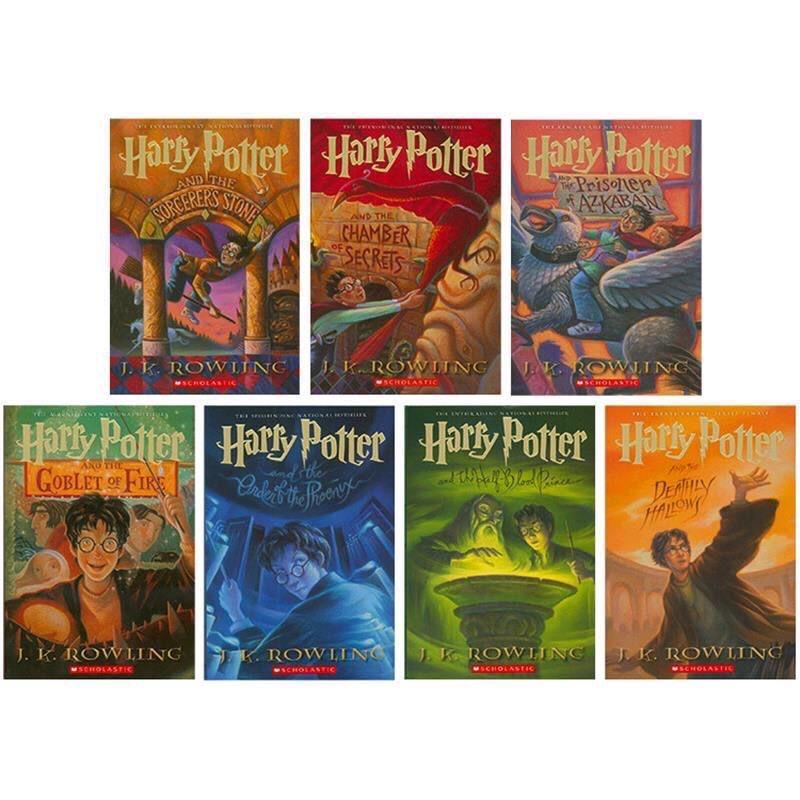
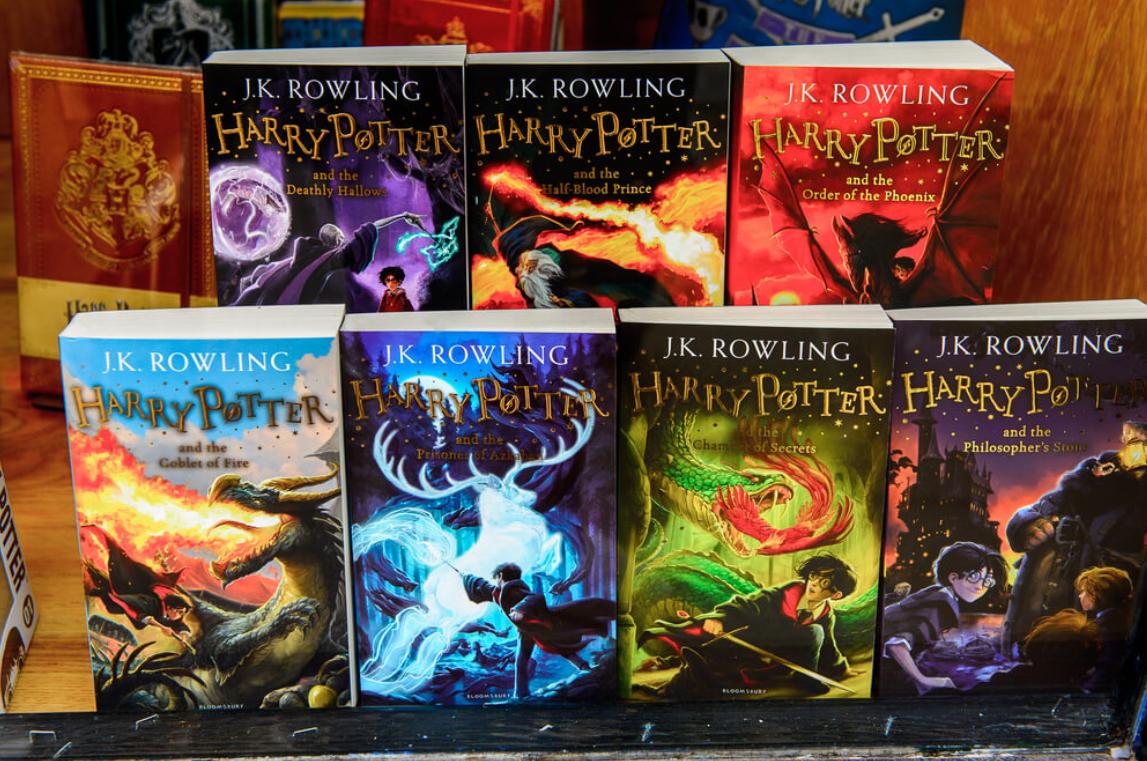
The original Harry Potter saga consists of seven novels:
1. Harry Potter and the Philosopher’s Stone — 1997
2. Harry Potter and the Chamber of Secrets — 1998
3. Harry Potter and the Prisoner of Azkaban — 1999
4. Harry Potter and the Goblet of Fire — 2000
5. Harry Potter and the Order of the Phoenix — 2003
6. Harry Potter and the Half-Blood Prince — 2005
7. Harry Potter and the Deathly Hallows — 2007
What makes the series particularly clever is that the books mature alongside their protagonist.
Philosopher’s Stone contains the wonder of childhood: magical sweets, moving staircases, Quidditch and the exhilarating discovery of Hogwarts.
By Goblet of Fire, innocence begins disappearing.
By Order of the Phoenix, the story is confronting propaganda, institutional abuse, political denial and teenage anger.
And by Deathly Hallows, Harry and his friends are effectively living through war.
Readers who grew up alongside Harry therefore experienced something unusual.
The books grew up with them.
✒️ J.K. ROWLING: THE AUTHOR WHO CREATED THE WIZARDING WORLD
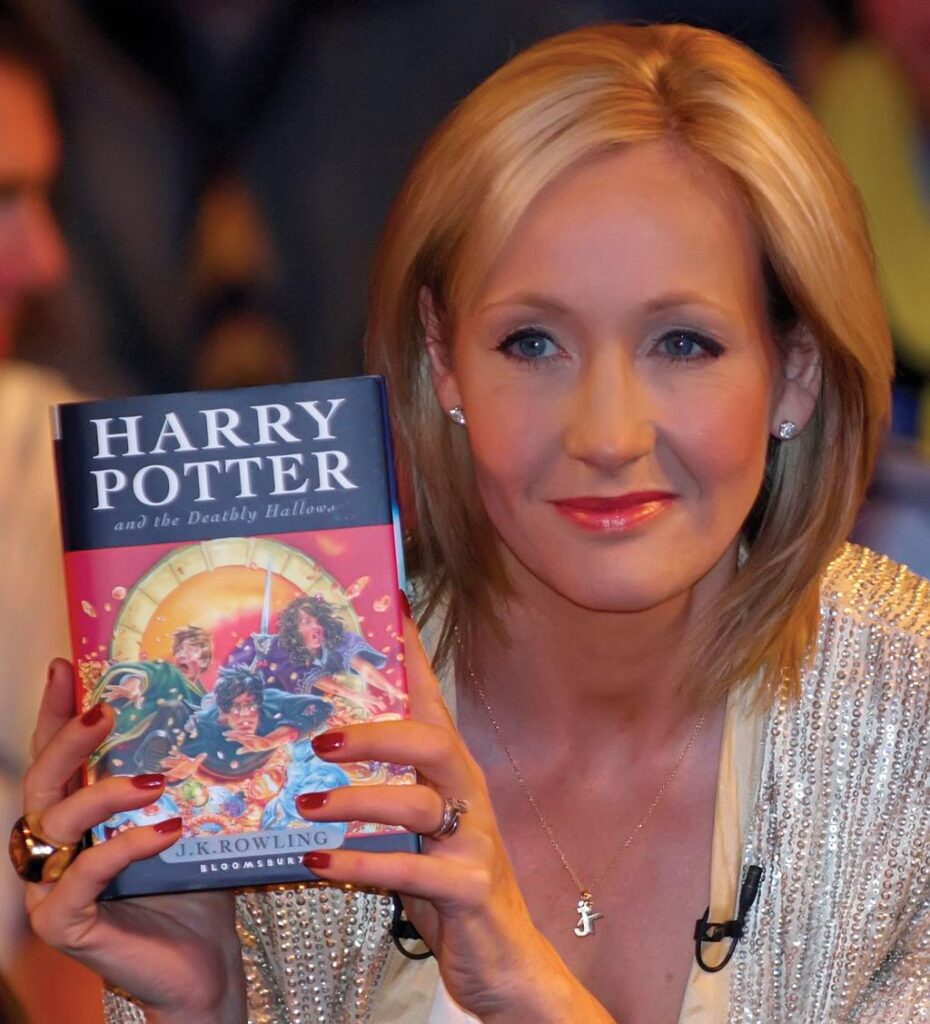
The idea for Harry Potter came to J.K. Rowling during a delayed train journey in 1990.
Over the following years, she developed the characters, rules, history and mythology surrounding Harry’s world before Harry Potter and the Philosopher’s Stone was finally published in Britain by Bloomsbury in 1997.
The complete seven-book story took ten years to publish, concluding with Harry Potter and the Deathly Hallows in 2007. Rowling later expanded the universe through companion books, screen projects and the stage production Harry Potter and the Cursed Child. She has also written crime novels under the pseudonym Robert Galbraith. Bloomsbury
Rowling herself has received numerous honours for her writing and cultural contribution, including an OBE and appointment as a Companion of Honour. Bloomsbury
Whatever one’s views of the controversies that have surrounded Rowling in more recent years, the literary and commercial impact of the seven Harry Potter novels themselves is impossible to seriously dispute.
They altered children’s publishing on a global scale.
🏰 HOGWARTS: PERHAPS THE REAL STAR OF HARRY POTTER
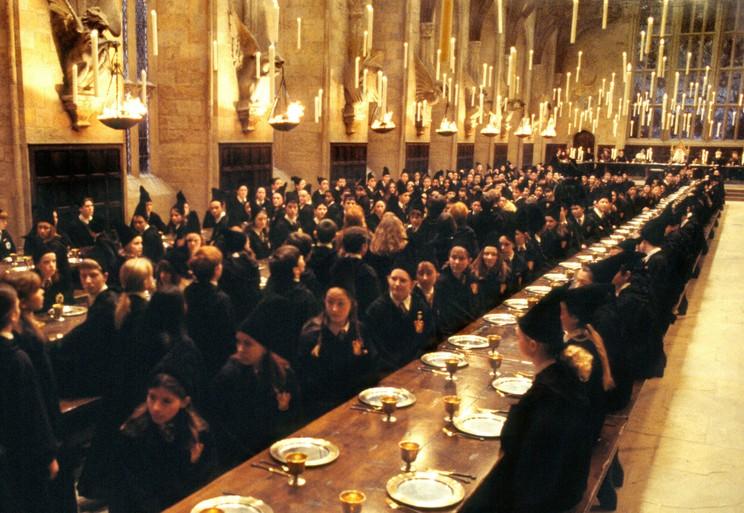
Ask readers what they remember most vividly about Harry Potter and many will not immediately say Voldemort.
They will say Hogwarts.
The moving staircases.
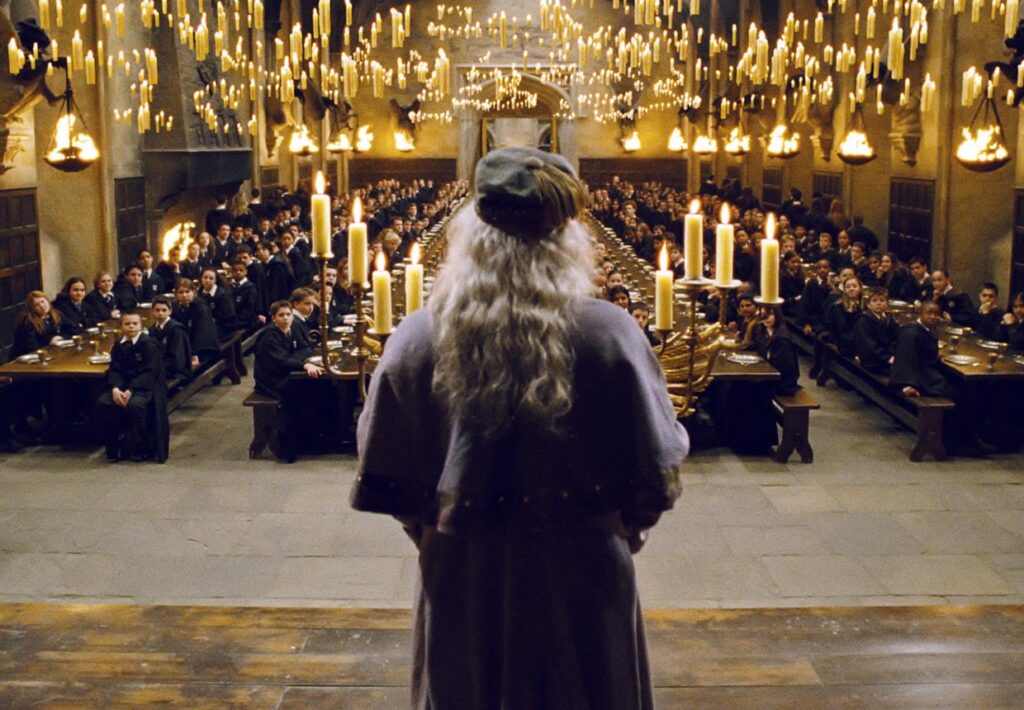
The Great Hall.
The four Houses.
Quidditch.
The Forbidden Forest.
Hogsmeade.
Secret passages.
Ghosts.
Talking portraits.
Classes we genuinely wished existed.
Rowling’s great achievement was not merely inventing magic.
Writers had been doing that for centuries.
She made magic feel administrative.
There are magical schools, examinations, newspapers, hospitals, prisons, banks, sporting leagues, government departments, shops, laws and careers.
Magic has paperwork.
And strangely, that makes the impossible world feel real.
Hogwarts is therefore more than a setting.
For many readers, it became somewhere they felt they had visited.
🧙 HARRY, RON AND HERMIONE: THE FRIENDSHIP THAT HOLDS EVERYTHING TOGETHER
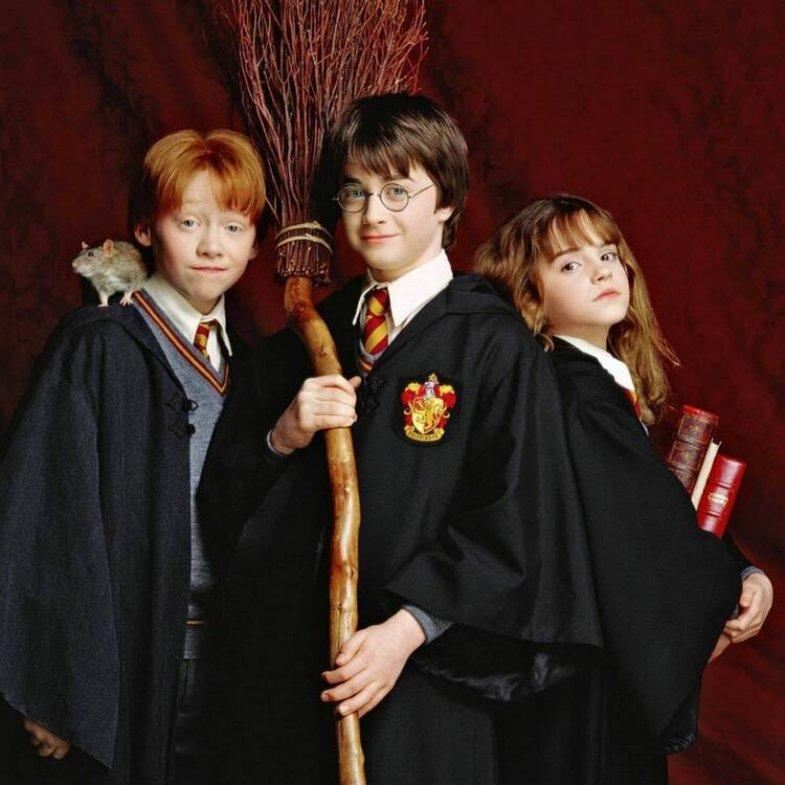
Strip away the spells and the series becomes surprisingly simple.
It is a story about three friends growing up together.
Harry brings instinct and courage.
Hermione brings intellect, discipline and an occasionally terrifying ability to be correct.
Ron brings loyalty, humour and the emotional warmth of the family Harry never had.
Importantly, none of them is perfect.
Harry can be impulsive and angry.
Hermione can be rigid and self-righteous.
Ron becomes insecure and jealous.
They argue.
They hurt one another.
They reconcile.
They grow.
Their friendship works because Rowling allows it to be imperfect.
And ultimately, Voldemort’s greatest weakness is not his inability to understand a particular spell.
It is his inability to understand why people would sacrifice themselves for one another.
🐍 VOLDEMORT, SNAPE AND THE SERIES’ SURPRISING MORAL COMPLEXITY
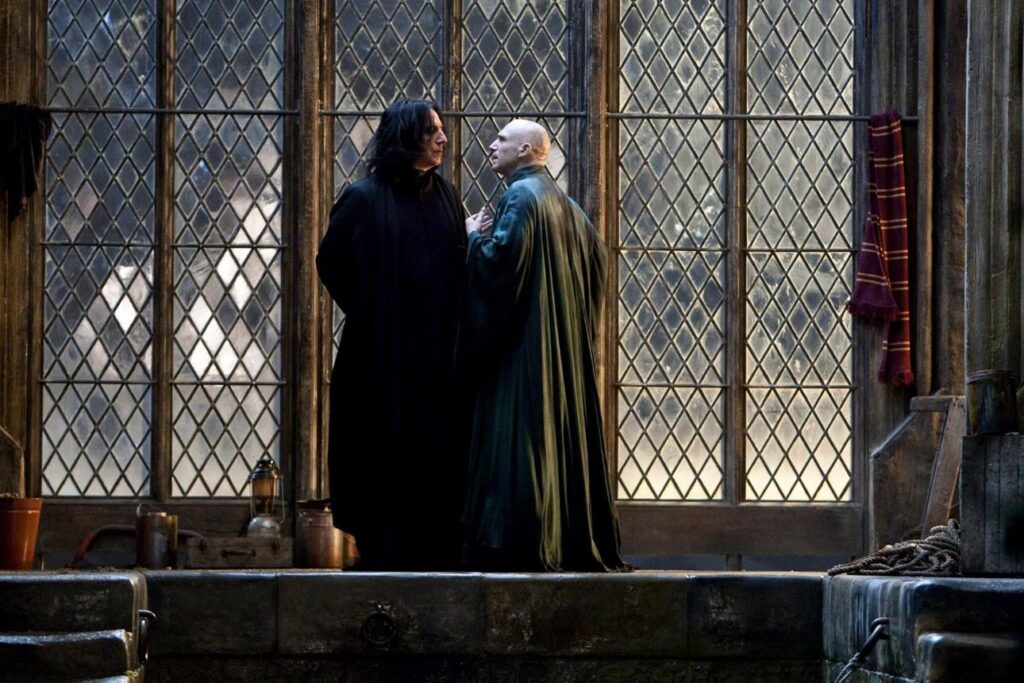
Harry Potter begins with an apparently uncomplicated distinction between good and evil.
Then things become messier.
Severus Snape is perhaps the clearest example.
Cruel teacher?
Bully?
Spy?
Hero?
Victim?
A man capable of extraordinary courage and deeply unpleasant behaviour?
The answer is inconveniently complicated.
Other characters receive similar treatment. Dumbledore’s wisdom becomes less comfortable when Harry discovers the mistakes and ambitions of his past. Sirius Black can be loving yet reckless. Draco Malfoy moves from schoolyard antagonist towards something more tragic.
Even Voldemort becomes a study in what happens when fear of mortality overwhelms humanity.
The later novels consequently ask a more mature question than simply:
Who is good and who is evil?
They ask:
What do people choose when choosing correctly becomes difficult?
🏆 THE AWARDS: WHEN HARRY POTTER CONQUERED MORE THAN THE BESTSELLER LISTS
Harry Potter was not merely commercially successful. The individual novels accumulated an extraordinary collection of literary, children’s-choice and publishing honours internationally.
Among the most significant:
🏆 Hugo Award for Best Novel
Harry Potter and the Goblet of Fire won the 2001 Hugo Award for Best Novel, defeating a formidable shortlist that included George R.R. Martin’s A Storm of Swords. The official Hugo records confirm Rowling’s fourth Harry Potter novel as the winner. The Hugo Award
🏆 British Book Awards
Harry Potter and the Philosopher’s Stone won at the British Book Awards, an especially significant early recognition for the series.
More than two decades later, it received the British Book Awards’ special 30from30 Award, recognising the most influential book among the awards’ winners from the preceding thirty years. J.K. Rowling
🏆 Nestlé Smarties Book Prize
The first three Harry Potter novels achieved an extraordinary run at the Nestlé Smarties Book Prize, with:
Philosopher’s Stone — Gold Medal
Chamber of Secrets — Gold Medal
Prisoner of Azkaban — Gold Medal
Three consecutive victories helped demonstrate that Harry Potter was not simply a publishing fad but a genuine children’s-literature phenomenon.
🏆 Additional Major Recognition
Across the seven novels, the series collected and received recognition from numerous British, American and international book organisations and reader-voted awards, including children’s book prizes, bookseller awards and library selections.
Prisoner of Azkaban was also a finalist for the 2000 Hugo Award for Best Novel. The Hugo Award
The award history is enormous, but one distinction is particularly revealing:
Harry Potter succeeded with critics, the publishing industry and children themselves.
That combination is rare.
🌍 WHY DID HARRY POTTER BECOME ONE OF THE BIGGEST BOOK SERIES EVER?

Because Harry Potter achieved something publishers dream about:
children became desperate to read very long books.
By the later instalments, these were substantial novels containing hundreds of pages, yet children queued outside bookshops for midnight releases.
But length was never the attraction.
Belonging was.
Harry begins the series unwanted, lonely and living under the stairs.
Then a letter arrives telling him there is another world in which he belongs.
That fantasy is enormously powerful.
Perhaps every child has wondered, at some point, whether there might be another world waiting to recognise something special within them.
Hogwarts offered precisely that possibility.
Then came the mysteries.
Every academic year contained clues, suspects, secrets and revelations. Rowling made the books compulsively readable by combining fantasy with the mechanics of detective fiction.
Add memorable characters, humour, school drama, sport, romance and increasingly dangerous stakes, and the result became almost irresistible.
Bloomsbury now reports sales exceeding 600 million copies, with translations into 80-plus languages. Bloomsbury
That is no longer simply bestseller territory.
It is cultural history.
🎬 WHEN HARRY POTTER LEFT THE PAGE AND CONQUERED CINEMA
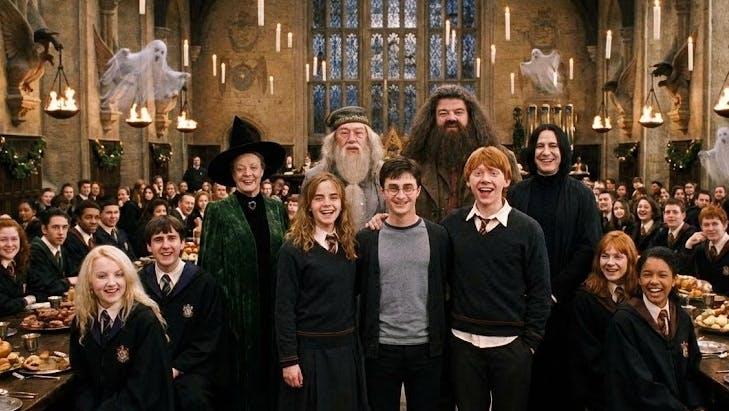
Then millions of readers watched the characters in their imaginations acquire faces.
Daniel Radcliffe became Harry Potter.
Rupert Grint became Ron Weasley.
Emma Watson became Hermione Granger.
Alongside them came an extraordinary ensemble of British acting talent: Alan Rickman as Severus Snape, Maggie Smith as Professor McGonagall, Robbie Coltrane as Hagrid, Michael Gambon and Richard Harris as Dumbledore, Ralph Fiennes as Voldemort, Helena Bonham Carter as Bellatrix Lestrange and many others.
Seven novels became eight blockbuster films, with Deathly Hallows divided into two parts. Bloomsbury describes the movies as eight smash-hit adaptations of the original books. Bloomsbury
The films introduced Harry Potter to audiences who had never read the novels and turned Hogwarts into a visual icon.
Yet they also demonstrated why the books remain essential.
Films must compress.
Books can linger.
Characters such as Ginny Weasley receive considerably more development on the page. Subplots disappear from the films. Hogwarts feels larger. The political dimensions of the later books become richer.
Watching Harry Potter is wonderful.
Reading Harry Potter is a different experience.
❤️ HARRY POTTER IS REALLY ABOUT LOVE—JUST NOT THE KIND YOU EXPECT
For a series famous for magic, its most important force cannot be produced with a wand.
Love protects Harry before he can even speak.
A mother’s sacrifice begins the entire story.
Friendship repeatedly saves him.
Parental love, romantic love, loyalty, grief and sacrifice shape almost every major character.
Voldemort pursues immortality because he is terrified of death.
Harry ultimately gains power precisely because he becomes willing to face it.
That contrast gives the final books their philosophical centre.
Harry’s greatest strength is not that he is the most talented wizard.
He isn’t.
It is that after experiencing extraordinary loss, he remains capable of loving other people.
📚 WHY SHOULD SOMEONE READ HARRY POTTER IN 2026?
Because the series accomplishes something increasingly difficult:
it makes reading feel like going somewhere.
Read it as a child and Hogwarts feels like an adventure.
Read it as a teenager and the friendships, romances, teachers and questions of identity become more visible.
Read it as an adult and suddenly you notice the politics.
You notice the media manipulation of the Daily Prophet.
You notice government incompetence.
You notice prejudice against Muggle-borns, house-elves, werewolves and other groups.
You notice how easily institutions can deny uncomfortable truths.
You notice adults failing children.
The books change because the reader changes.
That is one of the strongest arguments for returning to them.
🧐 BUT ARE THE HARRY POTTER BOOKS PERFECT?
No.
And popularity should never exempt a book from criticism.
Some plots rely heavily on coincidence.
Certain world-building questions become less convincing when examined too closely.
The treatment of house-elves has generated legitimate criticism, while some secondary characters and cultures could have been developed with greater depth.
The later books occasionally become overlong, particularly when compared with the beautifully economical storytelling of Prisoner of Azkaban.
And contemporary discussion of Harry Potter inevitably exists alongside intense public controversy surrounding comments and positions taken by Rowling herself. Readers differ considerably over how—or whether—they separate an author from their work.
Acknowledging those issues does not require pretending the novels had no literary impact.
Nor does appreciating the books require treating them as flawless.
Both ideas can exist simultaneously.
⭐ OUR VERDICT: DOES HARRY POTTER DESERVE ITS LEGENDARY STATUS?
⭐⭐⭐⭐½ 4.5/5
Not five.
Harry Potter is enormously entertaining, imaginative and emotionally effective—but cultural importance does not automatically equal perfection.
Its world-building occasionally cracks under close inspection. Some ideas have aged better than others. And across seven books, the quality inevitably fluctuates.
But judged as a complete reading experience?
It is extraordinary.
Few series have persuaded so many children to fall in love with books.
Few fictional schools have become places readers genuinely miss.
Few groups of characters have accompanied an entire generation from childhood into adulthood.
And few fantasy stories have moved so effortlessly from chocolate frogs and Quidditch matches to mortality, fascism, sacrifice and war without completely losing their original sense of wonder.
The Harry Potter books sold more than 600 million copies. Bloomsbury
But their real achievement cannot be measured in copies.
It can be measured in readers created.
People who opened Philosopher’s Stone as children and discovered that a book could become somewhere they wanted to live.
📖 BOOK QUOTE OF THE WEEK
“It is our choices, Harry, that show what we truly are.”
— J.K. Rowling, Harry Potter and the Chamber of Secrets
Perhaps no line better captures the moral heart of seven books.
Harry and Voldemort share strange similarities.
Both are orphans.
Both discover Hogwarts as a place of belonging.
Both possess unusual abilities.
Both encounter suffering.
What separates them is not simply destiny.
It is what they choose to become.
And that may be Harry Potter’s most enduring piece of magic:
The series tells children that where they begin does not have to determine where they end.
The cupboard under the stairs is only the first chapter.