Not too long ago, cash was king in Sri Lanka.
Whether buying groceries from the neighbourhood shop, paying for a tuk ride, or settling a restaurant bill, physical cash was almost always the preferred option. Carrying notes and coins felt ordinary, expected, and necessary.
Today, however, something interesting is quietly changing.
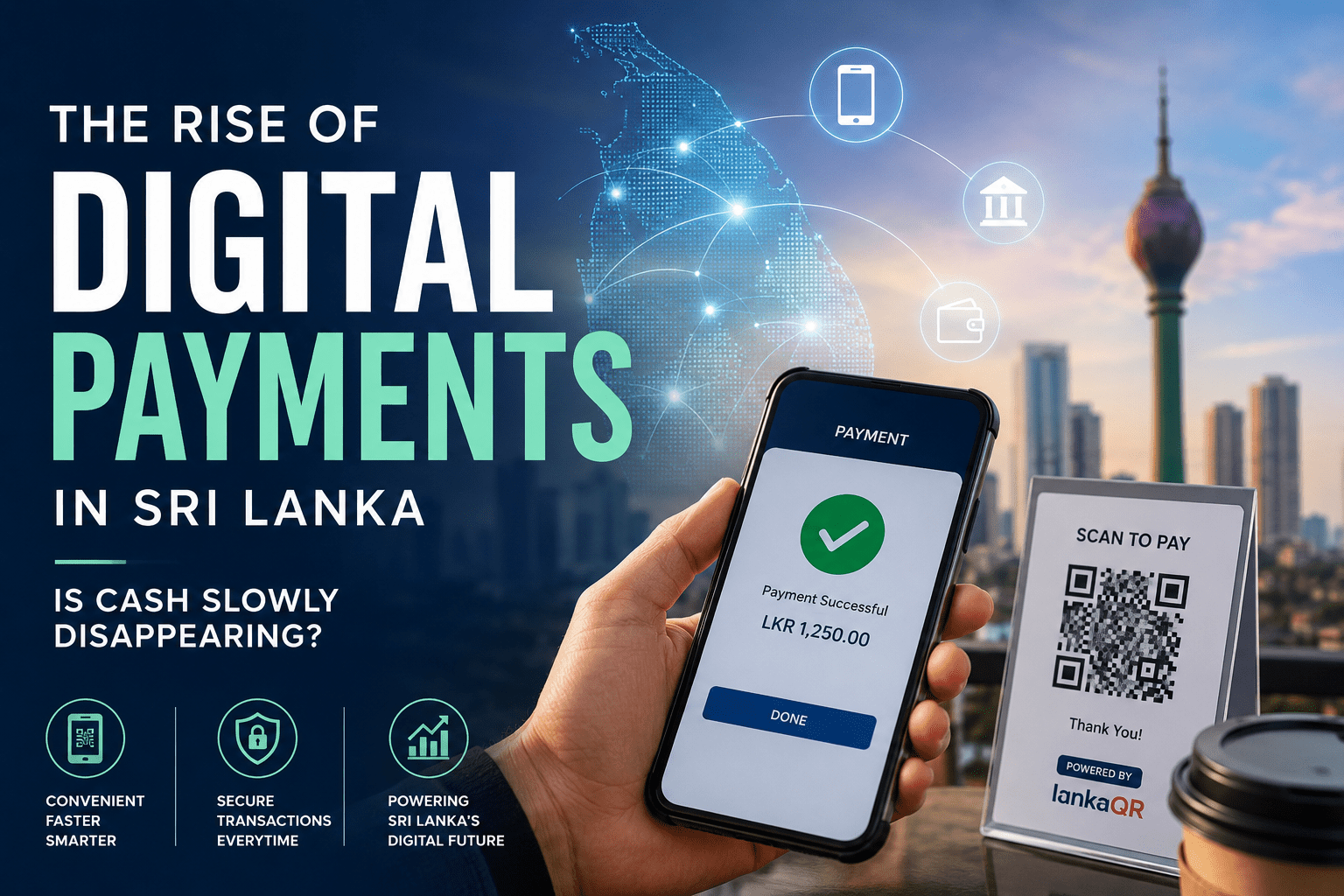
More Sri Lankans are tapping phones, scanning QR codes, and making instant digital transfers instead of reaching for their wallets. What once felt unfamiliar has slowly become part of everyday life.
The rise of digital payments in Sri Lanka is no longer just a trend. It is gradually reshaping how people spend, save, and do business.
The question now is simple.
Are we moving toward a cashless future?
The Digital Shift Happening Across Sri Lanka
In recent years, digital payment methods have become increasingly visible throughout the country.
From supermarkets and cafés to pharmacies and small retail stores, QR payment systems and digital wallets are becoming more common than ever before.
Even small businesses that once relied entirely on cash are beginning to embrace online transfers and digital payment options.
For many Sri Lankans, convenience is playing a major role in this shift.
Instead of searching for exact change or waiting in ATM queues, payments can now happen within seconds through mobile banking apps and digital platforms.
What once felt modern now feels surprisingly normal.
Why More Sri Lankans Are Choosing Digital Payments
Several factors are driving this growing preference.
Convenience Matters
Perhaps the biggest reason is simplicity.
A quick scan or mobile transfer often feels easier than carrying cash, especially for younger consumers already comfortable with smartphones.
Whether splitting restaurant bills, paying utility expenses, or shopping online, digital transactions offer speed that traditional payments often lack.
The Growth of Online Shopping
Sri Lanka’s growing digital economy has also played a major role.
As online shopping continues to expand, digital payment systems have naturally become more important. Consumers increasingly expect smooth and secure payment options when purchasing products or services online.
The rise of delivery services, online businesses, and digital marketplaces has only accelerated this behaviour.
Businesses Are Adapting
Businesses themselves are also encouraging digital payments.
Many retailers now prefer cashless transactions because they reduce handling errors, simplify bookkeeping, and make transactions easier to track.
For small businesses especially, digital payments are slowly becoming part of modern customer expectations.
Customers increasingly appreciate flexibility. If one payment method feels inconvenient, many simply move elsewhere.
Is Cash Really Disappearing?
Despite this rapid growth, cash is far from disappearing completely.
Sri Lanka still remains a country where physical cash plays an important role, especially in rural communities and informal sectors.
Many people continue to prefer cash because it feels familiar, reliable, and easier to manage.
Internet access, smartphone availability, and digital literacy also influence how quickly adoption can happen across different regions.
Trust remains another important factor. While younger consumers may adapt quickly, others remain cautious about digital fraud and online security.
For now, Sri Lanka appears to be moving toward a balance rather than a complete replacement.
Cash still exists.
But digital payments are growing stronger.
The Role of Younger Generations
Younger Sri Lankans are playing a major role in shaping this transition.
Gen Z and millennials, who are already deeply connected to digital technology, tend to adopt cashless habits faster. Mobile banking, instant transfers, and QR based payments often feel natural to them.
As younger consumers become a larger economic force, businesses may increasingly prioritise digital experiences.
The habits of today’s youth could shape tomorrow’s economy.
What This Means for Sri Lankan Businesses
For businesses, adapting to digital payments may no longer be optional.
Consumers increasingly value speed, flexibility, and convenience. Businesses that fail to modernise risk falling behind changing expectations.
Even smaller retailers are beginning to realise that offering digital payment options can improve customer satisfaction and create smoother purchasing experiences.
The shift may still be gradual, but it is becoming difficult to ignore.
Final Thoughts
Sri Lanka may not become completely cashless overnight.
Yet signs of transformation are becoming increasingly visible.
The familiar sound of coins and cash counting may slowly share space with QR scans, mobile transfers, and instant digital payments.
For consumers, this means greater convenience.
For businesses, it signals a future shaped by speed, technology, and changing expectations.
Cash may still have a place in Sri Lanka.
But its dominance may no longer be guaranteed.