From AI to changing customer habits, businesses are evolving faster than ever. Here are the trends smart companies can’t afford to ignore.
In business, staying still is often the fastest way to fall behind.
Customer expectations are changing, technology is moving at lightning speed, and businesses that once dominated industries are suddenly struggling to keep up. The good news? You don’t need to predict the future — you just need to understand where things are headed.
Whether you run a startup, SME, online business, or a growing company in Sri Lanka, keeping an eye on business trends can help you stay competitive and relevant.
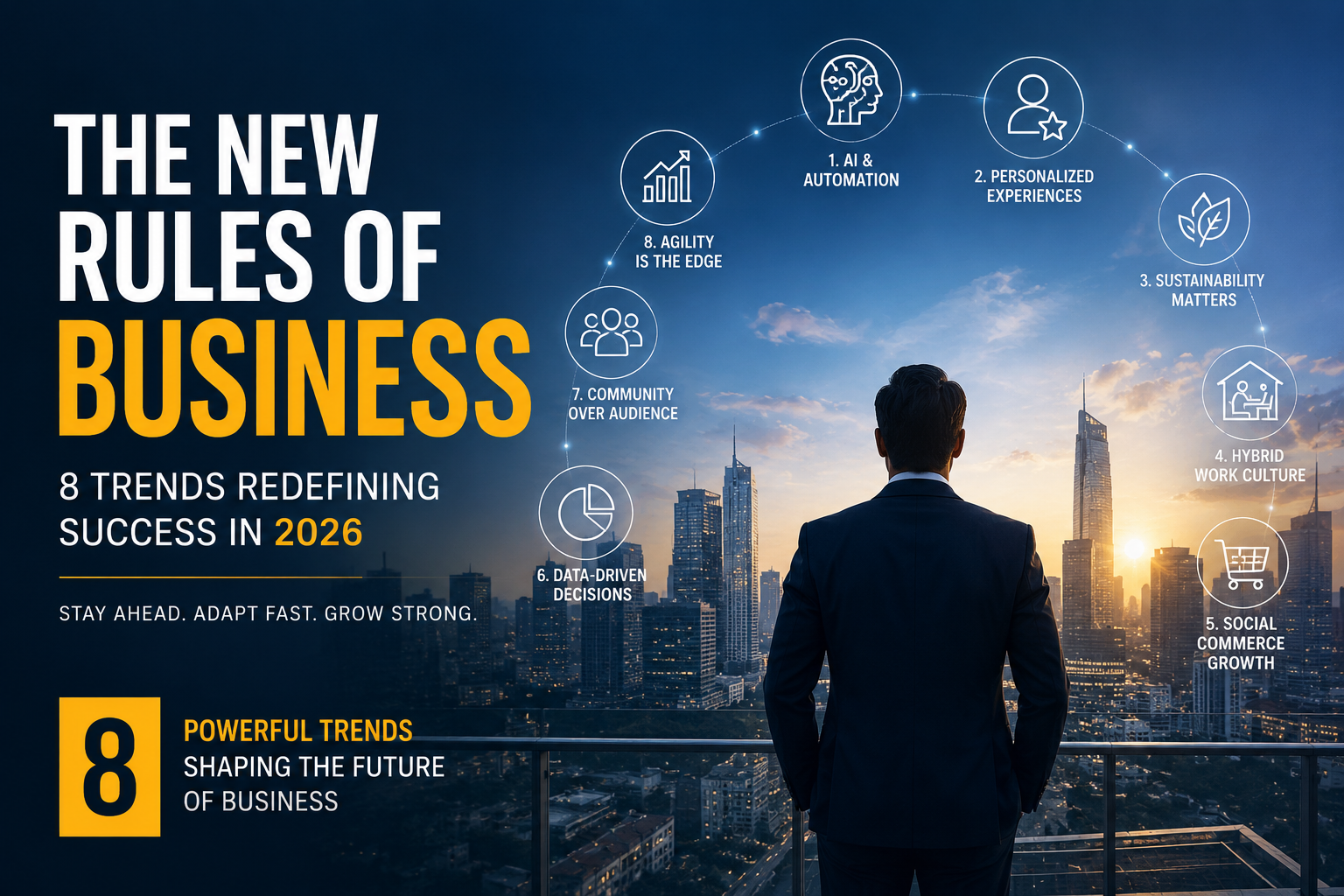
Here are eight major business trends shaping 2026 — and what they mean for your business.
1. AI Is No Longer Optional — It’s a Business Tool
A few years ago, Artificial Intelligence (AI) felt like something only giant tech companies used. Today, even small businesses are using AI for customer service, content creation, marketing, and operations.
From chatbots answering customer questions to AI-powered tools helping with social media captions, businesses are saving time and cutting costs.
How Businesses Can Adapt
- Use AI tools for marketing and customer support.
- Automate repetitive tasks.
- Train employees to work with AI rather than fear it.
Sri Lankan Example
Many Sri Lankan small businesses are now using AI-generated content for social media promotions, helping them stay active online without large marketing budgets.
2. Customers Want Personalised Experiences
People no longer respond well to generic marketing.
Customers expect brands to understand what they like, what they buy, and how they prefer to interact. Whether it’s a customised email, product recommendation, or targeted offer, personalisation matters.
Businesses that create tailored experiences often build stronger customer loyalty.
Actionable Tip
Start small:
- Personalise email campaigns.
- Recommend products based on customer behaviour.
- Use customer feedback to improve services.
3. Sustainability Is Becoming a Business Requirement
Consumers are paying more attention to how businesses operate.
They care about packaging, sourcing, waste management, and whether brands are environmentally responsible. Sustainability is slowly moving from a “nice extra” to something customers actively expect.
Sri Lankan Example
Several local cafes and businesses are moving toward reusable packaging and eco-friendly alternatives to reduce waste.
Even small changes can improve customer perception.
4. Hybrid Work Is Here to Stay
The traditional office-only model continues to evolve.
Many companies now combine office work with remote flexibility, creating hybrid work environments. Employees increasingly value flexibility, and businesses offering it often attract better talent.
Why This Matters
Flexible workplaces can:
- Improve employee satisfaction
- Increase productivity
- Reduce operational costs
For Sri Lankan businesses, especially in IT and digital services, hybrid work models are becoming increasingly common.
5. Social Commerce Is Growing Fast
Social media is no longer just for marketing — it’s becoming a place to shop.
Platforms like Instagram, TikTok, and Facebook are influencing purchasing decisions more than ever.
Customers discover products through creators, reviews, and viral content.
What Businesses Should Do
Instead of only selling, focus on:
- Creating entertaining content
- Building trust
- Showing behind-the-scenes moments
- Using short-form videos
Businesses that feel more “human” online often win customer attention faster.
6. Data Is Becoming a Competitive Advantage
Businesses are increasingly using data to make smarter decisions.
Understanding customer behaviour, sales trends, and engagement patterns helps companies avoid guesswork.
You don’t need complicated systems to start.
Even simple tools like website analytics or customer surveys can reveal valuable insights.
Ask These Questions:
- What products sell best?
- When do customers buy most?
- What content performs best online?
The businesses asking smarter questions are often making smarter moves.
7. Communities Matter More Than Audiences
Businesses are shifting focus from gaining followers to building communities.
Customers want connection. They want to feel seen, heard, and valued by the brands they support.
A loyal customer community can become your biggest marketing advantage.
Example
A small Sri Lankan clothing brand that actively responds to customer messages, reposts customer photos, and engages online can build stronger loyalty than a bigger competitor that feels distant.
People buy from brands they trust.
8. Agility Is the New Superpower
Perhaps the biggest trend of all is adaptability.
Markets change quickly. Customer expectations shift. Economic uncertainty appears unexpectedly.
The businesses thriving today are the ones willing to test, adjust, and evolve.
Being flexible is no longer a bonus — it’s survival.
Ask Yourself:
- Is your business adapting fast enough?
- Are you listening to changing customer needs?
- Are you embracing innovation or resisting it?
Sometimes, small changes today create major growth tomorrow.
The Bottom Line
Business trends are not just buzzwords — they are signals of where the market is moving.
The companies succeeding in 2026 are not necessarily the biggest or richest. They are the ones paying attention, adapting quickly, and staying connected to what customers truly want.
You don’t need to follow every trend. But understanding the right ones could be the difference between growing — or getting left behind.