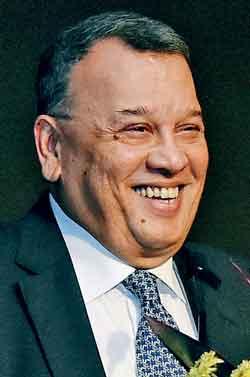
Sri Lanka must move swiftly to conclude its pending trade agreement with the United States to secure the favourable 10 percent tariff rate currently applicable to its exports, former Sri Lankan Ambassador to the United States Mahinda Samarasinghe has said.
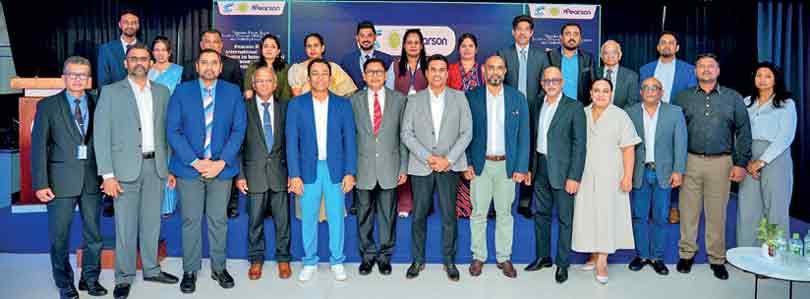
Delivering the keynote address at the 25th anniversary celebrations of the Sri Lanka Institute of Directors (SLID) in Colombo, Samarasinghe said negotiations with the US were in their final stages, with approximately 90 percent of the agreement’s content already finalised. He noted, however, that reaching agreement in principle would need to be followed by domestic processes required to give the agreement legal effect before it can be signed and implemented.
“What I have recommended very strongly to the government before I left was that we need to conclude the agreement so that we can lock in the very favourable tariff rate that Sri Lanka has got up to now,” Samarasinghe said.
He added that the Government remained committed to resolving the outstanding differences through negotiations and reaching an agreement that would provide domestic exporters with greater certainty that access to the US market would remain available in the years ahead.
The importance of securing the agreement is underscored by the US market’s role in Sri Lanka’s export sector. The United States accounts for around 25 percent of Sri Lanka’s total exports, making the market particularly significant for the country’s exporters and future investment plans.
Samarasinghe recalled that when the US administration announced its reciprocal tariff measures in April 2025, Sri Lanka faced an initial rate of 44 percent, among the highest announced at the time. Subsequent negotiations resulted in the rate being reduced progressively to 33 percent, 20 percent and eventually 10 percent.
“It was a do-or-die effort on the part of Sri Lanka to ensure that we get a good deal out of the negotiations that we undertook immediately after getting one of the highest tariff rates back in April 2025,” he said.
According to Samarasinghe, the reduction was achieved through negotiations, timely engagement and the provision of relevant information to US counterparts. However, he stressed that securing the 10 percent rate should not be regarded as the conclusion of the process.
He pointed to the European Union, which negotiated as a bloc, and to countries that had already concluded individual agreements with the US. A key requirement in the agreements, he said, was that signatories provide complete or near-complete duty-free access to American exports into their respective markets, with some countries adopting time-bound arrangements leading towards full access.
Samarasinghe also highlighted the growing connection between trade policy and geopolitics. He said the US tariff regime reflected not only domestic considerations such as revenue generation and strengthening the competitiveness of American manufacturers, but also broader strategic considerations.
He referred to the experience of a neighbouring country that faced an additional 25 percent surcharge in 2025 in connection with purchases of Russian oil, taking its overall tariff to 50 percent. Following negotiations, the surcharge was subsequently rolled back in February 2026.
Vietnam, meanwhile, faced a 40 percent surcharge associated with transshipment concerns. Samarasinghe said the surcharge was not imposed after Vietnam agreed to a strict supervision mechanism, with US consent, to prevent goods produced elsewhere from being transshipped through Vietnam into the American market.
He also noted that the US had chosen to conduct the tariff negotiations on a bilateral basis rather than through multilateral trade frameworks. According to Samarasinghe, Sri Lanka was informed from the outset that existing WTO and other multilateral trade agreements would not form the basis of the tariff negotiations.
Supply-chain commitments have also emerged as an important component of negotiations. Samarasinghe highlighted an arrangement involving Bangladesh under which the country could obtain a zero-rated quota, compared with the 10 percent rate it currently pays, if it increased sourcing of raw materials such as cotton and fibre from the US.
“That was very attractive, and this is a clause that Sri Lanka also would like to have because Bangladesh is one of our strongest competitors,” he said, stressing the importance of maintaining Sri Lanka’s competitive position against other exporting countries.
He further noted that several countries had used purchases and investment commitments in the US as part of their negotiations for improved market access. Examples cited included commitments involving agricultural products, aircraft purchases, shipbuilding, semiconductor manufacturing, liquefied natural gas, petroleum exploration and critical minerals.
“These are the kinds of deals that were used to leverage the market access that the US was able to give countries that all desperately sought to get. Sri Lanka was no different,” Samarasinghe said, adding that Sri Lanka had secured a favourable outcome from its negotiations despite the agreement not yet being formally signed.
Reflecting on bilateral relations, Samarasinghe said relations between Sri Lanka and the US were at a high point when he concluded his assignment in Washington. He described the US as a longstanding friend of Sri Lanka and pointed to US assistance provided through Coast Guard cutters, helicopters, the US International Development Finance Corporation and support following the 2004 tsunami.
He also credited the US with supporting Sri Lanka during its negotiations for an International Monetary Fund programme, debt restructuring discussions with the Paris Club and the ongoing Hamilton Reserve Bank case relating to Sri Lanka’s defaulted International Sovereign Bonds.
“When it came to the IMF negotiations, I was there in the thick of it, and without US help, Sri Lanka would never have got the IMF deal. The US is a true friend of Sri Lanka, and if we have them on board, their cooperation makes it that much easier for us,” he said.
Samarasinghe expressed hope that his successor would continue to strengthen the bilateral relationship and build further on the progress achieved during his tenure.
The latest US tariff framework currently places a 10 percent tariff on goods from Sri Lanka, subject to specified exemptions, according to the US Trade Representative’s determination issued in July 2026.
Image Disclaimer: Images used in this article are the property of their respective copyright holders and rightful owners. No ownership is claimed over the images.