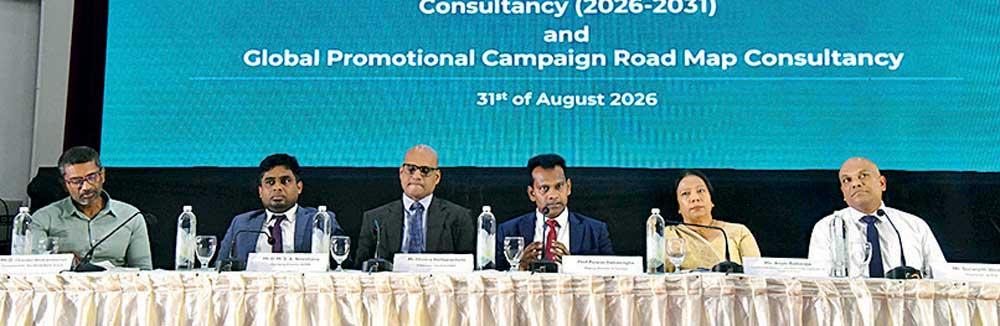
Sri Lanka Tourism yesterday launched two World Bank-supported consultancy assignments aimed at reshaping the country’s tourism strategy and international promotional approach, with a stronger focus on attracting higher-spending visitors and generating greater economic value from the sector.
The National Tourism Strategic Planning Consultancy for 2026–2031 will develop a five-year framework covering tourism demand and supply, investment requirements, regulatory and institutional reforms, skills development, marketing and implementation.
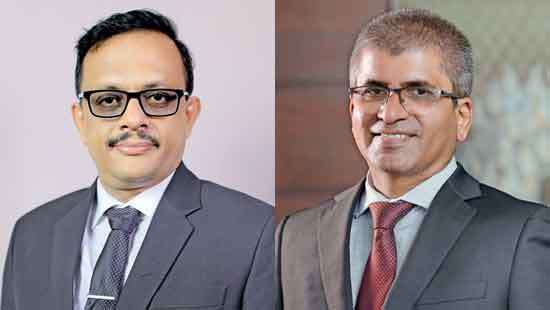
The assignment has been awarded to a joint venture between Spain-based Aninver Development Partners and Sri Lanka’s EML Consultants PLC.
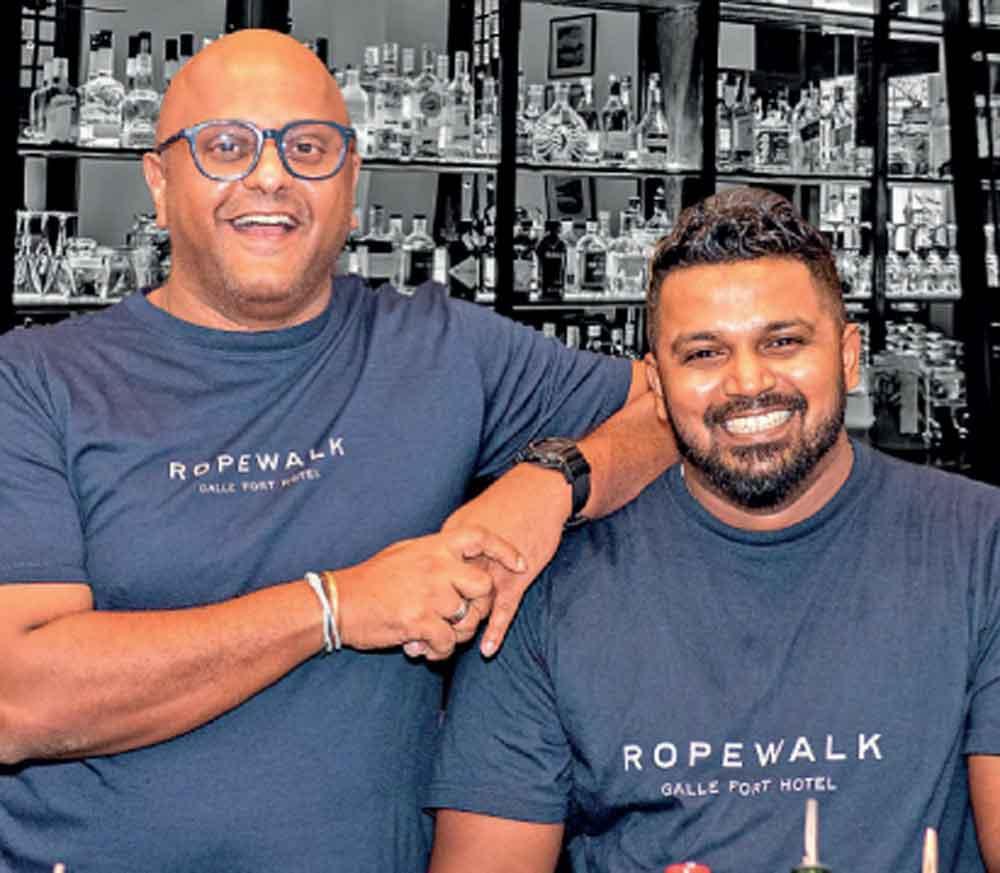
A separate Global Destination Communication Campaign Road Map Consultancy will formulate a five-year international promotional strategy based on market intelligence, destination analysis and global benchmarks. The consultancy has been awarded to US-based Skift Inc. and Sri Lanka’s MTI Consulting.
Both initiatives are supported by the World Bank’s Grant Facility for Project Preparation and are intended to provide a more coordinated approach to the country’s tourism development and global positioning.
Moving beyond tourist numbers
Foreign Affairs, Foreign Employment and Tourism Deputy Minister Prof. Ruwan Ranasinghe said the initiatives reflect a shift away from measuring tourism success purely through visitor arrivals.
“We are no longer interested only in volumes. We are a small island nation with sensitive ecological settings, a small population and fragile cultural practices and heritage,” he said.
“For an island of this size and type, I think five million tourists would be the maximum. Now, however, we need to focus on value.”
The national strategy will examine tourism products and growth opportunities across the country while identifying the investment required to expand the sector sustainably.
It will also conduct a skills-gap assessment and review and modernise the curriculum of the Sri Lanka Institute of Tourism and Hotel Management. Improvements to tourism data and digital systems will form another component of the strategy.
Targeting higher-value travellers
The global promotional roadmap will focus on strengthening Sri Lanka’s destination positioning, diversifying source markets and developing targeted campaigns aimed at higher-spending visitor segments.
World Bank Lead Private Sector Specialist for South Asia Natasha Kapil said stronger data and market intelligence would be essential to developing more effective tourism campaigns.
“We have witnessed a major shift in the types of tourists arriving on the island,” she said.
“Once we have gathered and analysed more intelligence and data, we will be able to develop much more targeted marketing approaches for the higher-spending visitor segments in Colombo and the other major tourism areas.”
The emphasis on visitor value comes as Sri Lanka seeks to increase the economic contribution of tourism while managing the environmental and cultural pressures associated with rapid growth in visitor numbers.
Part of a wider tourism programme
The two consultancies will complement the World Bank’s broader tourism initiatives in Sri Lanka, including the proposed US$77 million Thrive Colombo operation.
The project is intended to position Colombo as a regional short-break destination capable of attracting visitors seeking 48- to 72-hour getaways.
Together, the initiatives are expected to provide Sri Lanka with stronger market intelligence, improved tourism planning and a more focused international communications strategy.
Implementation remains the key challenge
While welcoming the assignments, Prof. Ranasinghe stressed that producing another strategy document would not be enough.
“We do not need just another report. We already have hundreds of them,” he said.
“We need to implement these proposals on the ground and begin delivering results.”
The comment highlights one of the central challenges facing Sri Lanka’s tourism sector: translating strategic recommendations into measurable improvements in investment, infrastructure, skills, destination development and visitor spending.
With the new strategy and promotional roadmap covering the 2026–2031 period, Sri Lanka is seeking to build a tourism model that prioritises value over volume, while protecting the island’s environmental and cultural assets and strengthening the sector’s contribution to the wider economy.
Image Disclaimer: Images used in this article are the property of their respective copyright holders and rightful owners. No ownership is claimed over the images.