
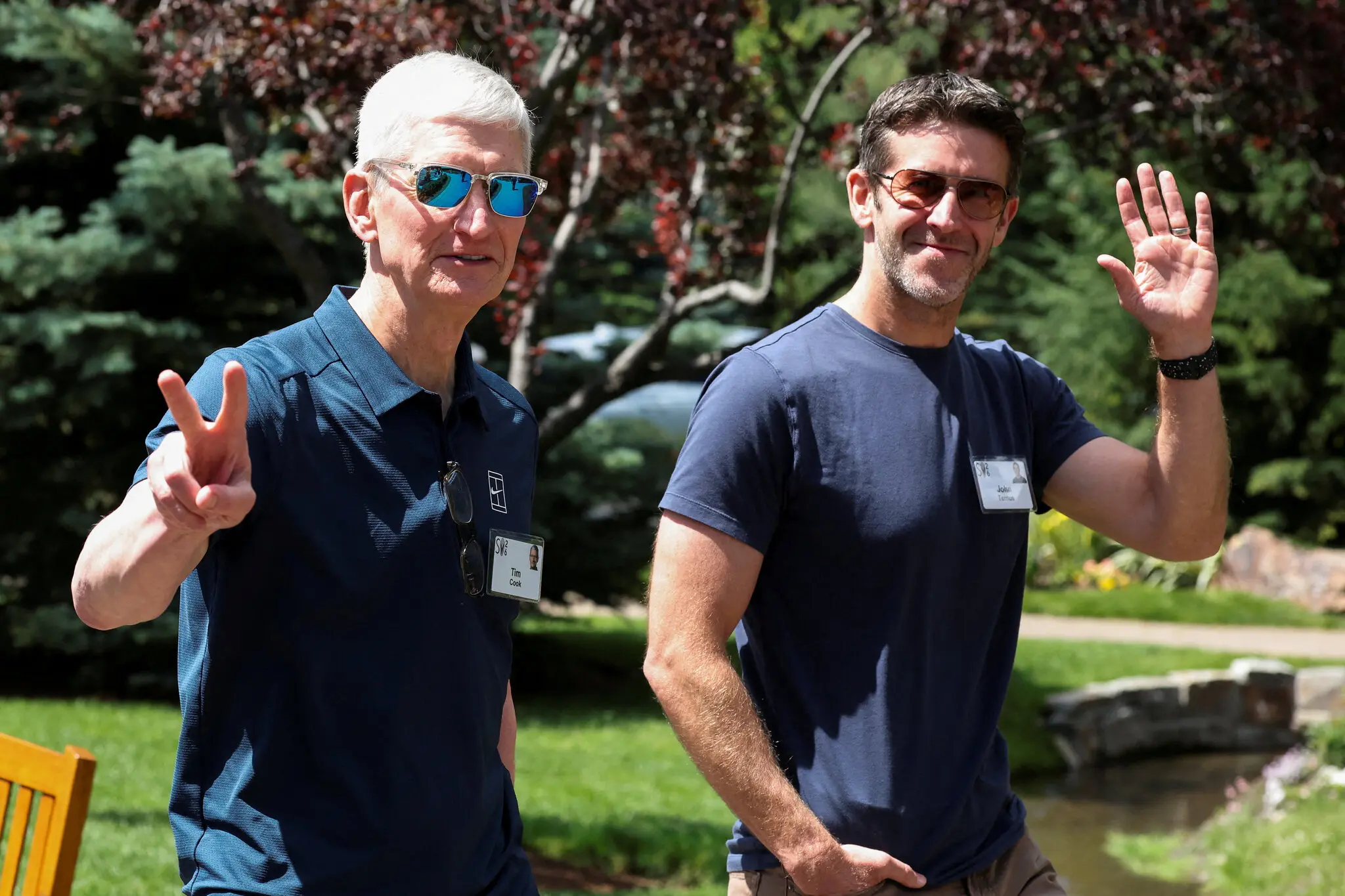
Apple enters a defining new chapter as John Ternus becomes CEO, inheriting a technology giant facing leadership changes, an aggressive AI race and growing pressure to deliver its next breakthrough product.
Apple has officially entered a new era.
On Tuesday, John Ternus became Apple’s chief executive officer, taking over from Tim Cook, who led the company for 15 years. Cook will remain closely connected to Apple as executive chair, creating a leadership structure that combines continuity with a new generation of management.
While the transition has been carefully planned for years, Ternus is stepping into the role at a particularly important moment. Apple is facing major changes across its leadership ranks, growing competition for engineering talent and perhaps its most significant technology challenges in years.
The new CEO will have to preserve what has made Apple financially successful while convincing consumers that the company still has the ability to surprise them.
A Carefully Planned Change at the Top
Cook’s departure from the CEO position marks the end of one of the longest leadership eras in Apple’s history.
Since succeeding Steve Jobs in 2011, Cook transformed Apple into one of the world’s most valuable companies while expanding its services business and maintaining the enormous global popularity of products such as the iPhone, Mac, Apple Watch and AirPods.
Ternus now inherits that enormous legacy.
The transition is not, however, a complete break with the past. Cook, now 65, will continue as executive chair and is expected to remain involved in areas including Apple’s relationships with governments and policymakers.
That arrangement could provide valuable institutional knowledge, but it also creates an unusual challenge for the new CEO: how do you establish your own vision when your predecessor is still in the room?
Ternus Faces an Apple in Transition
Ternus, 51, has spent years inside Apple and is hardly an outsider.
His background is particularly important because he previously led the company’s hardware engineering organisation. That experience gives him deep knowledge of Apple’s product-development culture at a time when hardware is undergoing significant changes.
Apple has already reorganised parts of its hardware leadership structure.
Johny Srouji, the company’s longtime chip leader, has taken on an expanded position as chief hardware officer. The changes bring together teams responsible for hardware engineering and hardware technologies, potentially giving Apple a more unified approach to developing its next generation of devices.
But the restructuring comes alongside a series of departures.
Several senior hardware executives have left Apple for other technology companies, while Apple has also experienced significant employee movement at lower levels.
One particularly notable destination has been OpenAI, which has attracted hundreds of former Apple employees. Apple’s legal filings have highlighted the scale of the talent movement, particularly following OpenAI’s acquisition of the design company founded by former Apple design chief Jony Ive.
For Ternus, retaining Apple’s best engineers and designers could become one of his biggest management priorities.
The AI Problem Apple Can No Longer Ignore
Perhaps Ternus’s most complicated challenge is artificial intelligence.
The technology industry has been transformed by the rapid development of generative AI, with companies such as OpenAI, Google and others racing to build increasingly powerful AI products and assistants.
Apple has taken a more cautious path.
While the company has introduced AI features across its ecosystem, its progress has not always matched the expectations created by the wider AI boom. That has left Apple under pressure to demonstrate that it can compete in a field that could fundamentally change how people interact with technology.
For Ternus, the question is no longer simply whether Apple should embrace AI.
It is how aggressively Apple should do it — and how deeply AI should reshape its products.
The answer could influence everything from the iPhone and Siri to Apple’s software platforms and future devices.
A Foldable iPhone Could Set the Tone
Ternus is also taking over just as Apple appears poised to make a major change to its most important product.
Apple is expected to introduce a foldable iPhone, representing one of the biggest physical redesigns of the iPhone in years.
The significance goes beyond the product itself.
The iPhone has traditionally evolved through improvements to its camera, processor, display, battery and software rather than dramatic changes to its basic form. A foldable model would signal Apple’s willingness to enter a category that competitors have already explored.
That makes the product an important early test for Ternus.
If Apple can make the foldable iPhone feel polished, useful and distinctly Apple, it could provide the kind of excitement the company has been searching for.
If it fails to capture consumers’ imagination, questions about Apple’s ability to lead the next major wave of hardware innovation could become louder.
Can Apple Still Surprise the World?
This may ultimately be Ternus’s biggest challenge.
Apple is no longer the disruptive young technology company it once was. It is a multitrillion-dollar corporation with an enormous installed customer base and a business that depends heavily on predictable execution.
That scale is a strength — but it can also make experimentation more difficult.
The new CEO therefore faces a delicate balancing act.
Apple must continue protecting the financial discipline and operational consistency that characterised the Cook years while taking enough creative risks to produce products that feel genuinely new.
That could mean making difficult decisions about technologies Apple has already explored, including its mixed-reality ambitions and projects that have previously been abandoned.
The Cook Question
The relationship between Cook and Ternus may become increasingly important as Apple’s strategy evolves.
So far, both executives have presented the transition as a smooth and cooperative process. Their public appearances together have reinforced the impression that there is no immediate conflict between the outgoing and incoming leaders.
But leadership transitions are ultimately tested when difficult decisions arrive.
What happens if Ternus wants Apple to make a major investment in AI that Cook would approach differently?
What if the new CEO wants to revive a technology project that was previously abandoned?
Or what if Ternus decides that Apple needs to move away from an established strategy?
The answers could determine whether Apple’s unusual leadership arrangement becomes a model for a successful succession or a source of tension.
A New Chapter for Apple
John Ternus is not taking over Apple at a quiet moment.
He inherits a company confronting an extraordinary combination of challenges: AI, leadership turnover, talent competition, new hardware categories and growing expectations for its next breakthrough.
At the same time, he has something most incoming CEOs could only dream of — one of the world’s strongest brands, an enormous customer ecosystem and decades of technological expertise behind him.
The real test will be whether Ternus can use those advantages to create something that feels unmistakably new.
Tim Cook built an Apple known for scale, efficiency and extraordinary financial performance.
Now John Ternus has the opportunity — and the pressure — to define what the next Apple looks like.
And with AI reshaping technology and new iPhone designs potentially around the corner, his first years as CEO could prove to be among the most consequential in the company’s modern history.
Image Disclaimer: Images used in this article are the property of their respective copyright holders and rightful owners. No ownership is claimed over the images.