
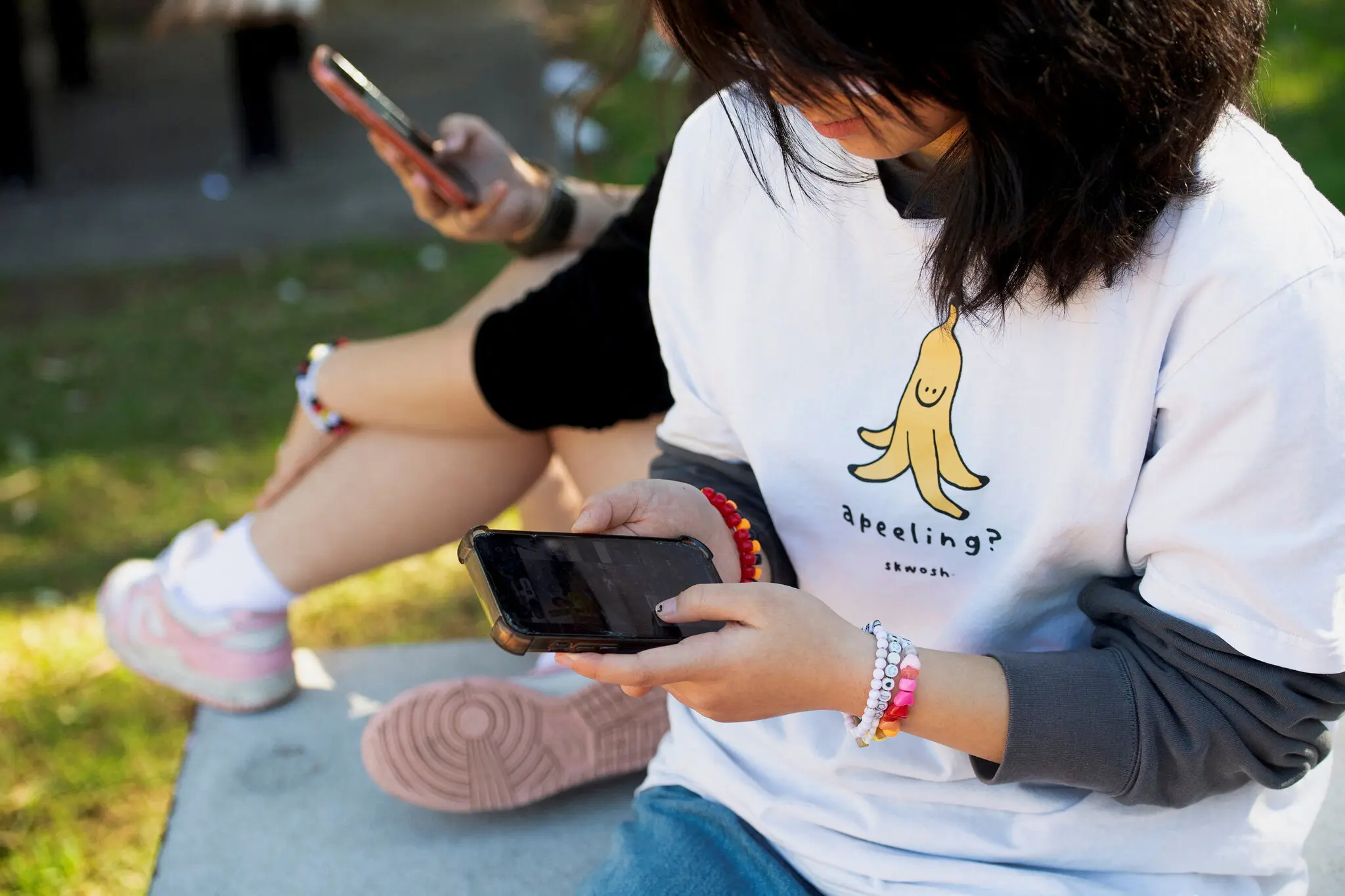
From Australia to Indonesia and Malaysia, governments are tightening rules around children’s access to social media. But as these restrictions spread, questions over effectiveness, privacy and children’s rights are becoming harder to ignore.
Social media has become an increasingly complicated part of childhood.
Platforms can help young people stay connected with friends, discover communities and access information. At the same time, concerns about addictive features, harmful content, cyberbullying and online safety have pushed governments around the world to consider stronger restrictions.
The result is a growing global movement to limit children’s access to social media.
Around 40 countries are currently debating, proposing or implementing measures aimed at restricting social media use among young people. Australia has already introduced one of the world’s most prominent age-based restrictions, while countries including Indonesia and Malaysia have followed with their own approaches.
But there is a growing problem at the centre of the debate:
Do social media bans actually work?
Why Governments Are Targeting Social Media
The push for restrictions is largely driven by concerns about children’s wellbeing and online safety.
Social media platforms are designed to keep users engaged. Features such as endless scrolling, automatic video playback and frequent notifications can encourage people to spend longer periods online.
For children and teenagers, critics argue that these systems can be particularly difficult to manage.
Governments have also pointed to the availability of harmful content, including pornography, cyberbullying, scams and material that could negatively affect young people’s mental health.
These concerns have made children’s social media use a major political and public-policy issue.
Australia Became the Biggest Test
Australia introduced legislation designed to prevent children under 16 from accessing certain social media platforms, making it one of the world’s most closely watched experiments in regulating children’s online activity.
However, early findings suggest that the restrictions have struggled to completely keep young people away from the platforms.
A survey conducted several months after implementation found that more than 80% of surveyed Australian children reported using at least one service covered by the restrictions.
Young users can potentially bypass restrictions through methods such as VPNs or by finding ways around age-verification systems.
That has raised doubts about whether an outright ban can realistically prevent teenagers who are already active online from continuing to use social media.
Yet the policy has not been universally dismissed.
Some parents say restrictions can still be useful because they give families additional support when deciding when children should be allowed onto social platforms. Even if older teenagers find ways around the rules, supporters argue that restrictions could make it harder for younger children to join in the first place.
Indonesia and Malaysia Face Similar Challenges
Australia is not alone.
Indonesia began implementing restrictions for children under 16 in March, while Malaysia started enforcing its own measures in June.
Both countries have faced difficulties involving age verification and cooperation from major technology companies.
The challenges highlight a fundamental problem with age-based social media restrictions: the internet does not have a simple front door.
Determining someone’s age online can be complicated, particularly when platforms and governments attempt to distinguish between adults and children without collecting excessive amounts of personal information.
The Privacy Problem
Age verification may help governments enforce social media restrictions, but it introduces another concern — privacy.
Many systems designed to establish a person’s age require users to provide some form of personal information.
Privacy advocates warn that collecting sensitive information could create new risks if that data is stored improperly, leaked or misused.
There is also a broader question about anonymity.
For many people, being able to participate online without revealing their identity is an important part of free expression. Critics fear that mandatory age checks could weaken that anonymity for everyone, not just children.
Human rights organisations have therefore questioned whether blanket restrictions are the best way to protect young people online.
Could Bans Affect Children’s Rights?
Opponents of social media bans argue that young people also use online platforms for legitimate reasons.
Social media can provide access to news, educational resources, communities and support networks. For teenagers who feel isolated in their offline lives, online communities can sometimes be particularly important.
Critics therefore argue that removing access altogether could prevent young people from participating in conversations about issues that affect them.
The disagreement is ultimately about where governments should draw the line between protecting children and preserving their rights to information, communication and expression.
Are Governments Solving the Wrong Problem?
Perhaps the most significant criticism is that age restrictions may target the user rather than the technology.
Social media platforms themselves contain features that can encourage prolonged engagement. Infinite feeds, recommendation algorithms, autoplay and constant notifications are all designed to keep users coming back.
Some experts therefore argue that governments should focus on forcing technology companies to change these systems rather than simply preventing children from accessing the platforms.
That approach could potentially address the underlying design choices affecting users of all ages.
However, it could also create a much bigger confrontation with the business models of social media companies, many of which depend heavily on keeping users engaged.
The Mental Health Debate Is More Complicated
Mental health is one of the strongest arguments used to support restrictions on children’s social media use.
Research has linked very high levels of social media use with poorer mental health outcomes among young people. One widely cited U.S. government advisory has highlighted evidence that adolescents spending more than three hours a day on social media may face significantly higher risks of certain mental health problems.
But researchers continue to debate whether social media itself is the direct cause.
Some studies suggest the relationship may work in both directions. Young people experiencing mental health difficulties may also be more likely to spend significant amounts of time online.
Other researchers have suggested that broader changes in childhood — including fewer opportunities for independent play, outdoor activities and unsupervised social interaction — could also contribute to declining wellbeing.
That makes it difficult to reduce a complicated mental health issue to one simple variable: screen time.
Why the Restrictions Continue Anyway
If bans have enforcement problems and create privacy concerns, why are governments still pursuing them?
The answer may be that policymakers see restrictions as a starting point rather than a perfect solution.
Parents increasingly want help managing their children’s online lives, while governments face pressure to respond to concerns about harmful content and addictive technology.
Even an imperfect restriction can also delay children’s entry into social media during an important stage of development.
The debate is therefore not simply about whether bans work perfectly.
It is about whether governments believe the potential benefits of reducing children’s exposure outweigh the practical and civil-liberty concerns created by enforcement.
What Comes Next?
The global movement toward children’s social media restrictions is unlikely to disappear soon.
Instead, governments may experiment with different approaches — from strict age limits and stronger parental controls to platform-design regulations and improved content moderation.
The coming years will reveal which strategies actually make a measurable difference.
For now, one thing is becoming increasingly clear: the question is no longer whether governments should regulate children’s relationship with social media, but how they can do it effectively without creating a new set of problems.
A successful policy may ultimately need to do more than block an account.
It may need to make social media itself a safer environment for young people.