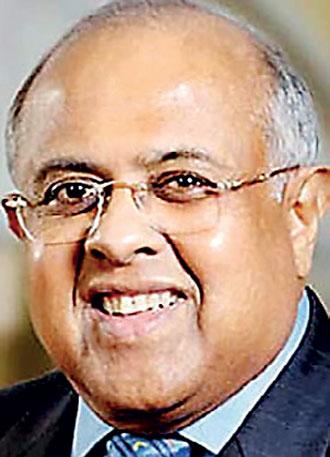
Success in business is not always the result of academic excellence, prestigious qualifications or a perfectly predictable career path. The story of Sri Lankan corporate leader Tilak de Zoysa is a striking example of how resilience, practical experience and the ability to work with people can shape a remarkable professional journey.
Born into the prominent de Soysa family and the nephew of businessman and philanthropist Sir Cyril de Zoysa, de Zoysa had strong business connections from an early age. However, his own path to corporate leadership was far from conventional.
During his time at Royal College, Colombo, de Zoysa showed a strong interest in sports. He became the Royal Primary Wrestling Champion and was also involved in cricket and rugby. His academic journey, however, was considerably more challenging. He failed the GCE Ordinary Level examination twice before eventually passing on his third attempt with impressive results.
Instead of entering university, he chose to gain practical experience. That decision became one of the most important turning points in his life.
For seven and a half years, de Zoysa worked in the tea plantations of Maskeliya. His experience covered almost every stage of tea production, including planting and maintaining tea bushes, plucking leaves, weighing the harvest, processing the tea and preparing it for auction.
The plantation environment also gave him an early education in leadership. Working closely with employees and dealing with labour-related challenges taught him the importance of discipline, patience and treating people with respect. These experiences would later influence the way he managed companies and interacted with employees throughout his corporate career.
His professional journey then moved beyond the plantations.
In 1966, de Zoysa joined Commercial Engineering Company as a clerk, earning a monthly salary of Rs. 200. His duties were practical and hands-on. Among them was travelling by bus to purchase essential construction materials such as steel and cement.
He subsequently joined his brother’s refrigerator business, where he gained experience in both sales and after-sales service. By 1971, he had progressed to the position of Sales and Service Manager.
A major transformation in his career came in 1978 when his father asked him to return to Associated Motorways (AMW), a family-controlled company facing difficult business conditions at the time. The organisation employed around 1,400 people, and de Zoysa entered the company at a period when strong leadership and new business opportunities were particularly important.
AMW eventually became one of the most significant chapters of his corporate career.
His work involved strengthening the company’s international relationships, including its association with Nissan. During a visit to Japan with his father, de Zoysa became involved in developing closer links with the Japanese automotive giant. He later rose to become Deputy Chairman and Managing Director of AMW.
His tenure was also associated with important developments in Sri Lanka’s automobile and tyre industries. One notable example was the introduction of CEAT tyres to the Sri Lankan market.
During a visit by CEAT’s Managing Director to Sri Lanka, de Zoysa arranged a visit to AMW’s tyre rebuilding facility in Kalutara, followed by a visit to the Kalutara Bodhiya, which has a significant connection to his family’s philanthropic history. The relationship developed from there, with a subsequent visit to India helping formalise the partnership.
De Zoysa was also involved in establishing and strengthening relationships with several international automotive brands, including Maruti, Suzuki, Yamaha and Renault.
His corporate influence eventually extended far beyond the automobile industry.
Throughout his career, de Zoysa served as chairman of 11 companies, with his leadership spanning organisations such as Carson Cumberbatch, Associated CEAT, Dutch Lanka Trailers, Trinity Steel and Wipro International.
His contribution to Sri Lanka’s private sector also reached the country’s major business chambers. He served as Chairman of both the Ceylon Chamber of Commerce and the National Chamber of Commerce, a distinction achieved by only a relatively small number of business leaders.
His corporate responsibilities further included serving on numerous boards and becoming a member of the Monetary Board of the Central Bank of Sri Lanka. His international profile also expanded through diplomacy, including his appointment as Consul of Croatia.
However, business leadership was only one side of de Zoysa’s career.
Humanitarian service became another major part of his public contribution. He spent 13 years as Chairman of HelpAge Sri Lanka before becoming the first Asian Chairman of HelpAge International in the United Kingdom. He later served as the organisation’s Global Ambassador.
His humanitarian responsibilities became particularly significant following the devastating 2004 Indian Ocean tsunami. De Zoysa was involved in overseeing the distribution of substantial international assistance, placing him in a position where transparency, accountability and responsible management of donor funds were critical.
His international humanitarian and public contributions also earned recognition from Japan. In 2004, he received the Order of the Rising Sun, Gold Rays with Neck Ribbon, an honour awarded to foreign nationals for distinguished contributions.
Despite holding senior positions across major corporations, international organisations and diplomatic circles, the principles behind de Zoysa’s leadership remained rooted in the practical lessons he learned early in his career.
He has emphasised the importance of listening to different viewpoints before making decisions, remaining impartial and accepting responsibility for one’s actions. He also believes that senior leaders should give capable executives the freedom to make decisions rather than creating an organisation where every decision depends on the person at the top.
For de Zoysa, effective leadership is ultimately about developing people who can think independently and take responsibility for their own decisions. He also believes recognition should go to the individuals who actually contributed to an achievement.
His philosophy towards work can be summed up in a simple principle: “Just do whatever you do properly.”
That straightforward idea reflects a career that took an unconventional route from the very beginning.
De Zoysa’s journey moved from academic setbacks at school to years of practical experience in the tea industry, followed by entry-level corporate work and eventually leadership positions at some of Sri Lanka’s most established companies and business institutions.
His story demonstrates that academic setbacks do not necessarily determine a person’s professional future. Qualifications can provide valuable opportunities, but they are not the only ingredients required to build a successful career.
Practical experience, resilience, integrity, responsibility and the ability to understand and lead people can be just as important. For aspiring business leaders, Tilak de Zoysa’s career stands as a reminder that success does not always follow a straight line—and sometimes the unconventional path can become the most valuable education of all.