
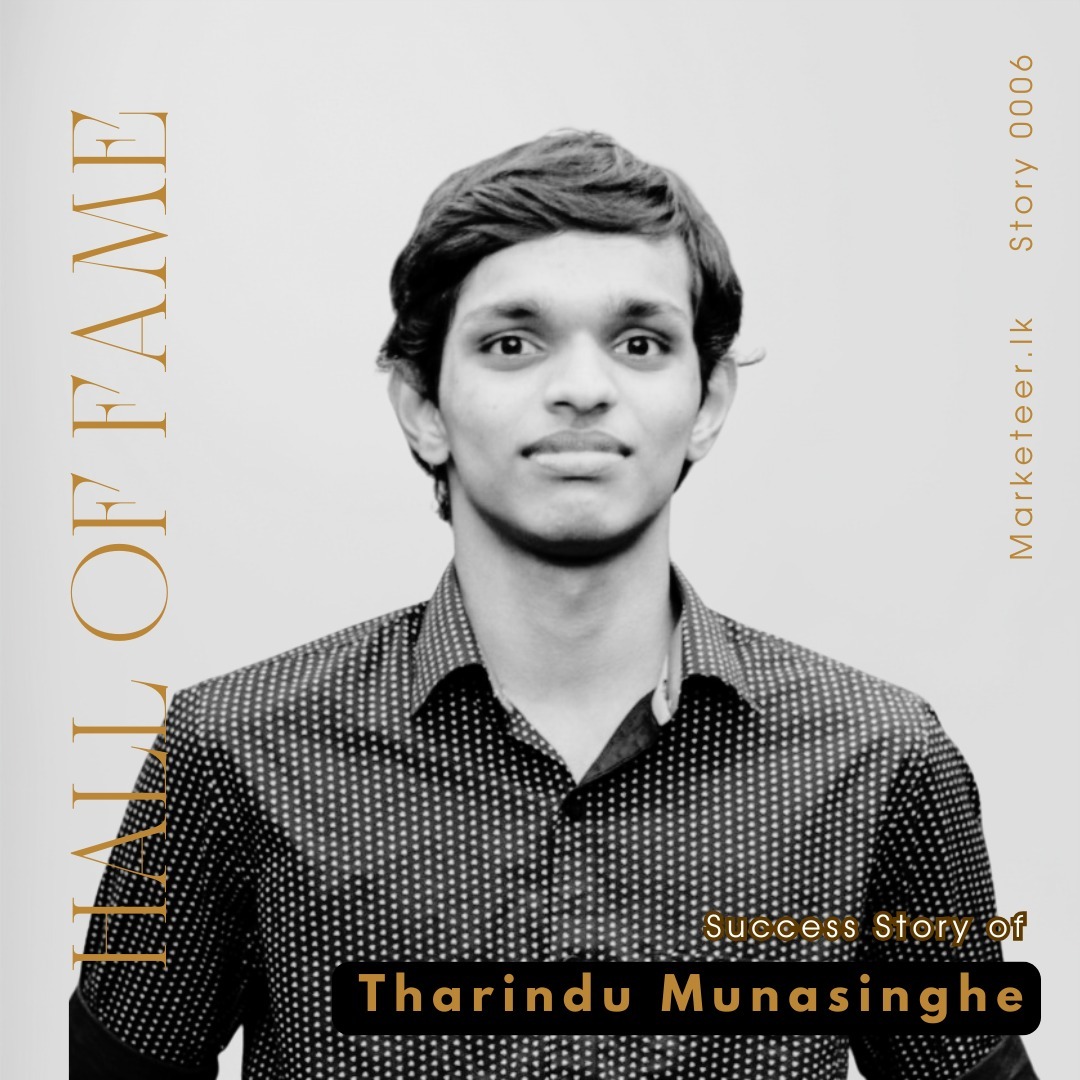
From childhood experiments and international recognition to founding Levelstair while still at university, Tharindu Deepaloka Munasinghe’s journey is a powerful reminder that remarkable things begin when curiosity is matched with the courage to create.
“Ideas are only worth something when they are executed. Break the idea into its smallest essential piece, build that first, and keep moving forward, one level at a time.”
Tharindu Deepaloka Munasinghe
For most people, playing a video game is simply a form of entertainment. For Tharindu Deepaloka Munasinghe, it became an invitation to look deeper.
While others focused on winning the battle, he found himself wondering how the game knew that a tank had been spotted, how individual parts of a vehicle could register damage, and how a virtual bullet followed its trajectory. Those questions about line of sight, 3D models and game mechanics opened a door that would eventually lead him far beyond the role of a player.
Today, Tharindu is the Founder of the Levelstair Community, a Director of Levelstair Studio and a final-year BSc (Hons) Computer Science undergraduate at the University of Colombo School of Computing. Yet his story is not defined by titles alone. It is the story of a multidisciplinary creator who turned his fascination with technology into a growing platform for Sri Lankan game developers, artists, animators and extended-reality innovators.
More importantly, it is the story of a young leader who decided that if opportunities did not exist, he would help create them.
A Childhood Built Around Curiosity
Tharindu grew up in a supportive family that gave him the freedom to explore without placing unnecessary pressure on him. However, that freedom came with one important question: “Whatever you are doing, are you genuine about it?” That question became a quiet compass throughout his life.
Long before he became involved in game development, Tharindu was already moving between creativity, science and technology. He wrote more than 20 song lyrics, with one receiving a four-star certificate of appreciation from the UK Songwriting Contest. He wrote two English fiction books, studied music, played the guitar up to the Bhatkhande Madhyama examination and earned a silver medal for organ performance at a Festival of Arts competition.
At just 16, he completed his first research and invention project, which received a bronze award in the Environmental Science category at the International Young Scientists Innovation Exhibition 2018 in Malaysia.
There was no single label that could contain his curiosity. He was a writer, musician, designer, researcher and technology enthusiast, often all at once.
Computers had fascinated him from the moment the first PC arrived at his home. He learnt Microsoft Office from his father, helped troubleshoot technical problems and eagerly waited for permission to play games on the family computer. His early gaming memories ranged from Nokia’s Snake and Bounce to Windows 98 Chess, Pinball and browser-based Adobe Flash games. The first PC game he installed separately was Need for Speed II SE, opening the door to many other genres.
However, gaming became more meaningful when it became social and story-driven. World of Tanks Blitz was among the first multiplayer games he enjoyed with his closest friends, while Genshin Impact introduced him to the emotional depth of storytelling within games. Gradually, he began to see games not merely as things to be played, but as entire worlds waiting to be understood.
A Boy Who Wanted Every Door Open
When it came time to choose a direction after school, Tharindu was not chasing one burning ambition. He was following what did not close doors. Chemistry at Advanced Level never appealed to him, so he studied IT instead, landing in the “common subject stream.” Computer Science, when the moment came, felt like the natural next step — not a narrow specialisation, but, in his words, “the entire thing about computers,” a field wide enough to hold everything he was still curious about.
And there was a lot he was still curious about. Long before Levelstair existed, Tharindu had imagined himself building a string of other careers entirely: freelance design, freelance writing, editing, video and audio editing, even automobile and marine engineering all crossed his mind at different points. Technology, in the end, was simply the widest road on offer: one broad enough to let him keep exploring instead of forcing him to commit to a single lane too soon.
From Playing Games to Building Them
Tharindu’s path into game development was not entirely planned. His original ambition was to become an extended-reality (XR) application developer. However, his first beginner XR course introduced their students to Unity through game development. Because games and XR applications often share similar technologies, he decided to explore both.
| The transition was challenging. He had experience with C, C++, web application technologies and conventional software-development environments. Suddenly, he was working with 3D rendering engines and C#, a language that was not familiar to him at the time.
His first creation was technically simple, but it changed the direction of his journey. |
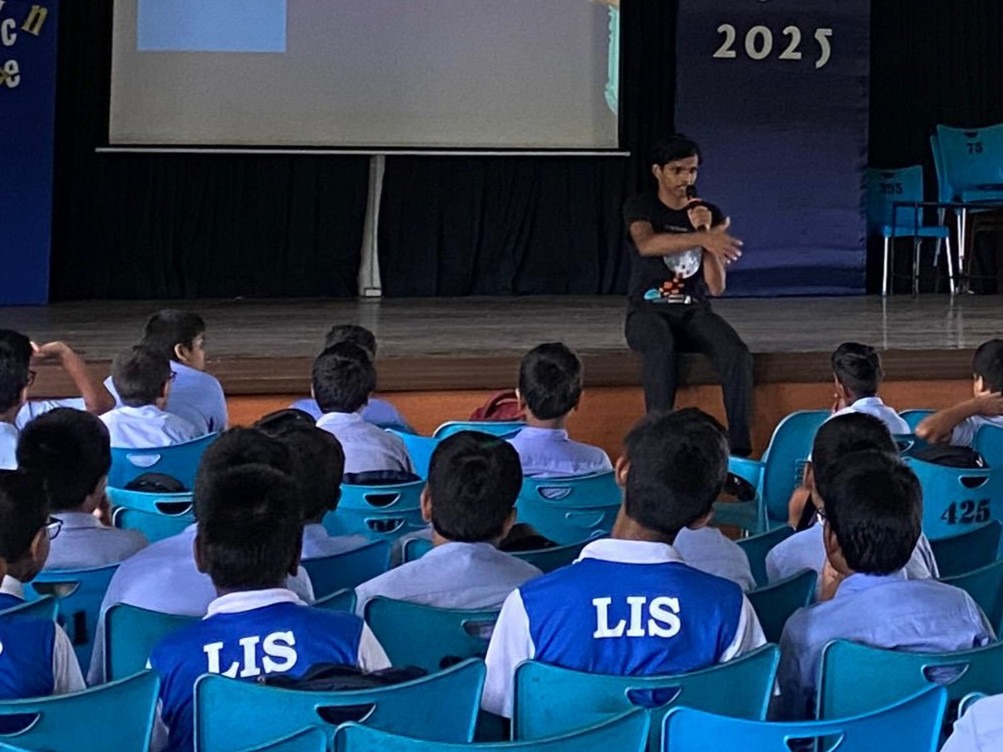 |
| After discovering the concept of a “game jam” — a hackathon-style event in which participants create a game within a limited time — Tharindu entered PP Jam #4. The challenge required participants to include zombies and a power-up mechanic. His answer was an endless-runner-style 3D game called Zombie Gets Paved. The player drove a taxi, slammed into zombies and avoided oncoming traffic.
It may not have been a blockbuster production, but it represented something far more important: the moment Tharindu stopped waiting to become a developer and began creating as one. “I like seeing people entertain themselves through something I made, whether it is a song, an edited video or a simple game.” |
 |
The Beginning of Levelstair
Levelstair was born on 14 August 2024. Its beginnings were modest, but its purpose was ambitious: to build a genuine community around game development and creative technology in Sri Lanka.
One of the earliest people to believe in the idea was Savith Penangama, whose words gave Tharindu the push he needed: “The only reason to fail is if there aren’t any game-development enthusiasts. But if there aren’t any, let’s make some.” That belief became the foundation of Levelstair.
What began as a community gradually evolved into a registered studio. The decision to establish a company was partly practical. When Tharindu and his team approached organisations regarding events, they were repeatedly asked the same question: “Who is organising this?” Some potential partners were reluctant to work with university groups, unregistered entities or informal nonprofit initiatives. Registration gave Levelstair the credibility and structure needed to build stronger partnerships.
However, there was another, more personal reason. Tharindu had seen capable university students struggle to secure internships. By establishing a legitimate company, he hoped Levelstair could eventually provide opportunities to young developers who found themselves without another pathway.
This reveals the deeper purpose behind his entrepreneurship. Levelstair was not built only to produce games; it was built to support the people who wanted to create them.
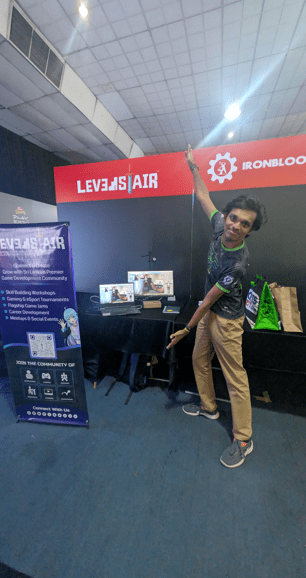
| Today, the Levelstair Community brings together game developers, XR developers, 2D and 3D artists, animators, students, enthusiasts and working professionals. Levelstair Studio provides services in immersive web development, mobile and PC game development, web-based games, AR and VR applications, and animation.
Its long-term vision is bold: to become South Asia’s leading hub for creative-technology builders and innovators. |
 |
Building a Company While Building a Future
Tharindu describes the gap between having an idea and actually running a company as the difference between standing before a desert and an ocean at the same time. You see a problem (the desert) and you believe you can do something with it: plant something, build something, make it liveable. “But you also have to keep looking out at the ocean, to how it behaves,” he says. “It could be calm, a bit rough, or supportive. But it’s also capable of bringing a tsunami.”
Starting a company while completing a Computer Science degree is not an exercise in perfect balance. There have been lectures Tharindu has had to miss, nights when sleep became optional and corporate events he could not attend. There were also occasions when personal time had to be sacrificed for an approaching event or an urgent responsibility.
Yet he refuses the familiar image of the heroic founder doing everything alone. “It is not a one-man show or a one-man army.” He credits his parents, friends from Levelstair community, schoolmates and teachers, university batchmates, lecturers, advisers and fellow directors for making the journey possible.
For Tharindu, balance does not mean giving equal attention to everything at all times. It means recognising what matters most at a particular moment and assigning priorities accordingly. His approach to decision-making is equally considered. Having experienced the consequences of high-risk, “do-or-die” choices, he now places greater value on reversible decisions and backup routes. A question continually guides him: “What if this does not work as we intended?” This is not pessimism. It is preparation.
Lessons the Syllabus Never Listed
Ask Tharindu what his Computer Science degree actually gave him, and the answer is not the curriculum itself. It was the lecturers at the University of Colombo School of Computing who were willing to pause and share their own experiences with any student prepared to speak up and genuinely listen. The supervision he received on group projects, year after year, shaped the way he now builds games and leads teams far more than any single module could.
The most valuable lesson of all, though, was learned nowhere near a lecture hall: financial literacy, picked up the hard way, running a studio with real budgets, real sponsors and real consequences.
Creating Spaces Where Others Can Begin
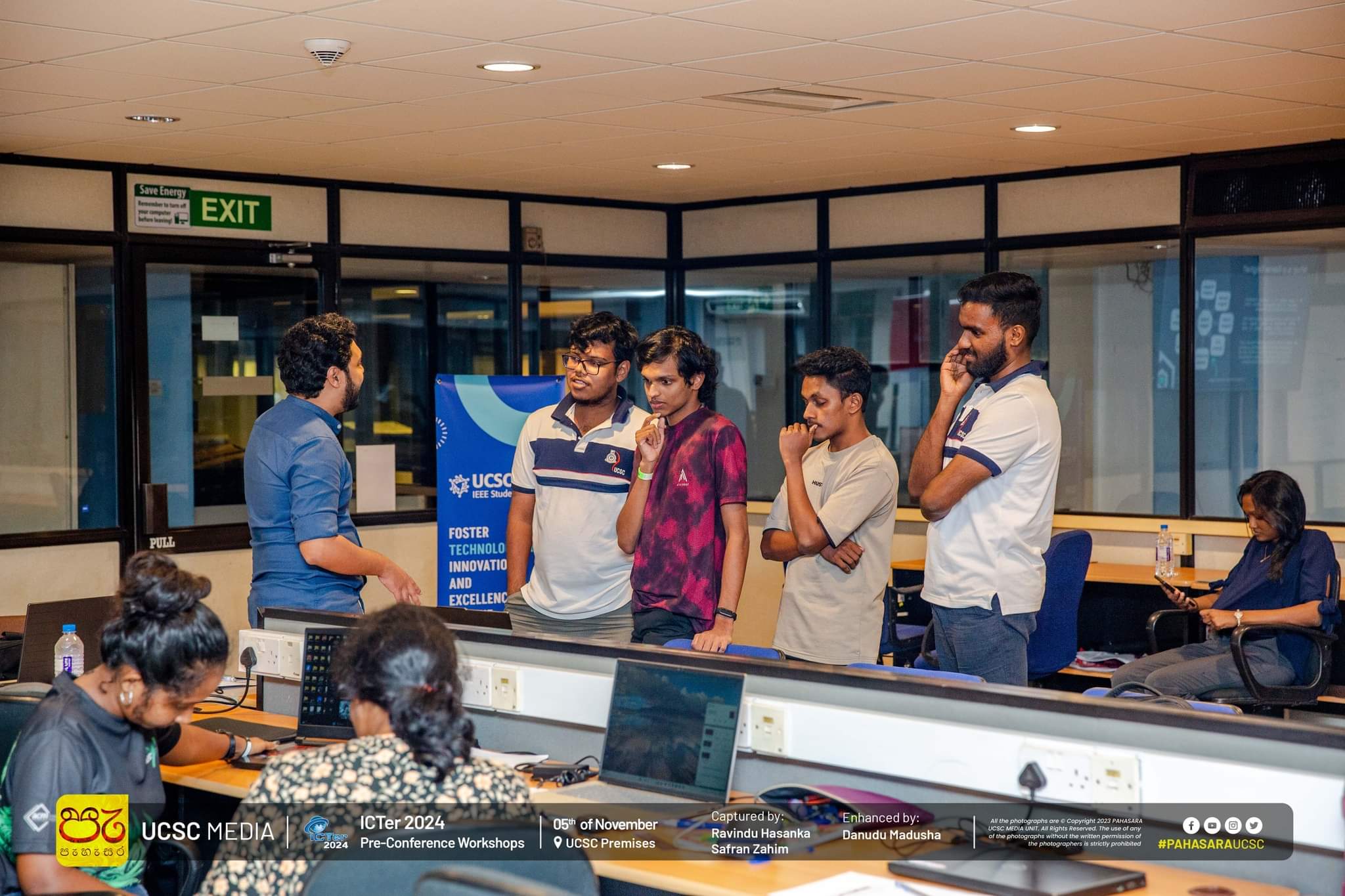
Events have become one of Levelstair’s strongest tools for developing Sri Lanka’s creative-technology ecosystem. The inspiration came from Tharindu’s own first game jam — the excitement of building something within a limited time and receiving encouraging feedback from a supportive community. He wanted other young creators to experience that same sense of possibility.
Level Zero, Levelstair’s beginner-friendly monthly game jam, was created to give newcomers a welcoming point of entry. Its first edition attracted 79 interested participants, although the submissions came from overseas. Later editions began receiving locally developed games from Sri Lankan students — a small but significant indication that the community was taking root.
The EXE All-Island Game Jam took this mission further. Conducted through a collaboration involving government and education-sector support, it attracted 300 registrations, generated 55 ideas and produced 30 playable projects from school and university students.
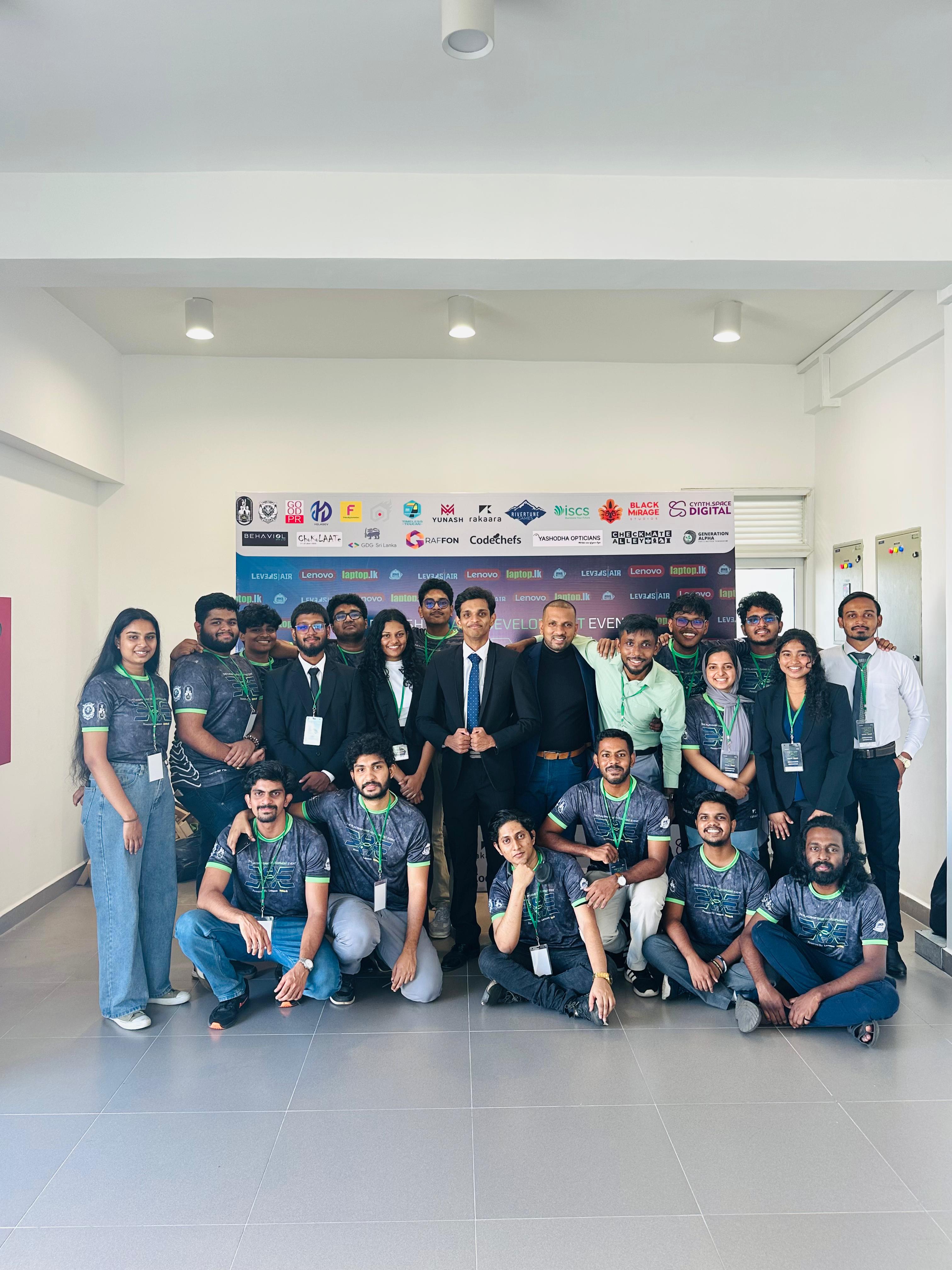
For Tharindu, the most memorable moment was not the announcement of the winners. It came during the final hours, when developers — despite competing for a prize pool — helped one another solve bugs and complete their submissions on time. That spirit of collaboration represents precisely what Levelstair hopes to build: an industry in which another developer’s success is not viewed as a threat, but as progress for the entire community.
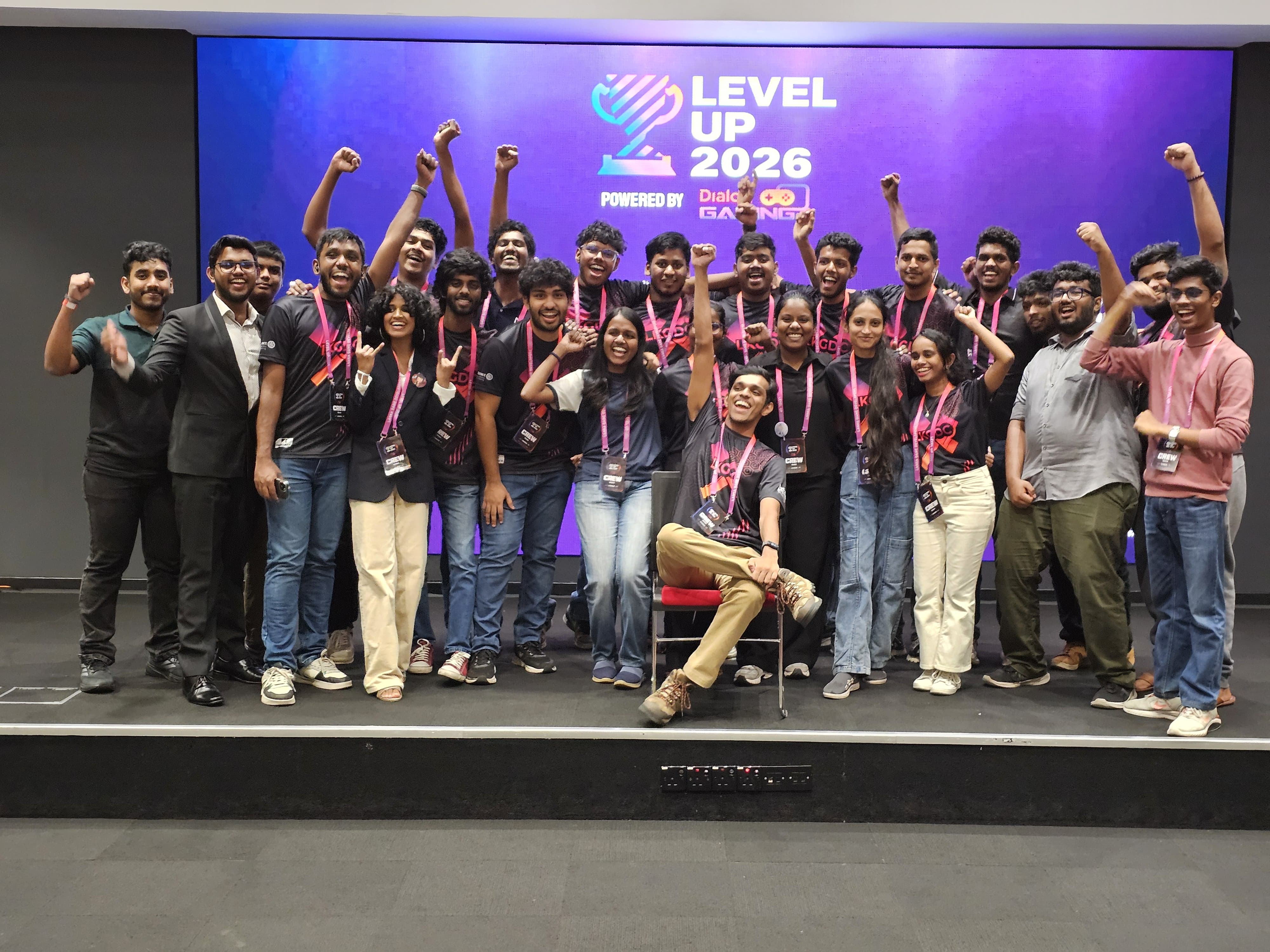
The organisation’s most significant milestone to date was the Lanka Game Developers Conference 2026. It brought students, gamers, content creators, game developers and XR specialists together under one roof, becoming Levelstair’s largest collaboration and network-building achievement so far.

Behind such events are countless calls, emails, designs, sponsor discussions, programme arrangements, technical decisions, venue negotiations and last-minute problems. Tharindu has faced sponsors withdrawing promised support, messages going unanswered and the difficulty of finding venues that match both the event’s needs and its budget. His response to a crisis is direct: “Panicking is not an option. It gets you nowhere.” When problems emerge, the team meets, examines the evidence, shares responsibilities and takes the actions necessary to move forward.
“Make It Exist First”
Not every idea has survived. Some game concepts that initially appeared exciting had to be abandoned because of time limitations or practical constraints. Rather than treating these projects as personal defeats, Tharindu developed a principle that now guides his work: “Make it exist first, then polish it.”
For students with large ambitions, his advice is to resist the temptation to implement everything at once. He compares an idea to a chocolate bar: break it in half, then break it again and again until only the smallest essential piece remains. Build that piece first. It is the core of the idea and the foundation upon which everything else can grow.
He also believes in failing early enough to learn, adjust and begin again. This philosophy has helped Levelstair continue despite its early financial difficulties and the unpredictable realities of building a startup. Tharindu says he cannot recall seriously considering giving up. “Giving up is not even an option after the point where you have poured your life into it.” What sustains him is the history of the work already completed, the knowledge accumulated along the way, the people beside him and the future he still believes can be built.
What Comes Next
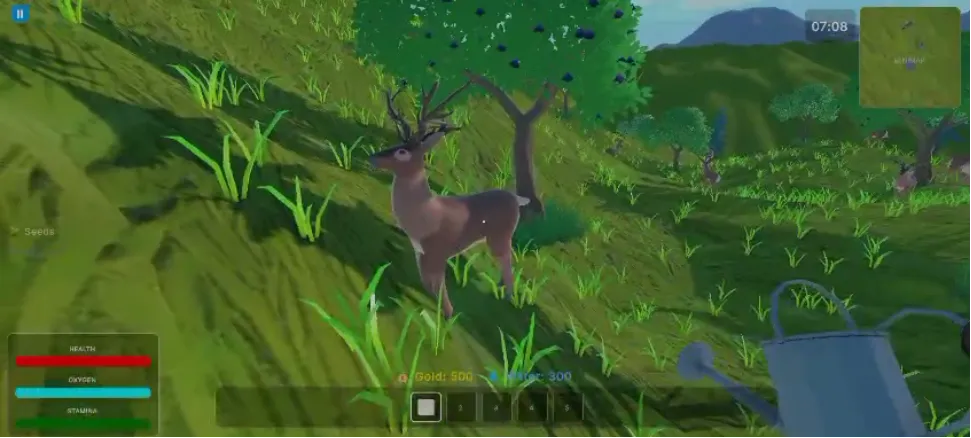
| Levelstair is currently working on several creative projects. Project HDP is a casual comedy game for mobile devices, while Arbourvale is an open repository that allows developers to experiment with simple open-world mechanics such as procedural generation. Project Hit Me is a VR boxing experience designed for physical events, while another game explores Vesak lantern creation.
The studio’s mobile title has reached its alpha stage and is moving towards release following a final beta test. The wider community continues to expand through the monthly Level Zero Game Jam, the EXE All-Island Game Jam, the Night Serpent esports tournament and the Lanka Game Developers Conference. Levelstair also hosts occasional Dungeons & Dragons campaigns, gaming communities and specialised groups for animators and VFX artists. |
 |
Tharindu’s ambition is to stabilise the company, support more local developers, publish games internationally and collaborate with overseas studios. Yet he is equally clear that Levelstair must not attempt to achieve everything at once. Sustainable progress, he believes, comes one carefully built level at a time.
A Call to Recognise Sri Lanka’s Gaming Potential
Tharindu believes Sri Lanka’s game-development sector requires stronger social, educational, governmental and investment support. Game development, he argues, should be recognised as a technology-export service and as a legitimate industry offering meaningful career opportunities.
He calls for Sri Lanka’s school IT curriculum to be modernised and extended across relevant grades so students can understand technology, information access, online privacy, cybersecurity and digital responsibility from an early age.
Awareness is equally important. Although some universities now offer game-development modules or specialisations, students may overlook them because they do not understand the industry or its career potential. Game development is not simply about entertainment. It introduces creators to computer graphics, computer vision, programming, storytelling, animation, design, communication, teamwork and extended reality.
Investors must also understand that creating a production-quality game requires patience. A game cannot always be assessed by the same timelines applied to a conventional software proof of concept. Even a playable demonstration may require weeks or months, depending on its mechanics, genre and technical complexity. The potential exists. What the industry now needs is recognition, informed investment and a generation courageous enough to build.
Advice for Anyone Standing Where He Once Stood
Long before Levelstair had a name, Tharindu had a physics teacher who was willing to sit with his wildest ideas and simply brainstorm alongside him. That experience is why he believes turning an idea into something real while still studying is entirely possible, provided a person finds their own version of that teacher. “There’s always a person that will listen and help you get there,” he says, whether that is a friend, a senior, or a stranger reached through a professional email.
For students who hold back because they lack money, experience, connections or confidence, his advice is specific rather than sentimental. Pitch the idea to an expert, not to an end user. Ask seniors where to find the experience you are missing. Build connections through platforms like LinkedIn or WhatsApp networking groups. As for confidence, he defines it plainly: being brave enough to speak, and strong enough to listen to criticism, understand where it is coming from, and use it to improve.
His advice to aspiring game developers follows the same practical instinct. Create while you are still learning, and resist the urge to postpone. “Make it exist first, then polish it.” Study the industry itself, because it is a gamble, and small teams especially need to stay aware of current trends and their genre’s market. He points young developers toward engines like Unity, Godot and Unreal, alongside browser-based tools such as Phaser, Three.js, Babylon.js and GSAP for interactive web experiences.
To someone facing repeated failure and feeling like their effort is going nowhere, he offers a question rather than a platitude: have you actually recognised your own failures, and improved with each attempt? Sometimes, he says, the right move is to pause and hold an honest retrospective. And sometimes, if a path genuinely proves to be a dead end, that recognition is itself the signal that it is time to change course.
Asked whether he would change anything if he could return to the beginning with everything he knows now, Tharindu’s answer is almost nothing. Every setback, he believes, played its part in shaping who Levelstair has become. If one line sums up everything the journey has taught him so far, it is this: “People can change unprecedentedly, in both good and bad ways.”
The Final Level Has Not Been Written
If Tharindu’s life were a video game, he says it would be called Levelstair. Its main objective would not be to defeat a villain or reach the top alone. It would be to build connections with the other characters, share knowledge and turn collective action into progress.
That answer captures the heart of his journey. Tharindu Deepaloka Munasinghe is building games, but he is also building something larger: a network where young Sri Lankans can discover creative technology, experiment without fear, meet others who share their interests and transform an uncertain passion into a possible profession.
His journey proves that students do not need to wait for graduation, perfect conditions, unlimited funding or complete confidence before beginning. They need the courage to create the first playable version, the humility to accept criticism and the discipline to improve one iteration at a time.
In an industry defined by imagination, Tharindu’s greatest creation may ultimately be the community growing around him. And for Levelstair, this is only the beginning.
“Make it exist first, then polish it.”
Tharindu Deepaloka Munasinghe
Published in Marketeer E-Magazine | August 2026