
The Ceylon Automobile Importers Association is pushing for a comprehensive overhaul of Sri Lanka’s vehicle taxation system in the upcoming Budget 2027, proposing a unified fee structure designed to make cars affordable again for the country’s middle class.
The proposal, which aims to address the severe supply constraints and skyrocketing prices that have locked young professionals out of the automobile market, has already seen robust engagement with key institutional stakeholders.
According to the Household Income and Expenditure Survey (HIES) 2022/23, around 58 percent of Sri Lankan households own at least one vehicle. The breakdown underscores a heavy reliance on two-wheelers and three-wheelers, with motorcycle ownership concentrated in 42.4 percent of households, followed by three-wheelers at 17.6 percent. Meanwhile, passenger cars lag significantly behind, owned by just 14.5 percent of households. Although these penetration rates are likely somewhat higher today given the reopening of vehicle imports and the subsequent recovery in registrations, the data illustrates how four-wheeled mobility remains a luxury for the vast majority. National registry figures show that total registered vehicles reached 8,816,613 by the end of 2025, where motorcycles accounted for 5,177,085 units compared to a mere 973,376 motor cars.
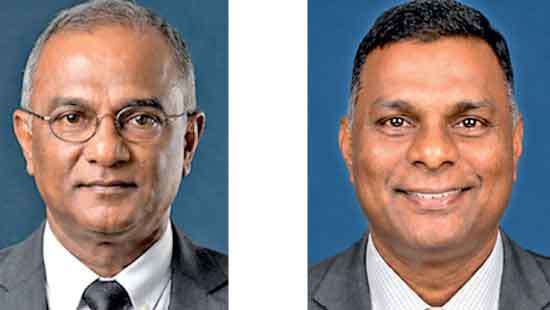
Speaking at the recent press conference held to announce Motor Rally 2026 in Colombo, Ceylon Automobile Importers Association President Prasad Manage revealed that the current taxation framework allows for only a very limited number of vehicle models to enter the market. To rectify this, the association is finalizing a new taxation model to present to the government ahead of the next budget.
“There’s a separate new formula that we are trying to put forward, and we are in the process of presenting it to the government. There will be a strict unified fee for all the imported vehicles,” Manage explained.
The industry body has already begun engaging with macroeconomic regulators regarding this proposed structure. During the event’s Q&A session, association representative Kasun Suriyapperuma confirmed the broad backing being sought for the framework. “Of course, we discussed with the Central Bank, Sri Lanka Customs, and all the relevant bodies,” he stated.
Manage pointed out that highly popular and affordable models, such as the Toyota Vitz and Honda Fit, are currently absent from the market due to prevailing capacity restrictions and surcharges on sub-1000cc vehicles. Furthermore, he highlighted anomalies in the Harmonized System codes, citing the Nissan X-Trail, which is currently classified under the ‘Electric and Other’ category despite being a hybrid.
By restructuring the tax brackets into a unified system, Manage argued the government could increase its overall revenue through higher import volumes while allowing consumers access to vehicles with higher safety standards and exceptional fuel efficiency, such as 1500cc hybrid models that can run over 30 kilometers per liter. Expanding the permitted vehicle range would naturally reduce the intense competition for limited inventory, leading to a stabilization of market prices.
The association’s stance is heavily bolstered by independent economic analyses, which argue that the current tax system creates extensive market distortions. Leading independent economic analyst Murtaza Jafferjee has noted that while taxes are essential to finance public goods, the passenger vehicle excise duty is poorly designed and economically excessive. Jafferjee highlighted that around 2016, the government replaced a value-based excise duty with a specific excise based on engine displacement to reduce under-invoicing. However, subsequent governments layered additional ad valorem taxes, including VAT and luxury taxes, on top of the specific excise duty, erasing the original justification and creating a severely burdensome environment. Furthermore, taxing close substitutes differently heavily distorts consumption decisions, echoing the association’s concerns over irrational categorizations and capacity-based penalties.
Beyond taxation at the border, auto importers raised serious concerns over the tightening of macroprudential measures that hinder prospective buyers. A primary hurdle is the current Loan-to-Value ratio applied to vehicle financing. Industry stakeholders pointed out that under the existing 50 percent restriction, purchasing an Rs. 18 million vehicle requires an upfront cash payment of Rs. 9 million, an impossible hurdle for most salaried professionals who rely on leasing facilities.
This affordability crisis has drastically shifted the aspirations of the country’s emerging workforce.
Addressing the gathering at the rally launch, Singer Finance PLC Managing Director and Chief Executive Officer Thushan Amarasuriya emphasized how the current economic and regulatory landscape has rewritten the milestones of young professionals.
“In the past, a young executive joining a company could buy their first car with the benefits provided by the company, but now it has become a major challenge with the surge in vehicle prices,” Amarasuriya stated. Highlighting the stark reality facing the middle class today, he added, “Now we often see that for a young executive, a motorcycle is the first vehicle they can afford to make their vehicle dream come true.”
Despite these severe economic hurdles, Amarasuriya observed that the underlying aspiration to own a four-door sedan remains remarkably strong among the Sri Lankan public.