The way we work is changing — and businesses that ignore it may struggle to keep up.
A few years ago, the idea of working from home, attending meetings online, or using AI to complete daily tasks felt unusual.
Today? It’s becoming normal.
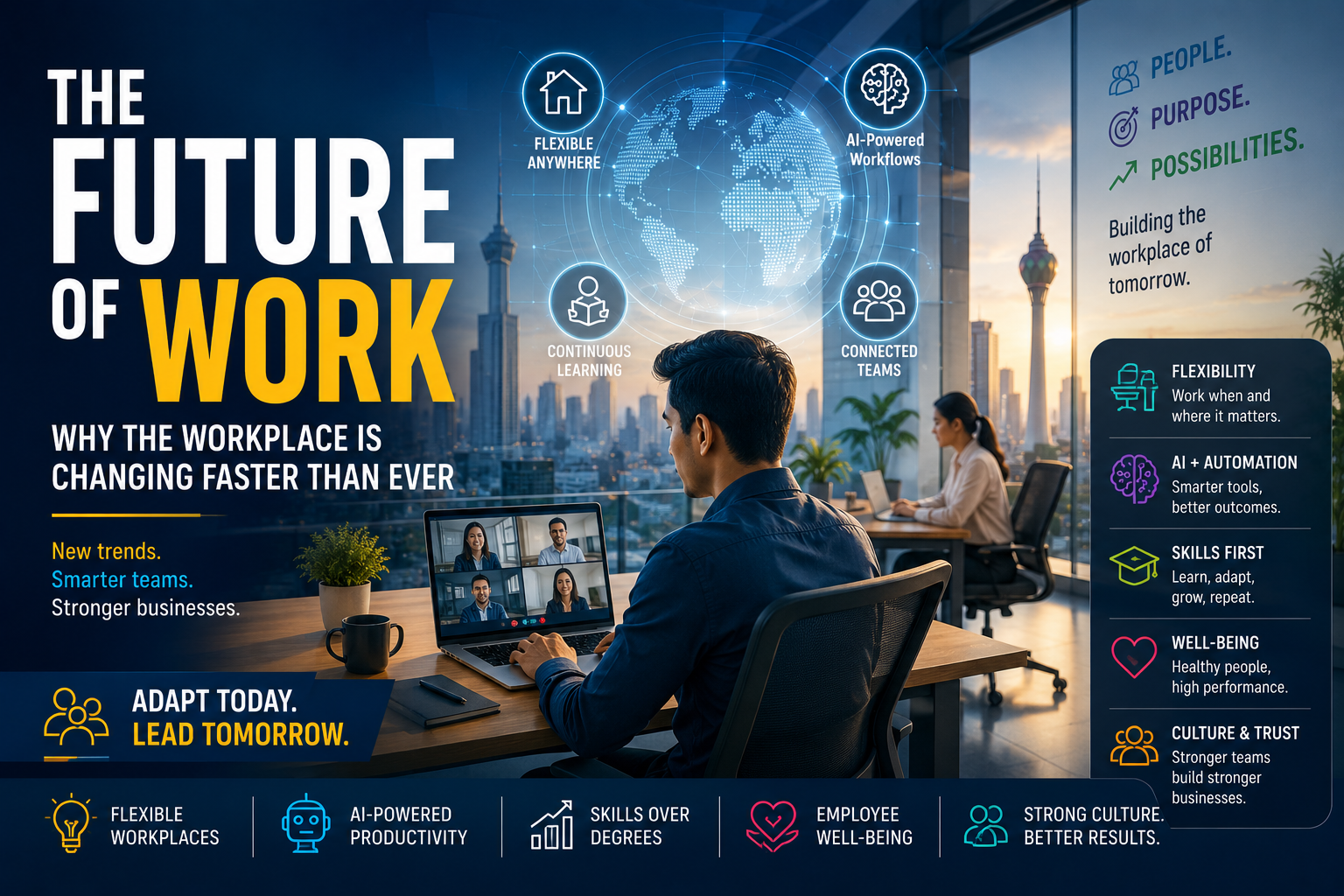
The future of work is no longer some distant idea — it’s already happening. Employees want flexibility, technology is reshaping jobs, and businesses are rethinking what productivity really means.
For companies in Sri Lanka and around the world, one big question remains:
Are businesses ready for the new workplace?
Here are the biggest workplace trends changing the future of business in 2026.
1. Flexibility Is Becoming More Important Than Ever
The traditional 9-to-5 office routine is slowly evolving.
Employees increasingly value flexibility — whether it’s remote work, hybrid schedules, or flexible hours.
For many workers, productivity is no longer about sitting in an office for eight hours. It’s about outcomes.
Why Businesses Should Care
Flexible workplaces often experience:
- Better employee satisfaction
- Higher productivity
- Improved work-life balance
- Better employee retention
Sri Lankan Example
Many companies in Sri Lanka’s IT and digital sectors are already adopting hybrid work models to attract younger talent.
Flexibility is increasingly becoming a competitive advantage.
2. AI Is Quietly Becoming Everyone’s Co-Worker
Artificial Intelligence is no longer limited to tech companies.
Today, businesses use AI to:
- Write content
- Analyse data
- Improve customer service
- Automate repetitive tasks
- Speed up decision-making
But here’s the reality:
AI is unlikely to completely replace people — it will mostly change how people work.
What Businesses Can Do
Instead of fearing AI:
- Train employees to use it effectively
- Automate repetitive tasks
- Focus people on creative and strategic work
The future workplace may belong to businesses that combine human creativity with smart technology.
3. Skills Are Becoming More Valuable Than Degrees Alone
A university degree still matters — but businesses increasingly care about practical skills too.
Companies are paying closer attention to:
- Communication skills
- Problem-solving ability
- Digital literacy
- Marketing knowledge
- Adaptability
Why This Matters
Industries are changing quickly.
Employees who continuously learn may stay more valuable than those relying only on qualifications earned years ago.
Actionable Insight
Businesses should invest more in training rather than expecting employees to already know everything.
Upskilling may become one of the smartest business investments.
4. Employee Well-Being Is Becoming a Business Priority
Burnout is becoming a serious workplace conversation.
Many businesses are realising that stressed, exhausted employees rarely perform at their best.
Future-focused workplaces increasingly prioritise:
- Mental well-being
- Flexible schedules
- Health benefits
- Supportive work cultures
Simple Question for Businesses
Are employees surviving work — or thriving at work?
The answer matters more than many companies realise.
5. The Workplace Is Becoming More Digital
From virtual meetings to cloud-based collaboration, technology is changing how teams communicate and operate.
Many businesses now rely on:
- Online collaboration tools
- Digital project management
- Cloud storage
- Virtual communication platforms
Sri Lankan Shift
More startups and SMEs are adopting digital systems to save time and improve efficiency.
The businesses embracing digital tools early may move faster than competitors.
6. Company Culture Will Matter More Than Salary Alone
Money matters — but workplace culture matters too.
Many employees today value:
- Respectful leadership
- Growth opportunities
- Work-life balance
- Positive environments
Businesses with strong cultures often attract and retain better talent.
Think About It
Why do some employees stay even when offered more money elsewhere?
Culture often plays a bigger role than people expect.
The Bottom Line
The future of work is changing — whether businesses are ready or not.
Companies that embrace flexibility, invest in people, adopt technology, and prioritise workplace culture may have a stronger advantage in the years ahead.
Because the future workplace isn’t just about where people work.
It’s about how businesses help people do their best work.