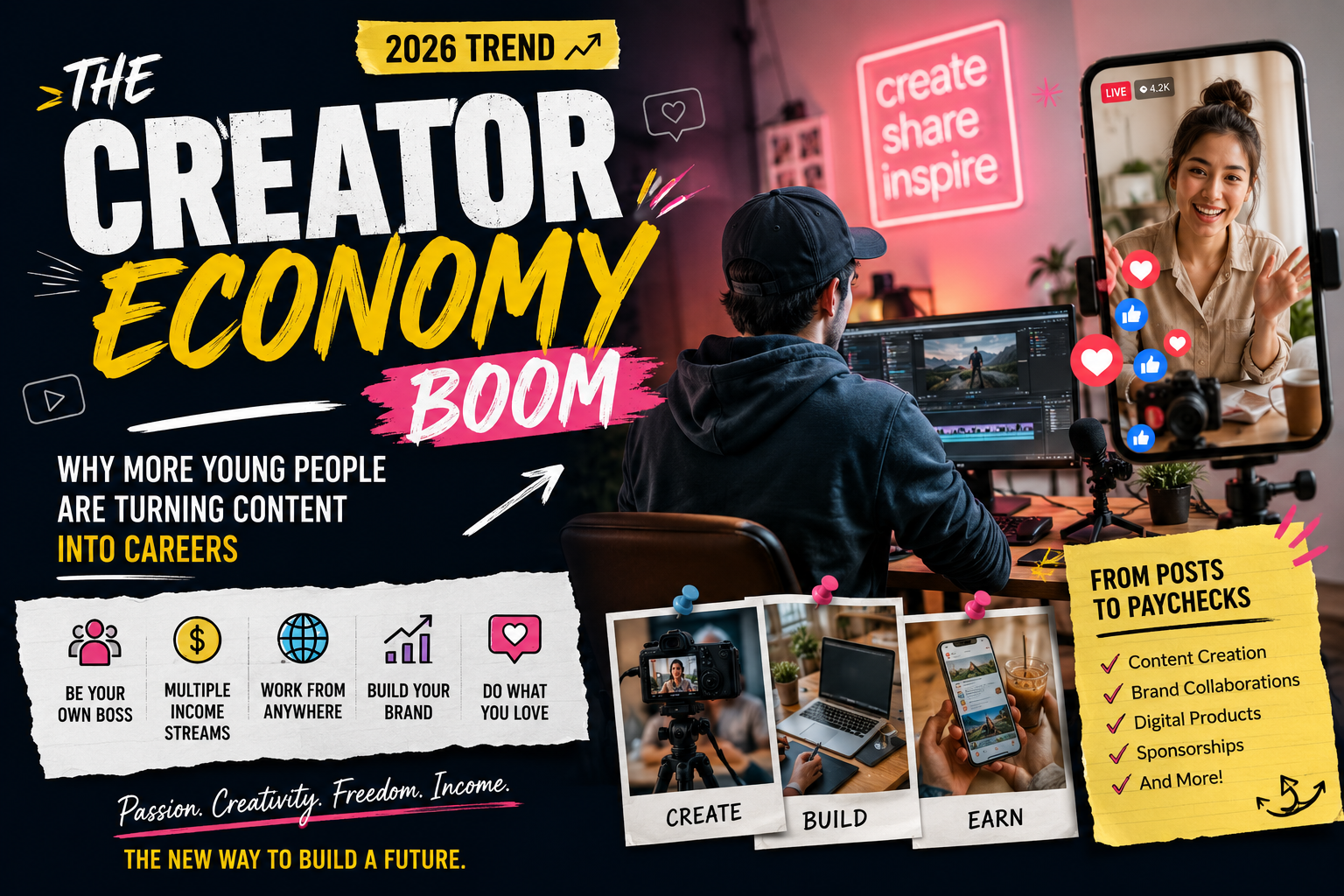
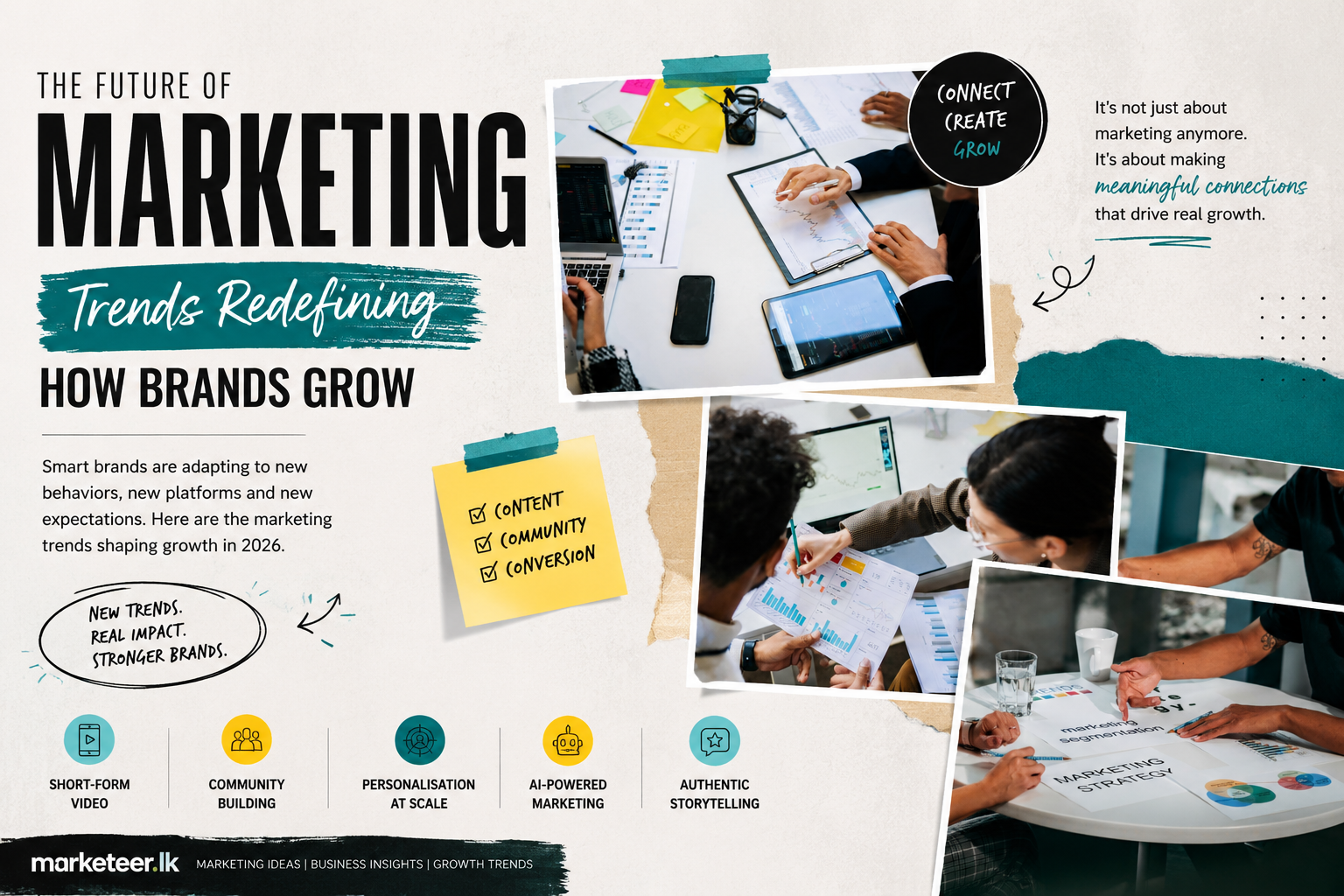
Marketing is changing fast — and businesses still relying on old strategies may already be falling behind.
A few years ago, running ads and posting occasionally on social media felt enough to attract customers.
Today? Not quite.
Consumers scroll faster, trust less, expect more, and have endless choices. Which means businesses now need smarter ways to grab attention — and keep it.
The future of marketing is becoming more personal, creator-driven, data-powered, and experience-focused.
For businesses in Sri Lanka and beyond, understanding these shifts may be the difference between growing — or getting ignored.
Here are the biggest marketing trends reshaping how brands grow in 2026.
1. Authenticity Is Becoming a Marketing Superpower
Perfect-looking ads are losing their magic.
Customers increasingly trust brands that feel real.
People connect more with:
- Honest storytelling
- Behind-the-scenes content
- Founder stories
- Real customer experiences
- Unfiltered moments
Why This Matters
Consumers are tired of overly polished marketing that feels fake.
They want brands that sound human.
Sri Lankan Example
Many Sri Lankan small businesses are growing through relatable Instagram content, casual videos, and authentic founder-led storytelling instead of expensive advertisements.
Being relatable is becoming more powerful than looking perfect.
2. Short-Form Video Is Dominating Attention
People scroll quickly.
Which means businesses have only seconds to capture interest.
Short-form videos through:
- Instagram Reels
- TikTok
- YouTube Shorts
- Facebook videos
are becoming some of the most effective marketing tools.
Why Video Works
Video:
- Builds trust faster
- Feels more engaging
- Explains products easily
- Improves visibility online
Actionable Tip
You don’t need expensive production.
Even a simple phone video showing products, customer reactions, or behind-the-scenes moments can work surprisingly well.
3. Personalisation Is Becoming Expected
Generic marketing feels outdated.
Consumers increasingly expect brands to understand:
- Their interests
- Shopping habits
- Preferences
- Buying behaviour
Think personalised emails, product recommendations, and customised offers.
Example
A clothing business recommending products based on previous purchases feels more useful than random promotions.
Customers notice when businesses “get” them.
4. Influencer Marketing Is Becoming Smarter
Businesses are becoming more selective with influencer partnerships.
The focus is shifting from big follower counts to trust and engagement.
Micro-influencers are increasingly valuable because audiences often trust them more.
Sri Lankan Example
A small local café collaborating with a trusted food creator may drive more real customers than a celebrity endorsement.
Sometimes smaller audiences create bigger impact.
Business Tip
Choose creators whose audience actually matches your brand.
Relevance matters more than popularity.
5. Community Building Is Replacing Traditional Audiences
Businesses are realising something important:
Followers don’t automatically equal loyal customers.
Future-focused brands are building communities, not just audiences.
What This Looks Like
Brands increasingly:
- Reply to comments
- Engage with customers
- Repost customer content
- Build loyalty groups
- Encourage conversations
Customers stay loyal to businesses that make them feel included.
6. AI Is Quietly Changing Marketing
Artificial Intelligence is transforming marketing behind the scenes.
Businesses now use AI to:
- Generate ideas
- Create content
- Analyse customer behaviour
- Improve targeting
- Automate customer service
Why Businesses Should Care
AI helps businesses:
- Save time
- Work faster
- Understand customers better
But the winning strategy?
Using AI without losing the human touch.
7. Content Is Becoming the Real Currency
Traditional selling is becoming less effective.
Modern marketing increasingly focuses on providing value first.
That means businesses creating:
- Helpful blog posts
- Educational content
- Entertainment
- Tips and advice
- Storytelling content
Ask Yourself
Would someone follow your brand if you stopped selling for a week?
If the answer is no, your content strategy may need work.
The Bottom Line
The future of marketing isn’t just about selling products.
It’s about building trust, creating experiences, and staying genuinely connected with customers.
The businesses growing fastest in 2026 are often the ones willing to adapt, experiment, and sound more human.
Because in today’s crowded market, attention matters.
But connection matters even more.