A few years ago, saying “I want to be a content creator” might have raised eyebrows.
Today?
It sounds like a serious career path.
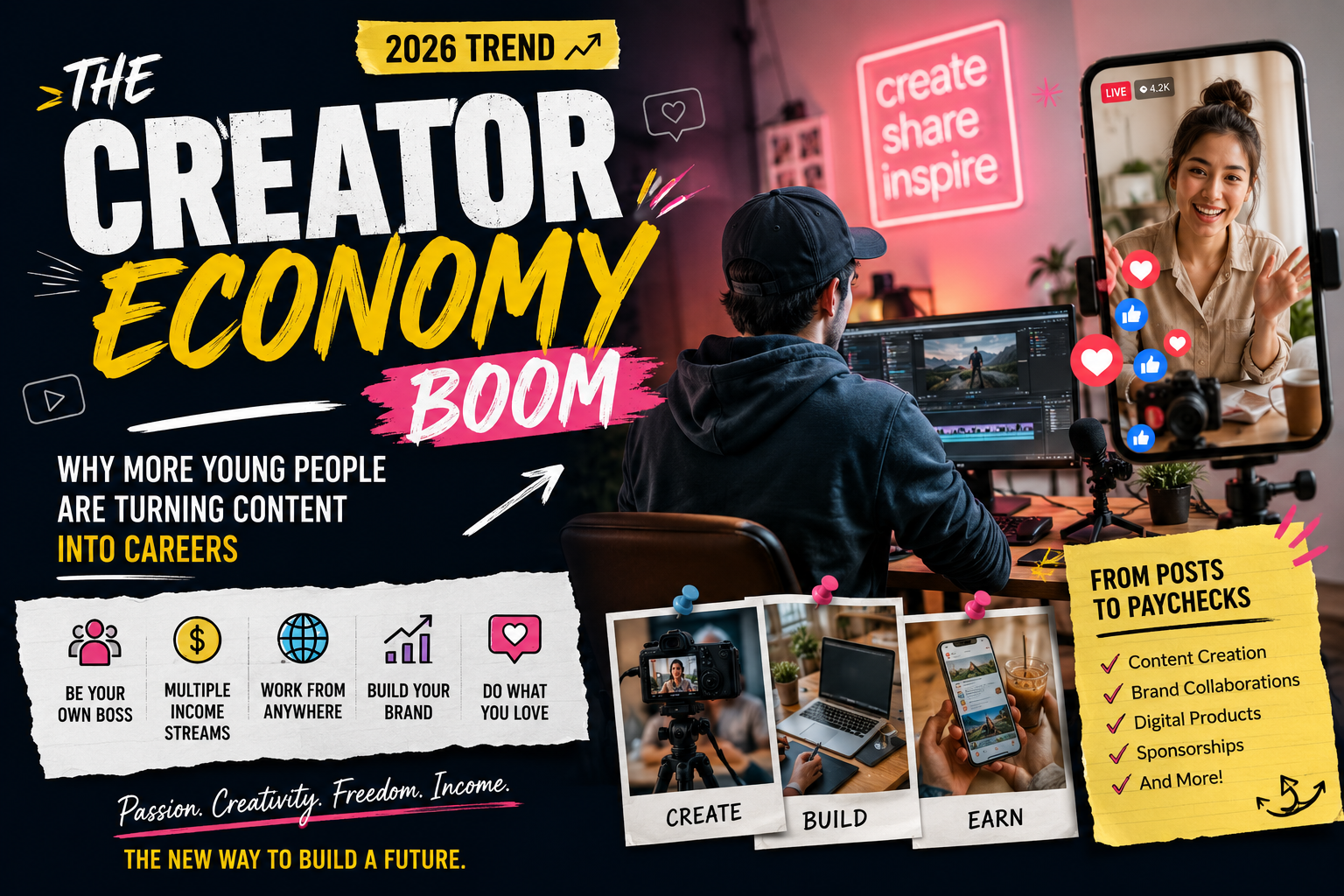
In 2026, more young people are turning creativity into income through social media, freelancing, personal branding, and digital content creation.
From YouTubers and podcasters to TikTok creators, Instagram influencers, freelance designers, and niche content specialists, a new digital economy is quietly reshaping what success looks like.
Welcome to the creator economy.
And it is growing faster than many people expected.
What Exactly Is the Creator Economy?
The creator economy refers to people earning income by creating digital content, building online audiences, or monetizing personal skills and expertise.
This includes:
- Content creators and influencers
- YouTubers and streamers
- Freelance writers and designers
- Digital educators and online coaches
- Podcast creators
- User Generated Content (UGC) creators
- Personal brand entrepreneurs
In simple terms, people are turning their creativity, personality, or knowledge into careers.
And increasingly, businesses are paying attention.
Why Are Young People Choosing Content Careers?
Traditional Career Paths Are Changing
Many young professionals no longer see traditional 9-to-5 jobs as the only option.
Flexibility, independence, and creative freedom are becoming increasingly attractive.
For some, content creation offers something traditional jobs may not always provide:
Control.
The ability to work independently, build something personal, and create multiple income streams.
Many creators now earn through sponsorships, brand partnerships, affiliate marketing, digital products, consulting, or freelance work.
Social Media Made Opportunity More Accessible
A smartphone and internet connection can now open unexpected opportunities.
Platforms like TikTok, Instagram, YouTube, and LinkedIn allow people to grow audiences without massive investments.
Someone sharing beauty tips, business advice, fitness content, travel experiences, or even humor can potentially build influence online.
In many ways, attention itself has become valuable.
And creators are learning how to turn that attention into business.
Businesses Are Investing in Creators
Brands are increasingly collaborating with creators instead of relying only on traditional advertising.
Why?
Because audiences often trust relatable creators more than polished advertisements.
A creator recommending skincare may feel more authentic than a commercial.
A food vlogger reviewing a café may attract more attention than a printed advertisement.
Consumers connect with people.
And creators often feel more relatable than brands.
This shift is changing marketing strategies everywhere.
Not Everything Is As Glamorous As It Looks
Despite the appeal, content creation comes with challenges.
Competition is intense.
Algorithms constantly change.
Income may feel unpredictable.
Creating content consistently also requires creativity, discipline, editing, branding, and resilience.
What looks effortless online often takes significant behind-the-scenes work.
Success rarely happens overnight.
For many creators, consistency matters more than virality.
What This Means for Sri Lanka
Sri Lanka is also seeing growth in digital creators.
From fashion influencers and travel vloggers to food reviewers and educational creators, local content is gaining attention.
Small businesses increasingly collaborate with creators to reach audiences online.
At the same time, young professionals are beginning to see digital content not just as a hobby, but as a real career opportunity.
As internet culture continues growing, the creator economy may become even more significant.
Final Thoughts
The idea of work is changing.
In 2026, careers are no longer limited to offices, corporate titles, or traditional industries.
For many young people, creativity itself is becoming a profession.
Of course, content creation is not always easy.
But the rise of the creator economy proves something important:
Sometimes, passion and business are beginning to meet in the same place.
And for a generation growing up online, that future feels increasingly possible.