Sanken Overseas, which has rebranded itself as Sanken Gen after generating project revenue of US$ 900 million across seven countries in the last five years, is preparing to expand into Australia, Saudi Arabia and Fiji while lining up luxury resort developments in Ella and down south, its top management announced in Colombo last week.
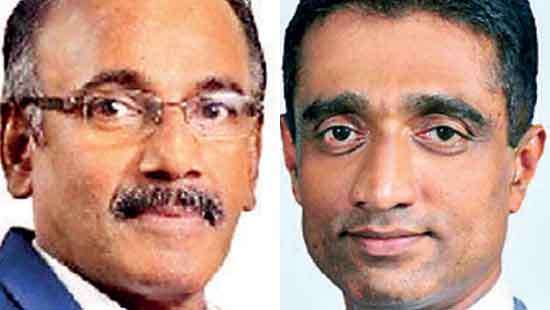
Sanken Gen Chief Executive Officer Mevan Gunatilleke identified Australia, Saudi Arabia and Fiji as the company’s next construction markets, where it has already set up local entities.
“There is a lot of opportunity and we are strategically discussing a few projects, and very soon we will be starting a couple of them,” he elaborated.
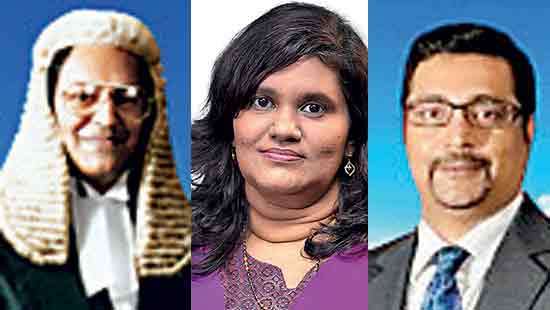
Sanken Gen Chief Operating Officer Duleesha Wijesiri revealed that the company had executed 36 projects in 10 cities over the last five years, with the Maldives remaining its prime market ahead of Seychelles, India, Bangladesh, Kenya and Myanmar.
“Part of this revenue we have been able to remit to Sri Lanka to boost Sri Lanka’s economy,” Wijesiri noted, adding that the projects had engaged over 300 staff members and more than 11,000 workers, mainly from Sri Lanka.
The portfolio spans ports, bridges and mini hydro power plants in addition to ultra-luxury resorts in the Maldives, among them The Ritz-Carlton Maldives, which Sanken designed and built and which featured in Time magazine’s 2021 list of the world’s 100 greatest places. It also carried out civil works at Kenya’s Mombasa Port as a subcontractor to Japan’s Toyo Construction.
However, the CEO pointed out that contracting remains a thin-margin business.
“When you are in an industry where your gross profit margin is less than 10 percent, you are dealing with huge cash flows and your bottom line is close to zero most of the time,” he remarked.
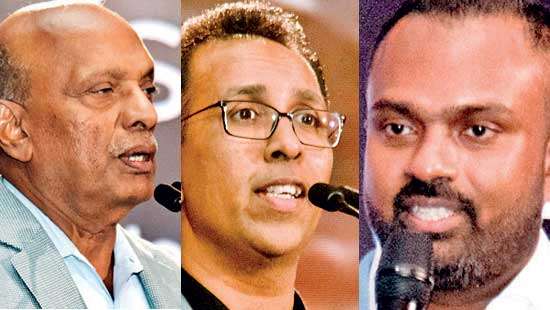
Meanwhile, the new identity was unveiled at an event marking the group’s 50-year journey, where the company also outlined its move beyond contracting into resort development, renewable energy and logistics.
The CEO explained that the new name stands for the generations of employees who built Sanken, and described the company as the centre of an “ecosystem” of group businesses offering clients an end-to-end solution spanning construction, investment, landscaping and design.
The rebranding, Sanken Gen Chairman Ranjith Gunatilleke observed, was driven by the CEO and his team to plan for the group’s next 50 years.
According to Sanken Gen Corporate Finance Manager Tanushi Chandradasa, the company’s first Maldivian investment, Amari Havodda Maldives, was divested in 2023, while JW Marriott Maldives Kaafu Atoll Island Resort, which opened last year, was structured as a strategic investment alongside institutional investors.
Chandradasa disclosed that Sanken Gen is now looking at resort development in Sri Lanka, with Ella and down south shortlisted.
“We intend to bring luxury tourism and replicate the level of the Maldives in Sri Lanka,” she stressed.
The company is also looking at solar and hydro power projects in Africa and the Pacific, while its entry into logistics was made last year through a strategic investment in freight forwarder CL Synergy.
Tracing the group’s history, the Chairman recalled that he joined Mitsui Construction in 1979 and worked as an engineer on the new Parliament complex in Sri Jayawardenepura Kotte.
A proposal to make him a shareholder in 1988 failed to materialise, and it was only in 2002, when Mitsui Construction moved to withdraw from Sri Lanka at the time of its merger with Sumitomo Construction, that he secured what he described as a considerable shareholding.
He recounted that Sanken took on the Empire residential towers when it had built nothing taller than 15 storeys, and later won the 50-storey Colombo City Centre, a US$ 100 million contract, over two foreign competitors.
The group’s growth, he maintained, rested on the trust of clients and banks, with Capitol TwinPeaks, its own development of two 50-storey towers, having started with an equity capital of Rs.10 million and bank-financed land before growing into a project valued at Rs.30 billion.
“It is the confidence that you should have with you,” he asserted.