
Not long ago, learning often meant long classroom sessions, thick textbooks, and hours spent attending lectures.
Education was traditionally built around the idea that meaningful learning required significant time and structure. The longer the lesson, the more valuable it seemed.
Today, however, learning is beginning to look very different.
In an increasingly fast paced world, people are turning toward shorter, quicker, and more flexible ways of gaining knowledge. Instead of spending hours in classrooms or committing to lengthy courses, many learners are choosing to learn in minutes.
Welcome to the age of micro learning.
From short educational videos and quick online lessons to bite sized professional training, micro learning is quietly transforming how people absorb information and build skills.
The question is no longer whether people are learning.
It is how they are learning.
What Exactly Is Micro Learning?
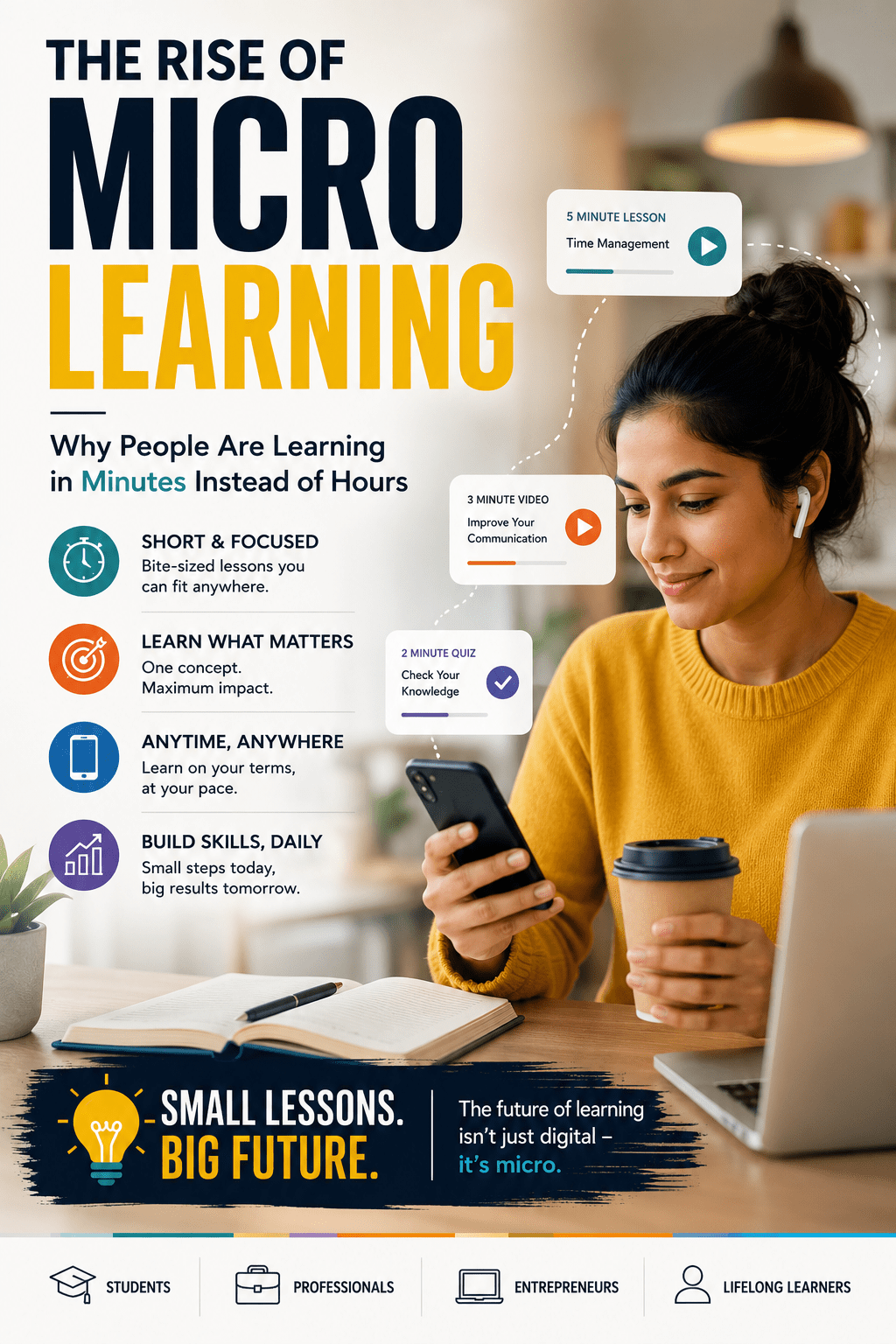
Micro learning refers to short, focused learning experiences designed to teach one concept or skill at a time.
Rather than sitting through lengthy lessons, learners consume information in smaller, more manageable segments.
This could include:
- Five minute educational videos
- Short online modules
- Quick professional training sessions
- Interactive quizzes
- Bite sized tutorials
- Skill based learning apps
The idea behind micro learning is simple.
People learn better when information feels manageable and easier to process.
Instead of overwhelming learners with large amounts of content at once, micro learning encourages gradual and consistent learning.
In many ways, it reflects how modern attention spans and lifestyles have evolved.
Why Is Micro Learning Becoming So Popular?
One of the biggest reasons behind the rise of micro learning is convenience.
Modern life is busy.
Students balance studies with personal responsibilities, while professionals often struggle to find time for lengthy training programs. Learning for hours may feel unrealistic for many people.
Micro learning offers flexibility.
Someone can learn a new skill during a lunch break, while commuting, or even between daily tasks.
Learning no longer needs to fit into rigid schedules.
Instead, it fits around everyday life.
Shorter Attention Spans Are Influencing Education
There is also another reality shaping modern learning.
Attention spans are changing.
In a digital world filled with constant notifications, short form content, and endless information, people increasingly prefer learning experiences that feel engaging and immediate.
Micro learning aligns naturally with these habits.
Short lessons often feel less intimidating, easier to complete, and more rewarding.
For many learners, finishing a five minute lesson feels more achievable than committing to a two hour session.
This creates stronger motivation and consistency over time.
How Businesses and Workplaces Are Using Micro Learning
The rise of micro learning is not limited to students.
Businesses are increasingly adopting it for workplace training and employee development.
Traditional corporate training programs often require long sessions that employees may struggle to retain.
Micro learning offers a more practical alternative.
Short learning modules allow employees to quickly update skills, improve productivity, and learn new tools without disrupting work schedules.
From leadership development to technical training, many organisations are finding that shorter learning experiences can sometimes lead to better engagement and stronger knowledge retention.
In fast changing industries, continuous learning is becoming more important than ever.
Is Traditional Education Becoming Outdated?
Despite its growing popularity, micro learning is unlikely to completely replace traditional education.
Complex subjects still require depth, discussion, and long term understanding.
Certain fields such as medicine, law, engineering, and scientific research cannot be mastered through short lessons alone.
However, micro learning is changing expectations.
People increasingly value flexible, personalised, and practical learning experiences.
Instead of replacing education, micro learning may complement it.
Traditional learning provides foundations.
Micro learning helps people continuously adapt.
What This Means for the Future of Learning
As technology continues to reshape education, learning may become increasingly personalised and accessible.
People are no longer learning only for exams or qualifications.
They are learning for careers, personal growth, side hustles, hobbies, and everyday improvement.
In this changing landscape, education is becoming less about sitting in classrooms and more about lifelong learning.
And increasingly, that learning may happen one small lesson at a time.
Final Thoughts
The rise of micro learning reflects a larger shift in how society approaches education.
People still value knowledge.
But they increasingly want learning to feel faster, more flexible, and easier to fit into modern life.
While traditional education will always have an important place, micro learning is proving that sometimes, small lessons can create big impact.
After all, in a world moving faster than ever, learning in minutes may simply make more sense than learning in hours.