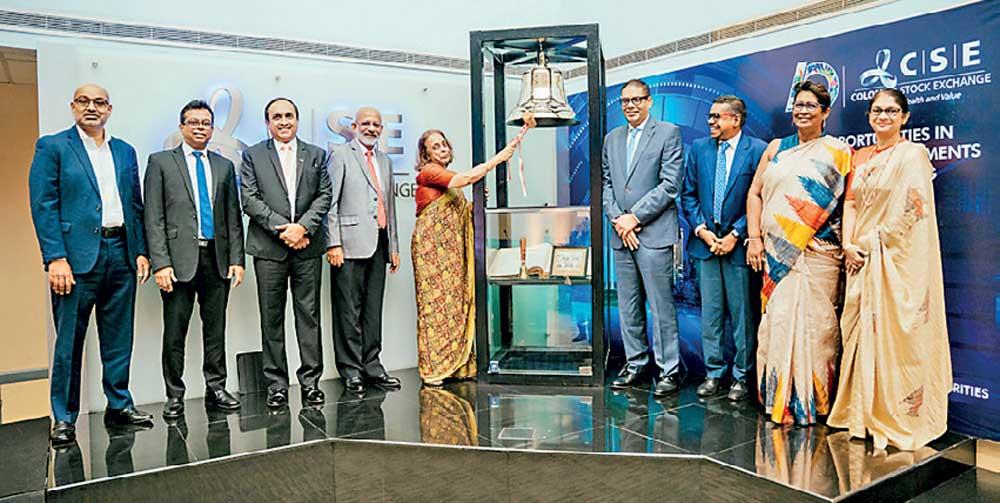
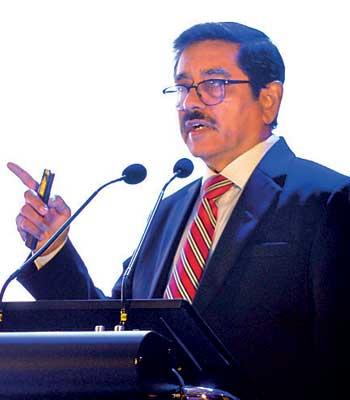
The government has “strong hopes” of demutualising the Colombo Stock Exchange (CSE) in the coming year and would give the capital market far greater visibility in the upcoming budget, while also weighing incentives to draw more companies to list, Labour Minister and Finance and Planning Deputy Minister Dr. Anil Jayantha Fernando said on Tuesday.
Speaking at the Institutional Investor Forum, jointly organised by the Securities and Exchange Commission of Sri Lanka (SEC) and CSE, in Colombo, Dr. Fernando confirmed that SEC Chairman Senior Professor D.B.P.H. Dissabandara had submitted a demutualisation proposal to the ministry and initial discussions had been held.
“In principle, we agree on this demutualisation. What the mechanism and how long the timeframe, we will have to decide but that is being discussed,” he stated.
Prof. Dissabandara pointed out that the reform had been under discussion for over three decades. He noted that the government was agreeable in principle and only a few technical areas remained to be cleared.
“I think in the coming year, I have some hope. Some hope means not 100 percent,” Prof. Dissabandara remarked, prompting Dr. Fernando to interject, “Not some hope, strong hopes.”
CSE Chairman Dimuthu Abeyesekera said the exchange had been ready for demutualisation for the last couple of years and that the move would have “an enormous benefit to the market”.
In his welcome address, CSE Chief Executive Officer Rajeeva Bandaranaike said the CSE had strengthened its institutional structure and governance framework, identified a model and embarked on a commercialisation drive.
Dr. Fernando also assured that the capital market would feature more prominently in the November 12 budget.
He acknowledged that some of the government’s capital market initiatives over the past two years had not been visible and recalled Prof. Dissabandara pointing out that the government’s policies were not reflected in last year’s budget speech.
“I’ll just give an assurance, so you will see that visibility in a bigger way in this budget,” he told the gathering.
He revealed that the Finance Ministry had already accepted most of a 12-point proposal submitted by Prof. Dissabandara. Some of the measures will be included in the budget proposals, while the rest will be taken up with the CSE and SEC for quick implementation.
Dr. Fernando added that the budget would allocate Rs.2 trillion for capital expenditure to support private investment, after the government spent 76 percent of its capital budget in 2025.
However, Dr. Fernando stopped short of committing to tax concessions for the listed companies. Asked whether listing could be made mandatory or whether the listed companies could be offered lower tax rates, he said such moves needed further discussion, though he agreed that some form of incentive was needed.
“We believe that a kind of incentive should be there for the companies to be listed,” he remarked.
He noted that some companies are reluctant to move from private to the listed status because they fear higher compliance requirements, closer scrutiny and higher costs and said the compliance arrangements should therefore be made convenient.
“As of now, we have not taken a specific decision on that,” he added.
Janashakthi Group’s Rs.5 billion offer in April has been the only sizeable equity initial public offering (IPO) so far this year, accounting for about 3 percent of Rs.160 billion raised through the CSE by late October, which underscores the exchange’s struggle to attract new issuers. Last year, equity IPOs raised just Rs.2.2 billion, compared to Rs.113 billion raised through debt IPOs, as per the CSE data.
Meanwhile, Dr. Fernando said a new State-Owned Enterprises (SOE) Act would allow selected state enterprises to be reorganised under one umbrella and incorporated as limited liability companies, giving them the autonomy to take their own decisions based on the market conditions.
He noted that only a few of the 527 entities labelled as SOEs are engaged in commercial activities and that the government has no interest in running hotels or trading businesses.
The government hopes to have the bill approved by Parliament by the end of the year, subject to clearance from the Legal Draftsman’s Department, with the next parliamentary session due in the first week of November.
The SEC and CSE are already engaging with the state enterprises and have visited a few of them, in the hope that some will decide to raise equity through the market, according to the CSE and SEC officials.