Sri Lanka is facing an increasingly significant demographic challenge as its population ages at a pace that could affect the country’s long-term economic growth, workforce availability and financial sustainability, according to a recent study published by the International Monetary Fund (IMF).
The IMF has identified Sri Lanka among a group of Asian economies at risk of experiencing substantial population ageing before achieving higher levels of economic prosperity.
In its October 2026 publication, Shaping the Future of Asia: Opportunities and Challenges, the international financial institution examines how demographic changes are reshaping economic prospects across the Asia-Pacific region and identifies policies that could help countries maintain productivity despite shrinking working-age populations.
The report highlights the growing importance of extending productive working lives, improving healthcare outcomes and providing opportunities for older individuals to remain economically active.
For Sri Lanka, these findings carry particular significance as the country attempts to strengthen economic growth following its recent financial crisis while preparing for the long-term implications of an ageing society.
Alongside Mongolia, Myanmar and Vietnam, Sri Lanka is identified in the reported analysis as one of four economies facing the possibility of becoming substantially older before reaching the income levels achieved by advanced economies at comparable stages of demographic development.
The study uses the European Union’s 1998 per capita income level as a benchmark to illustrate the potential difficulties confronting countries whose demographic transitions progress faster than their economic development.
This situation presents a complex challenge because population ageing can reduce the proportion of economically active individuals while increasing demand for healthcare, retirement benefits and other public services.
Countries experiencing these pressures before accumulating sufficient wealth may face greater difficulties financing the social and economic requirements of their ageing populations.
For Sri Lanka, the central concern is whether economic productivity can increase sufficiently to compensate for a gradual reduction in the relative size of its working-age population.
As the proportion of older citizens increases, fewer workers may be available to support economic production, contribute tax revenue and finance public services.
At the same time, government expenditure associated with healthcare, pensions and elderly care could rise.
The IMF’s research suggests that addressing these challenges will require a combination of labour market reforms, productivity improvements and policies that enable people to remain healthier and economically productive for longer.
One of the principal opportunities identified in the study is the changing relationship between age and workplace productivity.
Traditionally, many economies have operated around retirement structures that assume workers will gradually withdraw from formal employment after reaching a particular age.
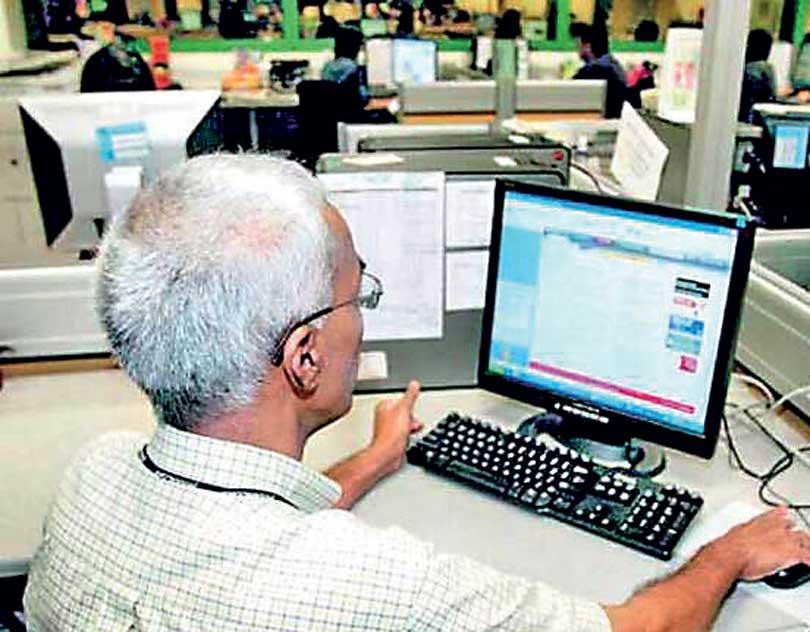
However, improvements in medical treatment, education, workplace technology and general living conditions have created opportunities for individuals to remain active beyond conventional retirement ages.
The IMF argues that longer working lives, when supported by appropriate health and employment policies, could help reduce some of the economic pressures associated with declining workforce participation.
Older employees often possess extensive professional knowledge, industry experience and specialised capabilities developed over decades of employment.
Retaining these skills within the labour market could support business continuity, knowledge transfer and organisational productivity.
Experienced professionals may also contribute through mentoring, consultancy, entrepreneurship and flexible employment arrangements that allow them to remain economically engaged.
For Sri Lanka, such opportunities could become increasingly relevant as businesses seek to maintain access to skilled workers while adjusting to demographic changes.
Nevertheless, the IMF emphasises that extending working lives should not simply involve encouraging individuals to remain employed for additional years without considering their health, capabilities and working conditions.
Instead, policies should support healthier ageing and provide employment arrangements that accommodate the changing needs of older workers.
This includes promoting age-inclusive workplaces, flexible schedules and opportunities for individuals to continue participating in economic activities at different stages of their lives.
Remote employment, part-time work and consultancy arrangements could provide alternative pathways for older professionals who may not wish to remain in conventional full-time positions.
Technological developments could also help individuals continue working by reducing certain physical demands and enabling more flexible forms of professional engagement.
Digital communication tools, automated systems and other workplace technologies may create opportunities for experienced employees to contribute without necessarily following traditional working patterns.
However, the successful adoption of these technologies will depend on access to relevant training and the willingness of organisations to support employees across different age groups.
The IMF therefore identifies lifelong learning and continuous skills development as important components of a sustainable response to population ageing.
As industries evolve and new technologies reshape employment, workers will need opportunities to update their knowledge and remain competitive.
This requirement applies not only to younger individuals entering the labour market but also to experienced employees whose existing skills may need to be adapted to changing professional environments.
For Sri Lanka, expanding access to vocational education, professional development and digital training could help older workers maintain their economic participation.
Educational institutions, employers and policymakers could play complementary roles in providing programmes that allow individuals to acquire new skills throughout their careers.
Such initiatives may also support productivity improvements by enabling businesses to make better use of the knowledge and experience available within their existing workforce.
Healthcare investment is another central element of the IMF’s assessment.
The study suggests that healthier ageing can contribute to economic resilience by allowing individuals to remain active and independent for longer periods.
Preventive healthcare, early identification of medical conditions and improved access to treatment can help reduce the burden of illnesses that may otherwise limit an individual’s ability to work.
Similarly, better long-term care arrangements can support older people while reducing the pressure placed on family members who provide unpaid care.
For countries experiencing rapid population ageing, these considerations extend beyond social welfare and become increasingly relevant to economic planning.
A healthier older population may require fewer intensive healthcare interventions and may be better positioned to contribute through paid employment, voluntary work and community activities.
However, the IMF cautions that improvements in health and employment participation should not be viewed as a complete solution to demographic pressures.
Although healthier ageing can help extend the period during which countries benefit from an economically productive population, the research indicates that the overall extension is likely to be relatively modest.
This means that longer working lives alone cannot fully compensate for the economic effects of declining birth rates, reduced labour force growth and rising dependency ratios.
Broader structural reforms will therefore remain necessary to maintain productivity and support long-term economic development.
For Sri Lanka, this could involve improving the efficiency of businesses, encouraging investment in technology and strengthening the skills of workers across different age groups.
Increased labour productivity would allow the economy to generate greater value from available human resources, helping offset some of the constraints created by a slower-growing workforce.
The IMF’s wider analysis indicates that population ageing is becoming one of Asia’s most important long-term economic challenges.
Across the region, the number of people aged 65 and above is projected to increase from approximately 450 million in 2024 to around 880 million by 2050.
By the middle of the century, roughly one in every five people in Asia is expected to be aged 65 or older.
These projections demonstrate the scale of the demographic transition taking place across economies with substantially different income levels, social protection systems and labour market structures.
The economic implications could be considerable.
A growing elderly population may increase demand for medical services, long-term care facilities, retirement income support and age-appropriate infrastructure.
Meanwhile, a declining share of working-age people could constrain the availability of labour and reduce the rate at which economies can expand.
These changes may also affect household consumption patterns, savings behaviour and government revenue.
Countries will consequently need to reconsider how economic policies, social protection systems and public expenditure are structured to accommodate changing demographic realities.
The IMF stresses that Asian economies will not experience these pressures in identical ways.
Some countries are already facing substantial reductions in their working-age populations, while others continue to benefit from relatively young demographic profiles.
Japan, South Korea and China are among the economies confronting advanced or rapidly developing ageing pressures.
Other Asian countries still have opportunities to benefit from expanding labour forces, although these advantages may diminish as fertility rates decline and populations grow older.
This diversity highlights the importance of developing demographic policies that reflect each country’s specific economic circumstances.
For Sri Lanka, the challenge is particularly significant because demographic change is occurring alongside efforts to rebuild economic stability and establish stronger foundations for future growth.
The country’s long-term development strategy must therefore account for the possibility that labour availability will become more constrained over time.
Policies focused exclusively on increasing employment numbers may be insufficient if the working-age population grows more slowly or begins to decline.
Instead, greater attention may need to be directed towards improving the quality, productivity and participation of the available workforce.
One area identified by the IMF is the potential to increase employment opportunities for women.
Expanding female labour force participation could help countries make better use of their existing human resources while supporting household incomes and economic output.
Such progress may require improvements in childcare availability, transport accessibility, workplace flexibility and employment practices that enable individuals to balance professional and family responsibilities.
Similarly, policies that reduce barriers to employment for older individuals could help preserve valuable skills and experience within the economy.
The combined participation of women, older workers and other underutilised groups could moderate some of the economic effects associated with demographic ageing.
However, these measures would need to be supported by investments in education, technology and business productivity to deliver sustained improvements.
The IMF also highlights the importance of adapting economic institutions to changing population structures.
Pension systems, healthcare financing arrangements and labour regulations may require periodic evaluation to ensure that they remain sustainable as the balance between working-age and retired populations changes.
As more individuals reach retirement age, pressure on publicly financed benefits could increase.
At the same time, slower growth in the workforce may limit the expansion of tax revenue, creating additional challenges for governments responsible for financing essential services.
For Sri Lanka, these considerations are particularly relevant given the need to maintain fiscal discipline while supporting economic recovery and development.
Effective long-term planning could help policymakers anticipate future expenditure requirements and identify measures to reduce potential financial pressures.
The demographic transition also has implications for businesses and employers.
Companies may need to reconsider conventional approaches to recruitment, professional development and retirement as the age composition of the workforce changes.
Age-inclusive employment practices could become increasingly important in retaining experienced workers and maintaining organisational knowledge.
Businesses may also benefit from creating opportunities for employees of different generations to collaborate, combining the experience of older professionals with the technological familiarity and emerging skills of younger workers.
Such arrangements could support innovation, improve decision-making and strengthen the transfer of specialised knowledge.
However, ensuring that workers can remain productive throughout longer careers will require continued investment in training, occupational health and workplace adaptation.
The broader development of artificial intelligence and digital technologies may also influence how countries respond to ageing populations.
Technological improvements could increase productivity by allowing businesses to complete certain tasks more efficiently and reduce dependence on labour-intensive processes.
The IMF has separately highlighted the potential for artificial intelligence to help Asian economies manage demographic constraints, while emphasising the need for investment in digital infrastructure and workforce skills.
For Sri Lanka, technology adoption could complement efforts to strengthen workforce participation and support industries facing future labour shortages.
Nevertheless, the benefits of technological innovation will depend on how successfully businesses integrate new systems and prepare employees to use them.
Without adequate training and access, technological change could also create employment challenges for workers whose skills do not match emerging industry requirements.
A balanced approach involving digital investment, education and labour market reform would therefore be important.
Beyond the workplace, the demographic transition raises broader questions about the country’s social and economic development.
An ageing society may require changes in housing, transportation, healthcare delivery and community services to accommodate the needs of older citizens.
These requirements could also create demand for new businesses and specialised services, particularly in healthcare, assisted living, medical technology and age-friendly consumer products.
Such developments may provide economic opportunities while addressing the practical requirements of an older population.
However, expanding these industries will require appropriate regulation, professional skills and investment.
The IMF’s findings reinforce the need for governments to incorporate demographic projections into long-term economic planning rather than treating population ageing solely as a future social welfare concern.
Decisions made today regarding healthcare, education, employment and productivity could influence how effectively countries manage demographic changes over the coming decades.
For Sri Lanka, the challenge involves maintaining economic momentum despite a gradual shift in the balance between younger and older population groups.
Increasing productivity, encouraging healthy ageing and widening access to employment could help preserve economic capacity.
At the same time, strengthening financial resilience and developing sustainable public services will be necessary to manage rising age-related expenditure.
The IMF’s assessment indicates that although longer and healthier working lives offer meaningful economic benefits, they cannot independently eliminate the pressures created by population ageing.
A comprehensive response will require coordinated policies that improve workforce participation, support technological development and enable businesses to operate more efficiently.
Sri Lanka’s future economic performance will therefore depend not only on the number of people available to work but also on how effectively the country develops and utilises its human capital.
By encouraging lifelong learning, improving health outcomes and creating employment opportunities across age groups, the country could reduce some of the economic constraints associated with demographic change.
The findings also underline the importance of acting before the consequences of ageing become more pronounced.
As Asia undergoes one of the most significant demographic transformations in its history, Sri Lanka faces the task of adapting its economy to a future in which older citizens represent an increasingly substantial share of the population.
Ultimately, the country’s ability to sustain growth will depend on transforming longer life expectancy into an opportunity for continued participation, productivity and social development while preparing its institutions and public finances for the demands of an ageing society.
Image Disclaimer: All photographs and images featured in this article belong to their respective copyright owners. They are included solely for illustrative and informational purposes. We do not claim ownership of any third-party photographs, images or visual materials.