Colombo has the potential to establish itself as a major trade finance centre in South Asia, capitalising on Sri Lanka’s strategic geographical location, established commercial infrastructure and the rapid expansion of neighbouring India’s economy.
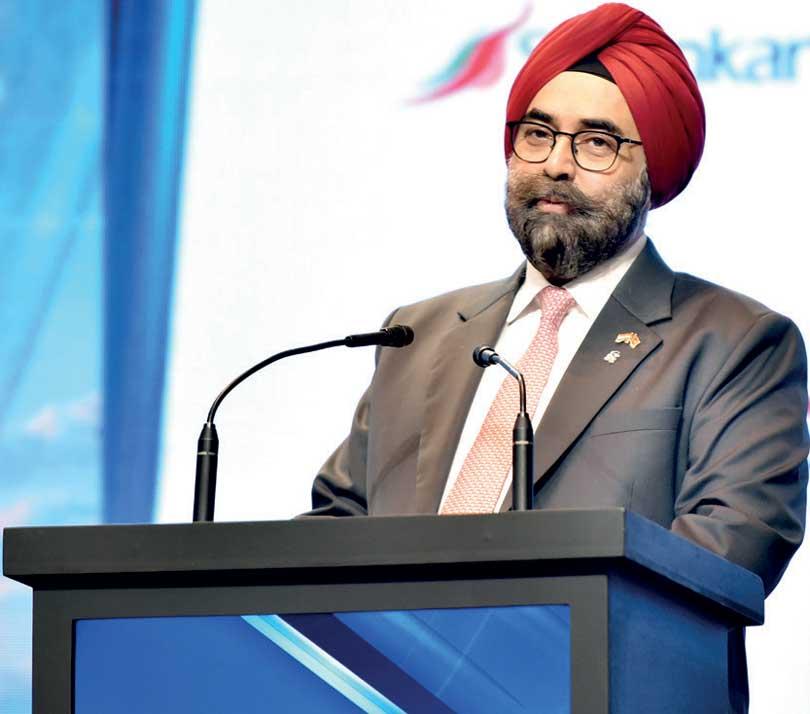
This opportunity was highlighted by Standard Chartered Bank’s Chief Executive Officer for India and South Asia, P. D. Singh, during his keynote address at the Sri Lanka Economic Summit 2026, organised by the Ceylon Chamber of Commerce.
Speaking at a session focusing on connecting Sri Lanka with Asia’s expanding economic networks, Singh outlined how the country could strengthen its role in regional commerce by developing closer relationships with international businesses, improving trade facilitation and attracting investment into high-value industries.
He expressed confidence that Sri Lanka possesses several competitive advantages that could enable Colombo to become an important destination for trade financing, regional business operations and cross-border commercial activities.
According to Singh, the increasing integration of Asian economies through manufacturing, services, investment and international supply chains is creating opportunities for strategically positioned countries to participate more actively in regional development.
Sri Lanka, situated along major international shipping routes and close to one of the world’s largest consumer markets, could benefit from this transformation by strengthening its ability to connect businesses, facilitate financial transactions and support regional trade.
Singh identified trade and treasury services as a particularly promising area for Colombo’s future development.
He suggested that the city could evolve into a regional centre capable of supporting significant volumes of commercial transactions, benefiting from its location, time zone and established financial services sector.
Developing such capabilities could allow Sri Lanka to provide specialised financial services to companies operating across South Asia and other Asian markets.
Trade finance plays an important role in international commerce by helping businesses manage payments, financing requirements and risks associated with cross-border transactions.
A stronger regional presence in this sector could therefore create opportunities for financial institutions, exporters, importers and companies involved in international supply chains.
Beyond financial services, Singh highlighted several additional industries where Sri Lanka could develop a stronger competitive position.
These included global capability centres, advanced analytics and technology services, specialised manufacturing, and port-related logistics and connectivity.
Together, these sectors could enable the country to attract international business activities while creating opportunities for skilled employment, investment and export development.
Global capability centres, in particular, have become increasingly important to multinational companies seeking specialised expertise in areas such as finance, technology, data analysis and business operations.
Sri Lanka’s educated workforce and existing professional services capabilities could provide a foundation for attracting such operations, particularly if supported by improvements in infrastructure, skills development and the business environment.
Singh placed considerable emphasis on the economic transformation taking place in India and the opportunities it presents for Sri Lankan enterprises.
He explained that India has developed into a major global manufacturing and services destination through sustained international investment, industrial development and the expansion of its skilled workforce.
Over the past two to three decades, investment from countries including Japan and South Korea has contributed to the development of extensive industrial networks involving manufacturers, suppliers, engineers, logistics providers and financial institutions.
As a result, India has strengthened its position in several globally significant industries, including automobile manufacturing, smartphone production, pharmaceuticals and international business services.
These industries operate within complex supply chains that involve numerous companies providing components, specialised services, technical expertise and logistical support.
For Sri Lankan businesses, the existence of such an extensive industrial ecosystem in a neighbouring country presents opportunities to establish commercial relationships and participate in international production networks.
Singh explained that companies operating in India are increasingly exploring opportunities beyond their domestic market.
As these businesses expand internationally, they require dependable partners, efficient supply chains and suitable locations to support their regional activities.
Sri Lanka could potentially meet some of these requirements by offering reliable manufacturing capabilities, professional services and efficient commercial connections.
Its proximity to India represents an important advantage, particularly for businesses seeking to reduce transportation complexity, strengthen supply chain resilience and work with partners located within a manageable geographical distance.
According to Singh, the ability to provide reliable services, consistent quality and efficient delivery could help Sri Lankan enterprises establish stronger relationships with Indian companies.
He also noted that Indian corporations expanding into overseas markets may require regional operational bases to coordinate international business activities.
Colombo could position itself as an attractive location for some of these functions by developing the necessary financial, technological and logistical capabilities.
Such an approach could enable Sri Lanka to benefit from India’s international commercial expansion without depending exclusively on direct exports to the Indian consumer market.
However, Singh cautioned that businesses seeking opportunities in India must recognise the considerable diversity of its economy.
India’s consumer preferences, purchasing patterns, commercial practices and market conditions vary across regions and industries.
Consequently, companies entering the Indian market should avoid assuming that a single strategy will be equally effective throughout the country.
Understanding regional demand, identifying suitable distribution channels and developing relationships with experienced local partners could improve the likelihood of successful market entry.
For Sri Lankan businesses, this could involve selecting specific geographic markets or industry segments that are most closely aligned with their products and capabilities.
Singh suggested that partnerships with established Indian enterprises could provide valuable market knowledge and help foreign businesses navigate the complexities of operating across India’s diverse commercial environment.
Manufacturing was another area identified as offering opportunities for Sri Lanka to strengthen its participation in regional value chains.
While product quality remains essential, Singh emphasised that internationally recognised standards and certifications are equally important for companies seeking to supply global manufacturers.
Businesses participating in international production networks must often comply with technical specifications, quality assurance requirements and industry-specific certifications.
For Sri Lankan manufacturers, obtaining relevant certifications and maintaining consistent production standards could improve access to international supply chains.
This would also support the country’s efforts to move towards higher-value manufacturing activities and reduce dependence on a limited range of traditional export industries.
The expansion of specialised manufacturing could create additional opportunities for technology adoption, workforce development and industrial innovation.
Alongside physical manufacturing, Singh highlighted the increasing importance of knowledge-based industries in shaping international economic relationships.
High-value analytics, technology-enabled services and global capability centres could become significant sources of growth for Sri Lanka.
As international businesses seek specialised talent and efficient operational models, countries capable of providing skilled professionals and reliable business environments may attract greater investment.
Sri Lanka could build on its existing strengths in education, information technology and professional services to develop a stronger presence in these industries.
However, achieving this potential would require continued efforts to enhance workforce capabilities and align professional skills with evolving international business requirements.
Singh also addressed the importance of modernising trade policies and simplifying procedures that influence cross-border commerce.
He noted that the structure of international trade has changed considerably since the India-Sri Lanka bilateral trade framework was established in 2000.
Modern supply chains increasingly depend on the efficient movement of goods, services, information and financial resources across national borders.
Administrative complexity and non-tariff trade barriers can create additional costs and delays for businesses seeking access to international markets.
Singh therefore encouraged greater attention to reducing such obstacles and making trade-related procedures easier to navigate.
Simpler regulatory processes, clearer documentation requirements and more efficient administrative systems could contribute to improving regional commercial integration.
These changes could be especially beneficial for small and medium-sized enterprises that may lack the resources required to manage complicated international trading procedures.
Improved market access could enable more Sri Lankan businesses to explore export opportunities and participate in cross-border partnerships.
Singh stressed that the success of regional trade initiatives should ultimately be evaluated through practical economic outcomes.
Increasing the number of businesses participating in export markets and expanding the contribution of higher-value products and services would be important indicators of progress.
Rather than measuring success solely through trade agreements or investment announcements, policymakers and industry leaders should consider whether reforms are making it easier for companies to develop sustainable international business relationships.
Greater participation in regional supply chains could also encourage technological improvements and strengthen the competitiveness of domestic enterprises.
For Sri Lanka, expanding high-value exports would be particularly relevant to strengthening foreign exchange earnings and supporting long-term economic stability.
The country’s established port infrastructure and location along international shipping routes provide additional opportunities to support these ambitions.
Singh identified logistics and connectivity as important components of Sri Lanka’s potential role within Asia’s expanding commercial networks.
Efficient port operations, modern transport infrastructure and dependable logistics services could help the country attract businesses seeking reliable connections between major regional markets.
When combined with stronger trade finance capabilities, these advantages could contribute to positioning Colombo as a centre for coordinating international commercial activities.
Such a development would require cooperation among financial institutions, logistics providers, manufacturers, technology companies and government authorities.
A coordinated approach could help improve the overall business environment while encouraging investment into sectors capable of generating long-term economic value.
Singh’s address also highlighted the importance of Sri Lanka’s existing entrepreneurial capabilities.
He acknowledged the country’s progress and resilience, expressing confidence that businesses and policymakers have the potential to build on those foundations.
Nevertheless, he emphasised that the strategic decisions taken over the coming years would play an important role in determining how effectively Sri Lanka participates in Asia’s economic development.
Investments in skills, infrastructure and technology, together with improvements in trade facilitation and regulatory efficiency, could influence the country’s ability to attract international commercial activity.
Private sector leadership would also be essential in identifying opportunities, establishing partnerships and developing products and services capable of competing in regional markets.
For Sri Lankan businesses, India’s economic expansion offers opportunities extending beyond conventional import and export arrangements.
Companies could potentially participate in manufacturing networks, provide specialised business services, support regional logistics operations and develop financial solutions for cross-border commerce.
At the same time, collaboration with international enterprises could encourage knowledge transfer, operational improvements and access to new technologies.
These developments could support Sri Lanka’s broader ambitions to diversify its economy and strengthen its position within regional and global markets.
Singh reiterated his support for the vision of Colombo becoming a leading regional trade finance destination.
He suggested that the city could serve as a platform through which businesses expand their activities across South Asia, benefiting from its strategic location and access to neighbouring markets.
The ambition reflects a wider opportunity for Sri Lanka to position itself as an active participant in regional commercial networks rather than functioning primarily as an individual domestic market.
Achieving such a transformation would depend on the country’s ability to translate its geographical advantages, professional expertise and existing infrastructure into competitive services valued by international businesses.
Standard Chartered’s regional leadership views stronger commercial integration between Sri Lanka, India and other Asian economies as an opportunity to support investment, trade and business development.
As Asia’s manufacturing and services sectors continue to evolve, Sri Lanka could strengthen its economic prospects by establishing itself as a reliable partner within these expanding networks.
The central message of Singh’s address was that Colombo’s potential as a South Asian trade finance hub is supported by several existing advantages, but realising that ambition will require deliberate policy choices, industry collaboration and sustained investment.
By improving international connectivity, reducing trade barriers, developing specialised industries and strengthening financial services, Sri Lanka could establish a more prominent role in facilitating commerce across the region.
The coming years will therefore be significant in determining whether the country can convert its strategic location and regional relationships into lasting opportunities for economic growth, investment and international business expansion.
Image Disclaimer: All photographs and images featured in this article are the property of their respective copyright owners. They are included solely for illustrative and informational purposes. We do not claim ownership of any third-party images or visual materials.