The Sri Lankan Government is preparing to introduce private sector participation in the management of the East Container Terminal (ECT) at the Port of Colombo, while ensuring that ownership of the strategically important maritime facility remains with the State.
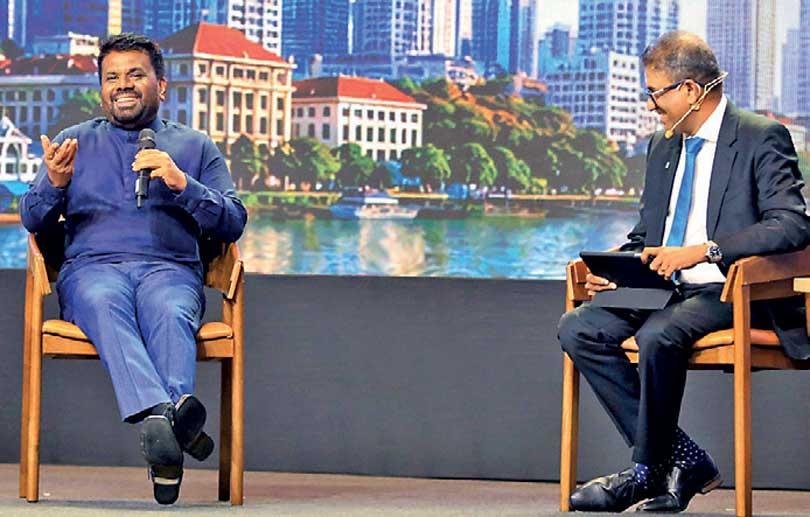
President Anura Kumara Dissanayake announced the proposed management arrangement during the Sri Lanka Economic and Investment Summit 2026, organised by the Ceylon Chamber of Commerce, on October 12.
The President revealed that the Cabinet had approved the establishment of a separate company to oversee the terminal’s management, with opportunities for private investors to acquire shares in the proposed entity.
Under this arrangement, the terminal itself would remain government-owned, while private sector involvement would be introduced to improve operational performance and strengthen its commercial capabilities.
According to the President, discussions are already taking place with several prominent international shipping companies interested in participating in the terminal’s management.
However, details regarding the potential investors, the percentage of shares to be offered and the timeline for implementing the arrangement have not yet been disclosed.
Sri Lanka News Portal
+1
The announcement forms part of the Government’s wider efforts to modernise Sri Lanka’s maritime industry, expand port infrastructure and increase the economic contribution generated by the country’s strategic position along international shipping routes.
Speaking during a discussion moderated by Ceylon Chamber of Commerce Vice Chairperson Bingumal Thewarathanthri, President Dissanayake acknowledged that Sri Lanka’s port sector has considerable potential to contribute more significantly to national economic development.
The discussion examined why the country’s maritime facilities have not yet generated economic returns comparable to their available infrastructure and operational capacity.
A central concern highlighted by the President was the underutilisation of the East Container Terminal.
According to the figures presented at the summit, the terminal currently handles approximately 500,000 containers, despite having a potential annual handling capacity of around 3.2 million containers once fully developed and optimised.
This substantial difference between existing throughput and potential capacity illustrates the scale of the opportunity available to improve terminal operations.
The President indicated that maintaining the existing management structure without additional commercial participation may not be sufficient to maximise the terminal’s economic potential.
The Government therefore intends to introduce a management model capable of combining public ownership with private sector expertise and investment.
Such an arrangement could provide opportunities to strengthen operational efficiency, expand commercial relationships with international shipping companies and improve the terminal’s competitiveness within the regional maritime industry.
The proposed participation of international shipping companies is particularly relevant given the highly competitive nature of container transhipment operations.
Shipping lines often consider factors such as terminal efficiency, vessel turnaround times, port connectivity and operational reliability when selecting facilities for their regional shipping networks.
Improving performance in these areas could help Colombo attract additional container traffic and strengthen its position within international maritime supply chains.
The Government’s approach also reflects an effort to distinguish between ownership of national infrastructure and responsibility for its commercial management.
By retaining State ownership of ECT while allowing private investment in the proposed operating company, the authorities aim to introduce greater commercial participation without transferring ownership of the terminal itself.
The precise financial and governance arrangements, however, will depend on the structure eventually approved and implemented.
Beyond the East Container Terminal, the President outlined plans for further development of Colombo’s port infrastructure.
A major component of the proposed expansion involves the second phase of the West Container Terminal, which requires the construction of a new breakwater.
The estimated cost of this infrastructure project has increased from an earlier projection of US$1.1 billion to approximately US$1.4 billion.
According to the President, completing the required breakwater would enable the second phase of the West Container Terminal to support an additional container handling capacity of approximately 3.2 million units.
The development is expected to form an important part of Sri Lanka’s efforts to accommodate future maritime traffic and expand the capacity of the Port of Colombo.
Sri Lanka News Portal
+1
Preparatory activities for the project are also progressing.
The Asian Development Bank (ADB) is undertaking the feasibility study required to assess the proposed development.
An interim report is expected in December 2026, while the completed feasibility assessment is scheduled for April 2027.
The forthcoming national Budget is expected to include financial allocations for preliminary studies and other preparatory requirements associated with the project.
These studies will provide information needed to evaluate the technical, financial and operational aspects of the proposed infrastructure investment.
The increase in projected construction costs also highlights the importance of careful financial planning and project evaluation before proceeding with major infrastructure commitments.
Large-scale maritime infrastructure projects typically involve substantial capital expenditure, extended development periods and complex coordination between engineering, financial and commercial stakeholders.
Consequently, their long-term viability depends on factors such as future shipping demand, operational efficiency and the ability to attract sufficient commercial activity.
In addition to increasing container handling capacity, President Dissanayake emphasised the need to broaden Sri Lanka’s maritime industry beyond traditional transhipment services.
He suggested that the country’s ports should evolve into more comprehensive centres for logistics and other maritime-related commercial activities.
Container transhipment has historically been an important component of Colombo’s port operations, allowing cargo to be transferred between vessels serving different international destinations.
However, the President indicated that Sri Lanka should explore additional opportunities to create economic value through its port infrastructure.
Developing an integrated logistics hub could allow the country to offer a wider range of services to shipping companies, importers, exporters and international supply chain operators.
These services could include cargo storage, distribution, warehousing, consolidation and other logistics-related activities that complement conventional container handling.
Expanding such operations could also create opportunities for private investment and employment in industries connected to maritime transport.
The President referred to a proposed logistics development that had previously encountered legal complications associated with its tender process.
According to his remarks, disputes involving the companies concerned had reached the courts but were subsequently addressed through an agreement involving compensation.
The resolution of these matters is expected to support further progress in the Government’s plans to develop logistics-related facilities.
Another measure under consideration involves establishing a container yard at Kerawalapitiya.
The proposed facility is intended to help reduce congestion within the Port of Colombo by providing additional space for container-related operations.
Congestion can affect the efficiency of port activities by creating delays in cargo movement, container storage and transportation.
Developing suitable supporting infrastructure outside the main port area could therefore help improve traffic management and facilitate smoother logistics operations.
The proposed Kerawalapitiya development forms part of the wider effort to improve the efficiency of Sri Lanka’s maritime transport and cargo handling systems.
The Government is also reviewing taxation affecting the bunkering industry, another important component of the country’s maritime services sector.
Bunkering refers to the supply of fuel to vessels, making it an essential service for ships operating along international maritime routes.
Sri Lanka’s location near major shipping lanes provides opportunities to develop this activity as part of a broader maritime services industry.
However, the commercial competitiveness of bunkering operations can be influenced by fuel prices, taxation, regulatory requirements and the availability of supporting infrastructure.
President Dissanayake indicated that the Government was examining an existing tax-related issue affecting the sector and considering possible relief through the forthcoming Budget.
He emphasised the importance of ensuring that taxation applicable to international maritime activities remains consistent with internationally accepted practices.
Any adjustments to the relevant tax framework would need to be formally introduced through the appropriate policy and legislative processes.
The proposed review could have implications for Sri Lanka’s ability to compete with other regional ports offering bunkering and related maritime services.
Sri Lanka News Portal
+1
Taken together, the announcements indicate a broader strategy to increase the contribution of port operations, maritime services and logistics to the national economy.
The Government’s priorities include improving the performance of existing infrastructure, expanding container handling capacity and encouraging greater commercial participation in selected port activities.
The proposed ECT management arrangement is a significant element of this approach because it seeks to address operational underutilisation through a different commercial structure.
At the same time, the planned West Container Terminal expansion is intended to provide additional capacity for future growth in container traffic.
The development of logistics facilities and the review of bunkering taxation represent further efforts to strengthen supporting industries associated with maritime commerce.
Sri Lanka’s geographical location provides a foundation for pursuing these ambitions.
Situated close to major shipping routes connecting Asia with Europe, the Middle East and other international markets, the country has opportunities to develop services that support regional and global trade.
Nevertheless, geographical advantages alone are insufficient to guarantee commercial success.
Modern port operations require reliable infrastructure, efficient cargo handling, competitive pricing and strong relationships with international shipping and logistics companies.
Investment in digital systems, operational technology and supporting transport infrastructure can also contribute to improving the efficiency of maritime facilities.
The involvement of experienced international operators could potentially provide access to industry knowledge, commercial networks and operational practices that support improvements in terminal performance.
However, the financial outcomes and operational effectiveness of the proposed arrangements will depend on their eventual terms, implementation and management.
For Sri Lanka, increasing the economic value generated by existing port assets is particularly relevant as the country seeks to strengthen investment, trade and long-term economic growth.
More efficient ports can support domestic exporters and importers by improving connectivity and reducing avoidable delays in international cargo movements.
Expanded logistics services could also create commercial opportunities for local transportation companies, warehouse operators, technology providers and other businesses involved in supply chain activities.
The President’s comments at the Sri Lanka Economic and Investment Summit 2026 therefore point towards an approach in which existing State-owned maritime infrastructure is combined with selected private sector partnerships and new development projects.
While several elements of the plan remain subject to further studies, commercial negotiations and policy decisions, the Government has identified port development as an important component of its economic strategy.
The immediate focus will be on determining the structure of private participation in the East Container Terminal, progressing preliminary work on the West Container Terminal expansion and implementing supporting measures for logistics and maritime services.
The success of these initiatives will ultimately depend on the country’s ability to convert available infrastructure capacity into greater commercial activity while maintaining effective oversight and financially sustainable operations.
As regional ports continue to compete for shipping traffic and logistics investment, the proposed developments could influence Colombo’s future position within international maritime networks.
The Government’s latest announcements underline its intention to increase the economic contribution of Sri Lanka’s ports by improving asset utilisation, expanding infrastructure and diversifying the range of services offered to international maritime businesses.
Image Disclaimer: All photographs and images featured in this article are the property of their respective copyright owners. They are included solely for illustrative and informational purposes. We do not claim ownership of any third-party images or visual materials.