Sri Lanka’s stronger tax collections have created a legitimate debate over relief for the middle-income earners but any cuts should be considered as part of a broader overhaul of the tax system, the International Monetary Fund (IMF) said.
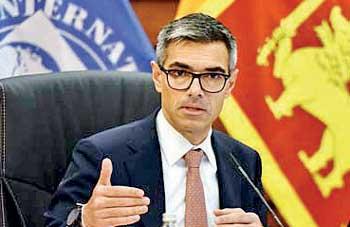
IMF Mission Chief Evan Papageorgiou said tax revenue reached 15.4 percent of gross domestic product in 2025, double its level in 2022, reflecting a substantial improvement in public finances.
“What is the point of having such good reserves, such good revenues, such good fiscal buffers, if taxation is what it is?” he said when asked at a press briefing whether the government had room to ease the burden on the middle-income earners.
Papageorgiou said the question was fair but cautioned against judging individual tax cuts in isolation. The level of taxation, pace of revenue growth and scope for relief needed to be considered together, alongside the design of personal and corporate income taxes, value-added tax and exemptions.
He declined to comment on specific relief measures while discussions with the government were continuing.
“Yes, we understand, of course and we see the arguments as well,” he said.
In a statement at the end of its September 10-23 mission, the IMF called on Sri Lanka to develop a medium-term revenue strategy that would sustain the collections while making the tax system more efficient and fair.
It also urged the government to broaden the tax base, rationalise exemptions and incentives and improve compliance.
The comments come ahead of Budget 2027, as the government weighs demands for relief against the need to preserve the revenue gains, underpinning its economic recovery.