For decades, winning a Grammy has been considered one of the highest achievements in the music industry. Artists spend years chasing that golden gramophone, seeing it as the ultimate recognition of their work.
But BTS have done something few artists have ever dared to do.
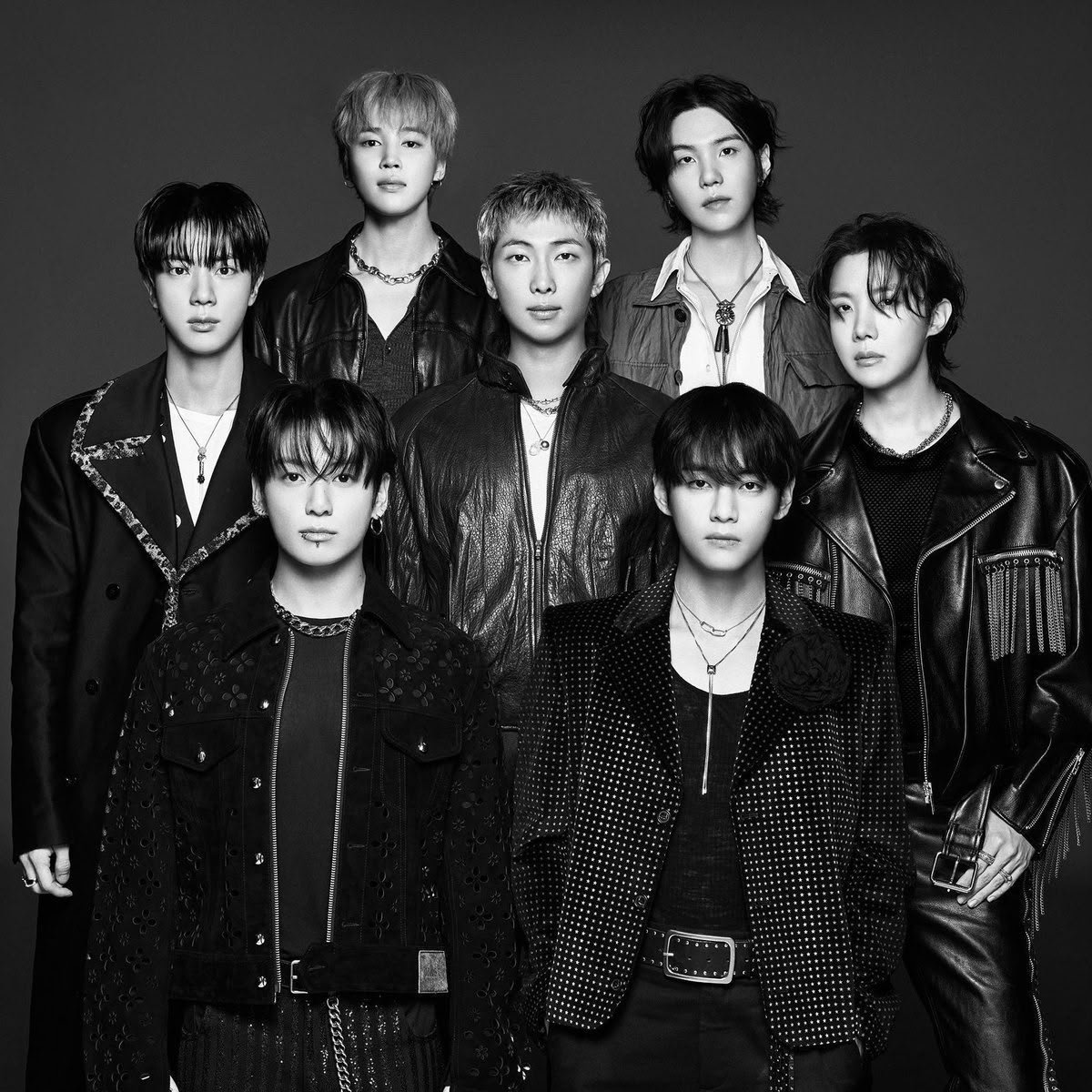
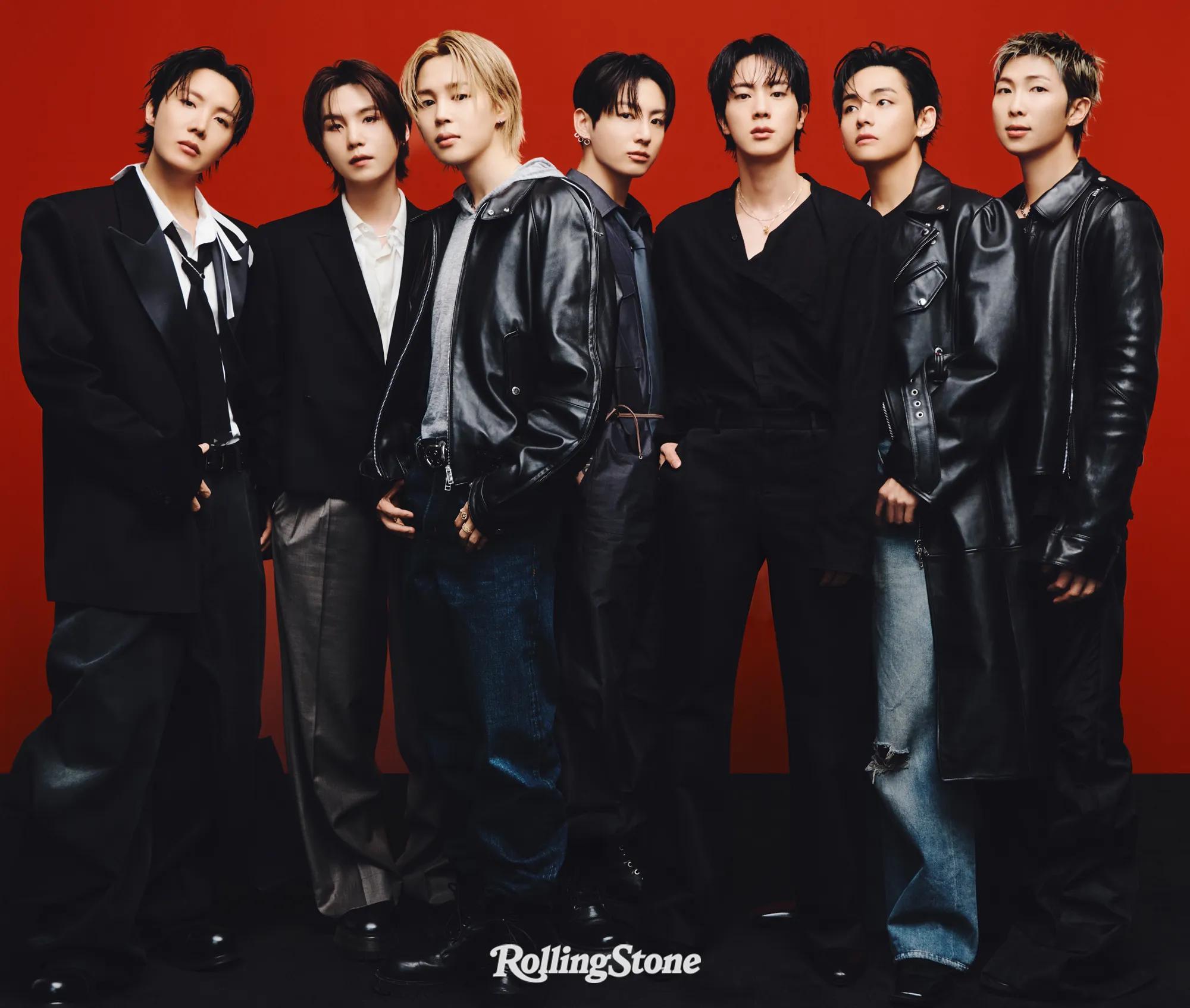
Instead of submitting one of the biggest albums of 2026 for Grammy consideration, the seven members of BTS, RM, Jin, Suga, J-Hope, Jimin, V and Jungkook, collectively announced that they would not participate in the 2027 Grammy Awards.
Their reason was simple yet powerful.
“We have decided not to submit to the Grammys this year. We hope that music can be heard and loved for what it is, rather than being divided by region or language.”
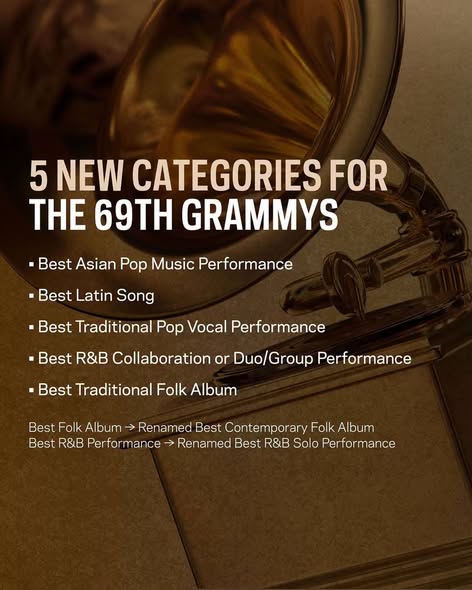
The statement arrived just weeks after the Recording Academy introduced a new Best Asian Pop Music Performance category, a decision that immediately sparked debate across the global music industry.
For millions of fans, BTS’ decision was not about rejecting an award. It was about standing up for a principle.

(Translation – “We’ve decided not to submit our work for this year’s Grammy Awards. We hope music will be recognized and loved for what it is, rather than being divided by region or language. Thank you, as always, to ARMY and everyone who supports us.”)
A Category That Divided Opinions
The Recording Academy described the new award as a way to recognise excellence in Asian pop music.
However, many fans and industry observers questioned whether creating a separate category based on geography and language was truly a step forward.
Critics argued that music should compete based on artistic excellence rather than where an artist comes from or the language they sing in.
Many ARMYs described the move as creating another barrier instead of removing one. Some even called it discriminatory, arguing that separating Asian artists into their own category risks reinforcing divisions rather than celebrating diversity.
This criticism became even stronger because Grammy rules allow a song to compete in only one performance category. Choosing the Asian Pop category would mean giving up the opportunity to compete in broader pop performance categories.
For BTS, whose music has already proven it belongs alongside the biggest artists in the world, many fans felt this represented a step backwards.
Arirang Was More Than Worthy of the Main Categories
BTS’ decision becomes even more significant when considering what Arirang achieved.
Released after the group’s long-awaited reunion following military service, the album quickly became one of the biggest musical events of the year.
The album:
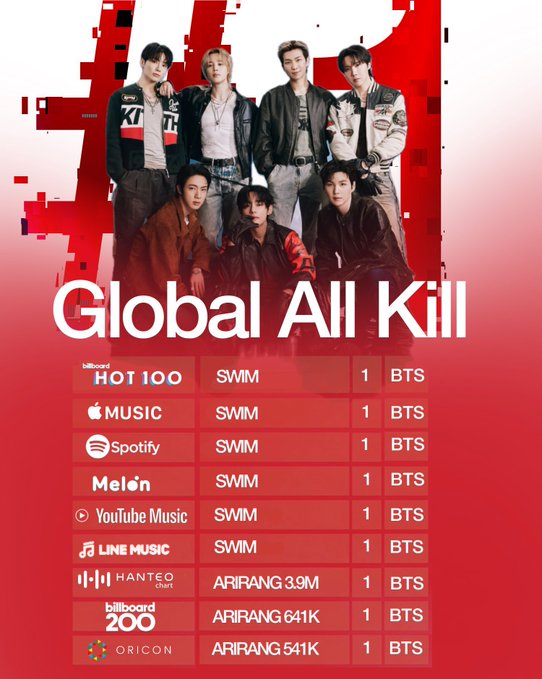
- Debuted at No. 1 on the Billboard 200
- Reached No. 1 in 23 countries, including the United Kingdom, Germany and Japan
- Became one of the best-selling albums of 2026
- Marked BTS’ triumphant return after a four-year group hiatus
- Received widespread critical acclaim worldwide
Its lead single Swim also made history by:
- Debuting at No. 1 on the Billboard Hot 100
- Becoming BTS’ latest US chart topper
- Dominating global streaming platforms
- Receiving predictions for Song of the Year consideration from industry experts
Many critics expected Arirang to compete in prestigious Grammy categories such as Album of the Year, Record of the Year, Song of the Year and Best Pop Duo/Group Performance.
Instead, discussions quickly shifted toward whether BTS would fit into a newly created regional category.
For many fans, that conversation alone highlighted the very issue BTS addressed in their statement.

This Is Not the First Time the Grammys Have Faced Criticism
The Recording Academy has faced accusations of bias and exclusion for years.
The Weeknd boycotted the Grammys after receiving zero nominations despite having one of the biggest albums of 2020.
Drake withdrew his nominations and questioned the credibility of the awards.
Frank Ocean declined to submit his music, openly criticising the Academy’s judging process.
Even rapper Nicki Minaj has repeatedly criticised Grammy decisions, arguing that deserving artists have often been overlooked.
In 2020, Drake famously questioned whether the Grammys still represented the highest form of recognition for modern artists, suggesting that the music industry had outgrown the awards.
BTS are now part of a growing list of globally recognised artists choosing principles over trophies.
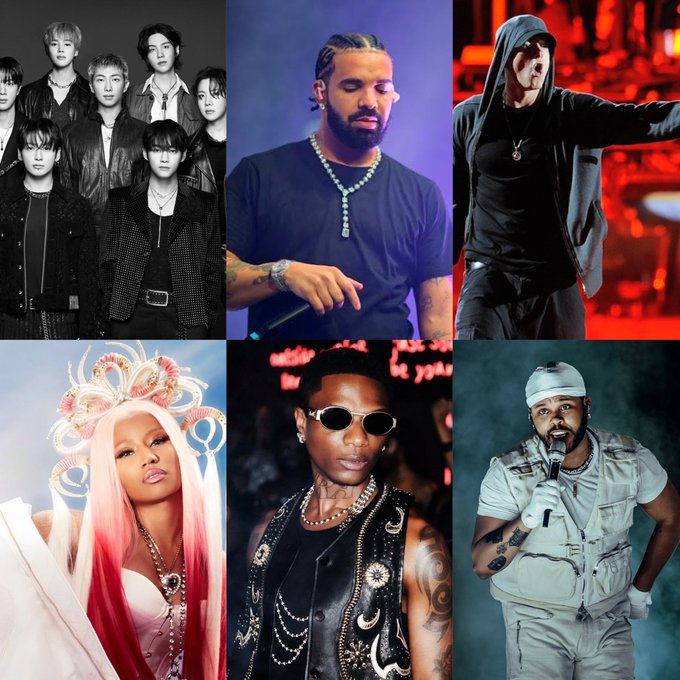
(Artists Who Have Boycotted the Grammy Awards Due to Alleged Unfair Treatment)
BTS Have Already Broken Every Barrier
Since their debut, BTS have never accepted the limitations often placed on non-English artists.
They became:
- The first K-pop group nominated for a Grammy.
- The first Korean act to top the Billboard Hot 100.
- Multiple-time Billboard Music Awards winners.
- Two-time American Music Awards Artist of the Year winners.
- The most awarded group in Billboard Music Awards history.
- One of the best-selling artists in the world.
They achieved all of this while releasing music primarily in Korean and proving that language has never been a barrier to connecting with audiences.
Their success has always challenged the idea that music needs translation to be understood.

(Jung Kook, V, Jin, RM, Suga, Jimin and J-Hope of BTS accept the Artist of the Year award onstage at The 52nd American Music Awards held at the MGM Grand Garden Arena on May 25, 2026 in Las Vegas, Nevada)

(BTS performing at FIFA World cup Halftime Show – 2026)
ARMY Is Standing Behind BTS
Rather than expressing disappointment, millions of BTS fans have overwhelmingly supported the group’s decision.
Across social media, fans praised BTS for refusing to compromise their values.
Many argued that BTS have nothing left to prove. Others pointed out that the group has already earned recognition from audiences around the world, making fan support more meaningful than any trophy.
For ARMY, the message was clear.
Recognition should never come at the cost of equality.
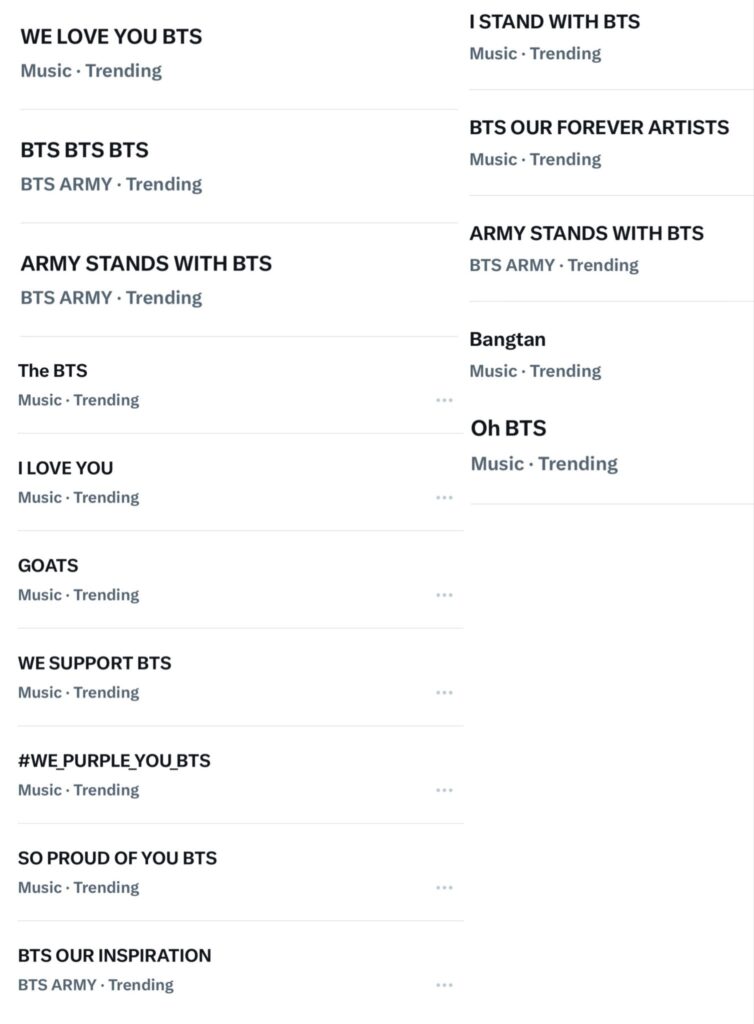
(Trending topics on X after BTS announced the matter)
When a Grammy Becomes a Choice
For countless musicians, winning a Grammy remains a lifelong dream.
For BTS, it has become something different.
By choosing not to submit one of the year’s biggest albums, the group demonstrated that recognition only has value when it is earned on equal terms.
Rather than allowing themselves to be placed into a category many fans see as limiting, BTS chose to step away entirely.
In doing so, they transformed what many artists consider the ultimate goal into something optional.
That may be one of the strongest statements any artist has made in recent Grammy history.
Who Really Needs Whom?
BTS have sold out stadiums across the world, broken streaming records, dominated international charts and built one of the largest fan communities in music history.
Their 2026 comeback proved once again that their influence extends far beyond any awards ceremony.
In fact, BTS’ comeback live attracted more viewers than the Grammy Awards broadcast, further highlighting the group’s unparalleled global reach.

(BTS Comeback Live drew more live viewers than recent major award shows)
It leaves the music industry with one unavoidable question.
If the biggest band in the world can walk away from the Grammys without losing its influence, while millions continue to support them regardless…
Who really needs whom?