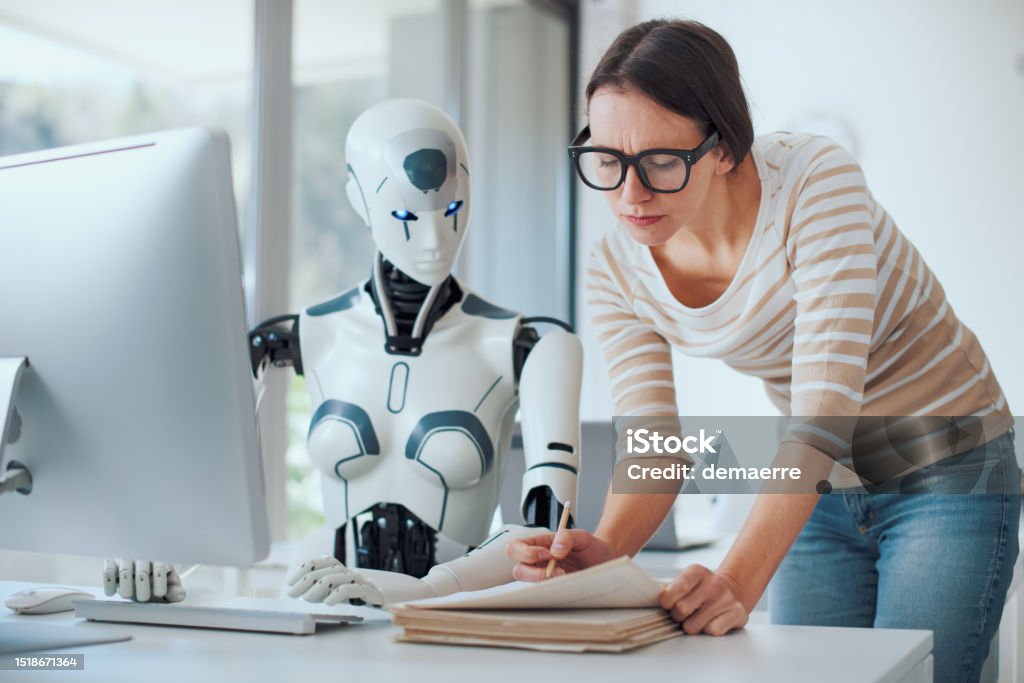
Imagine walking into your workplace one morning and finding that your newest colleague is not human.
It does not take coffee breaks, never misses deadlines, works around the clock, and can process information in seconds. At first glance, it may sound like something borrowed from a science fiction film. Yet in 2026, the idea of working alongside robots is becoming less fantasy and more reality.
Across industries, robots and intelligent machines are gradually stepping into workplaces, changing how businesses operate and how people work. From hospitals and hotels to offices and warehouses, automation is no longer a distant possibility. It is already here.
The real question is no longer whether robots will become part of our workplaces.
It is whether we are truly ready for them.
The Rise of the Robot Workforce
For decades, robots were mainly associated with factories and manufacturing lines. They performed repetitive tasks, lifted heavy materials, and helped increase productivity.
Today, however, robotics has evolved far beyond industrial settings.
Modern workplaces are witnessing a new generation of intelligent machines capable of assisting with customer service, scheduling, data analysis, inventory management, and even healthcare support.
In some restaurants, robotic assistants deliver food to tables. In hospitals, robots help transport medicine and supplies. Warehouses increasingly rely on automated systems to sort, package, and move products with impressive speed.
Even office environments are beginning to feel the impact of automation through AI powered assistants that handle repetitive administrative tasks.
The workplace is changing quietly, but rapidly.
Will Robots Replace Human Jobs?
This is perhaps the biggest concern surrounding workplace automation.
Whenever technology advances, fears of job displacement naturally follow. Many workers wonder whether machines will eventually make human employees unnecessary.
The reality may be more complex.
While certain repetitive jobs may become increasingly automated, experts suggest that robots are more likely to transform jobs rather than eliminate all of them.
Tasks involving routine processes may become automated, allowing employees to focus on work requiring creativity, emotional intelligence, communication, leadership, and critical thinking.
After all, robots may be efficient, but they cannot fully replicate empathy, human judgment, or emotional understanding.
A customer service robot may answer questions quickly, but it may struggle to comfort an upset customer in the way a human can.
In many industries, human skills may become even more valuable rather than less.
The Rise of Human Robot Collaboration
Perhaps the future workplace is not about humans competing with robots.
Perhaps it is about collaboration.
Many businesses are beginning to view robots as assistants rather than replacements. Instead of taking over entirely, machines can support employees by handling repetitive or time consuming tasks.
Imagine a workplace where robots organise logistics while humans focus on strategy. Or healthcare environments where robotic technology handles precision tasks while medical professionals focus on patient care.
This partnership between human intelligence and machine efficiency could redefine productivity in powerful ways.
The future employee may not compete against robots.
They may work alongside them.
Skills That Could Matter Most in the Future
As automation grows, the workplace may begin to reward different strengths.
Technical knowledge will certainly remain important, but uniquely human qualities could become even more valuable.
Skills likely to matter in the future include:
- Creativity and innovation
- Emotional intelligence
- Communication and collaboration
- Leadership and decision making
- Adaptability and problem solving
In a world increasingly shaped by intelligent systems, being deeply human may become one of the greatest professional advantages.
Are Businesses Ready for the Shift?
For businesses, adopting robotics offers clear advantages. Increased efficiency, lower operational costs, fewer repetitive errors, and faster productivity are difficult to ignore.
Yet the transition is not always simple.
Companies must balance innovation with employee concerns, ethical questions, and workplace adaptation. Workers need opportunities to learn new skills and adjust to evolving roles.
Businesses that approach automation thoughtfully may gain a significant advantage in the years ahead.
Those that ignore it entirely may risk falling behind.
Final Thoughts
The idea of robot colleagues may still feel unfamiliar, even slightly intimidating.
But history has shown that workplaces continuously evolve. From computers to smartphones to artificial intelligence, technology has repeatedly reshaped how we work.
Robots may not replace every human role, nor should they.
Instead, they may become partners in a new kind of workplace where technology handles efficiency and humans bring creativity, empathy, and meaning.
The future of work may not belong to humans or robots alone.
It may belong to both.