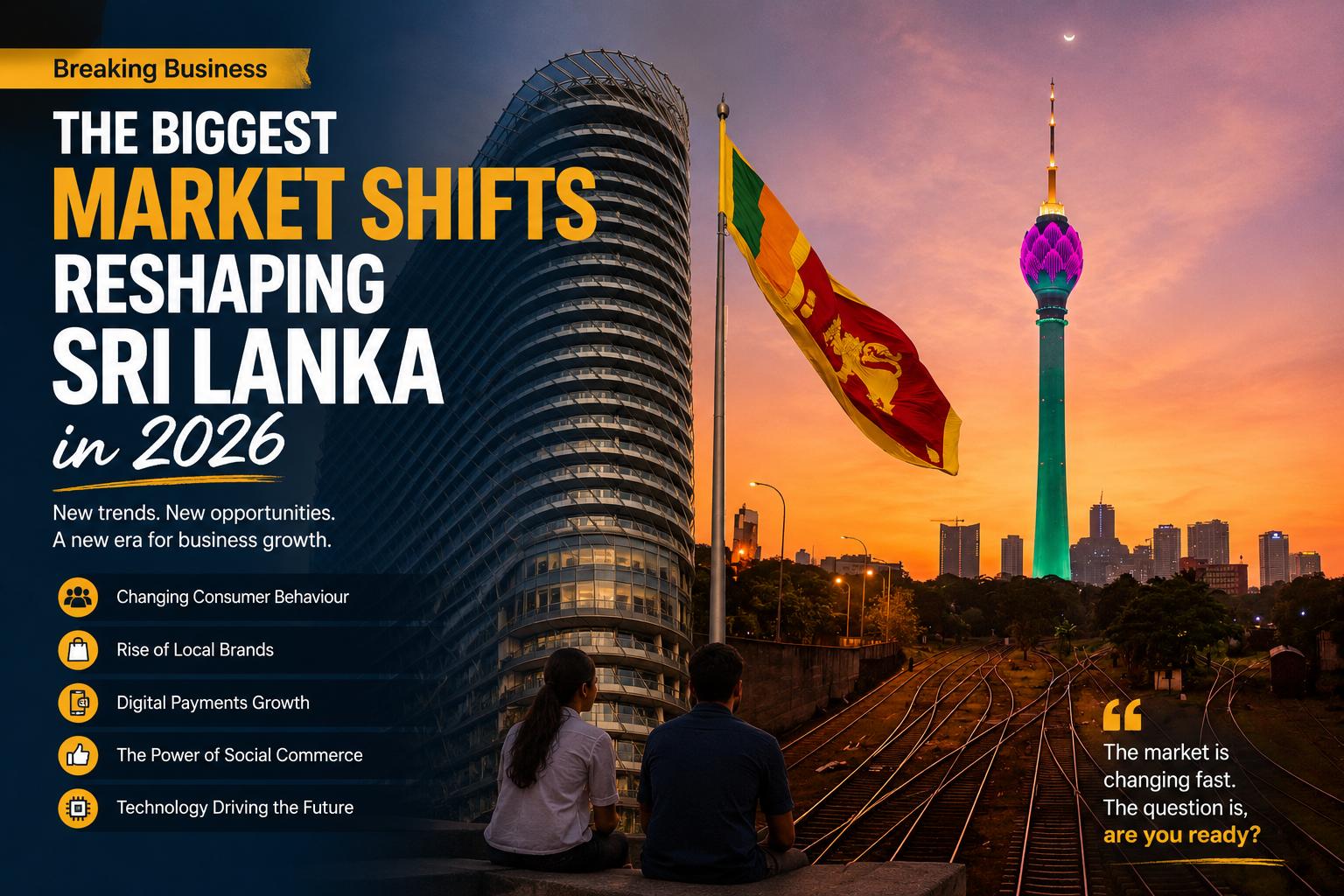
Sri Lanka’s business landscape is changing — and faster than many expected.
A few years ago, businesses were mainly focused on survival.
Today? The conversation is shifting.
Companies are adapting to changing consumer habits, digital transformation, rising competition, and a growing demand for convenience. From social commerce to local entrepreneurship and smarter spending habits, Sri Lanka’s market is quietly going through a major reset.
And for businesses, ignoring these shifts may be riskier than adapting to them.
Here are the biggest market changes reshaping Sri Lanka in 2026 — and why they matter.
1. Local Brands Are Winning More Customer Attention
There was a time when international brands automatically felt more trusted.
Not anymore.
Sri Lankan consumers are increasingly supporting local businesses — especially in:
- Fashion
- Skincare
- Food brands
- Cafés
- Handmade products
Why?
People are becoming more interested in authenticity, affordability, and supporting local entrepreneurs.
Sri Lankan Shift
Many homegrown brands are building loyal customer bases through social media and word-of-mouth instead of huge advertising budgets.
Being local is becoming a strength.
Business Takeaway
If you’re a local brand, this may be your moment to stand out.
Consumers are paying attention.
2. Social Media Is Quietly Becoming the Marketplace
Scrolling is becoming shopping.
Consumers increasingly discover businesses through:
- TikTok
- Facebook Marketplace
- WhatsApp Business
For many Sri Lankan SMEs, social media isn’t just marketing anymore.
It is the business.
Why This Matters
Customers want convenience.
They expect:
- Quick replies
- Fast ordering
- Online catalogues
- Easy communication
Businesses that stay digitally accessible are often gaining an advantage.
3. Digital Payments Are Becoming More Common
Cash is still important — but payment habits are changing.
More customers now expect:
- QR payments
- Online transfers
- Card options
- Mobile payment methods
Sri Lankan Reality
Restaurants, cafés, clothing stores, and even smaller vendors are increasingly embracing digital payment systems.
Convenience is becoming a competitive advantage.
Ask Yourself
How easy is it for customers to buy from you?
Because sometimes, friction costs sales.
4. Customers Are Spending More Carefully
Consumer behaviour is shifting.
People are becoming more intentional with spending.
Instead of buying impulsively, customers increasingly value:
- Quality
- Durability
- Value for money
- Trustworthy brands
What Businesses Are Learning
People still spend.
But they spend smarter.
Brands that clearly communicate value may perform better than businesses simply competing on price.
5. Small Businesses Are Growing Faster Through Content
Traditional advertising isn’t working the same way it used to.
Businesses increasingly attract customers through:
- Reels
- Educational content
- Behind-the-scenes videos
- Customer stories
- Relatable content
Sri Lankan Example
A local café sharing behind-the-scenes content or a boutique posting styling videos may gain more traction than businesses relying only on promotions.
Attention is becoming currency.
6. AI Is Slowly Entering Everyday Business
Artificial Intelligence may sound futuristic — but many businesses are already using it quietly.
Companies are using AI to:
- Create content
- Generate ideas
- Improve customer support
- Save time on repetitive work
Business Insight
You don’t need to become a tech company overnight.
But businesses learning digital tools early may gain an advantage.
7. Trust Is Becoming a Bigger Selling Point
Customers increasingly care about:
- Transparency
- Honest reviews
- Good service
- Fast responses
- Brand reputation
In a crowded market, trust is becoming one of the biggest differentiators.
Reality Check
People may forget an advertisement.
But they rarely forget bad service.
The Bottom Line
Sri Lanka’s business landscape is changing — quietly, but quickly.
The businesses growing in 2026 are not always the biggest.
They’re often the ones paying attention to shifting consumer behaviour, adapting faster, and making things easier for customers.
Because the market is evolving.
And businesses willing to evolve with it may be the ones leading the next chapter.