People rarely remember advertisements.
But they remember stories.
A heartfelt brand campaign.
A founder’s journey from struggle to success.
A short video that feels emotional, relatable, or inspiring.
In 2026, businesses are beginning to realize something important:
Consumers do not simply buy products anymore.
They buy meaning, emotions, and experiences.
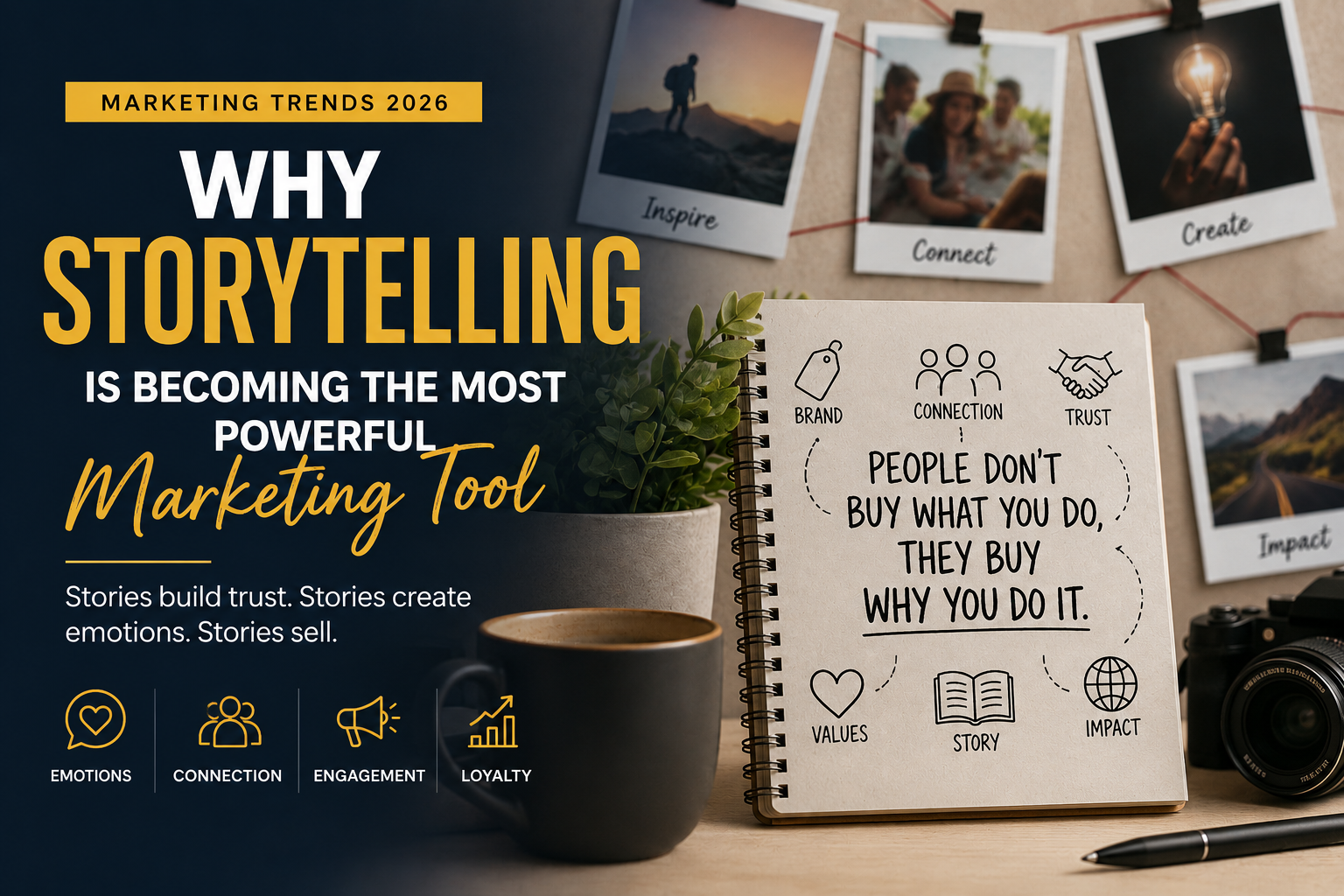
And storytelling is becoming one of the strongest ways to create that connection.
In a world filled with endless advertisements, brands are discovering that facts may grab attention, but stories leave lasting impressions.
Why Storytelling Matters More Than Ever
Modern consumers are overwhelmed with content.
Every day, people scroll past advertisements, promotions, sponsored posts, and sales messages.
Standing out is becoming increasingly difficult.
This is where storytelling changes the game.
Stories feel human.
They create emotional connection.
Instead of saying, “Buy our product,” storytelling answers a much deeper question:
Why should people care?
Consumers often remember how a brand made them feel more than what it tried to sell.
People Connect With Emotion, Not Just Products
Think about the advertisements people often talk about.
They are rarely the ones listing product features.
Instead, they are the ones that make people laugh, feel nostalgic, emotional, inspired, or understood.
A skincare brand may tell a story about confidence.
A travel company may sell memories instead of hotel rooms.
A café may market comfort, connection, and belonging rather than simply coffee.
Products solve problems.
Stories create emotional attachment.
And emotional attachment often drives loyalty.
Storytelling Makes Brands Feel Human
People increasingly want authenticity.
Perfectly polished marketing can sometimes feel distant or overly corporate.
Stories help brands feel real.
Consumers enjoy learning about the people behind businesses, the challenges brands have faced, and the values driving their work.
Founder stories, customer experiences, behind-the-scenes content, and honest brand journeys often create stronger trust.
People connect with people.
Not logos.
Social Media Has Changed Marketing
Platforms like Instagram, TikTok, and YouTube have accelerated the power of storytelling.
Short videos, personal experiences, and relatable moments often outperform traditional advertisements.
Consumers increasingly prefer content that feels authentic over content that feels overly scripted.
A simple behind-the-scenes video may sometimes perform better than an expensive campaign.
Because relatability matters.
Stories feel personal.
And personal content often feels more trustworthy.
What Good Brand Storytelling Looks Like
Good storytelling does not always need dramatic narratives.
Sometimes, simplicity works best.
Businesses can tell stories through:
- Customer success experiences
- Founder journeys
- Behind-the-scenes moments
- Brand values and mission
- Everyday relatable content
- Emotional or meaningful campaigns
The goal is not perfection.
The goal is connection.
The strongest brand stories often feel genuine.
What This Means for Sri Lankan Businesses
For Sri Lankan businesses, storytelling presents a major opportunity.
Small brands may not always have large marketing budgets, but they often have something equally powerful: real stories.
A family-owned café sharing its journey.
A clothing brand highlighting local craftsmanship.
A startup talking honestly about challenges and growth.
Authenticity can become a competitive advantage.
Especially in crowded digital spaces.
Final Thoughts
Marketing is changing.
Consumers are becoming harder to impress and easier to ignore.
But stories still have power.
Because while people may forget advertisements, they often remember feelings.
The brands winning in 2026 may not necessarily be the loudest.
They may simply be the ones telling stories worth listening to.