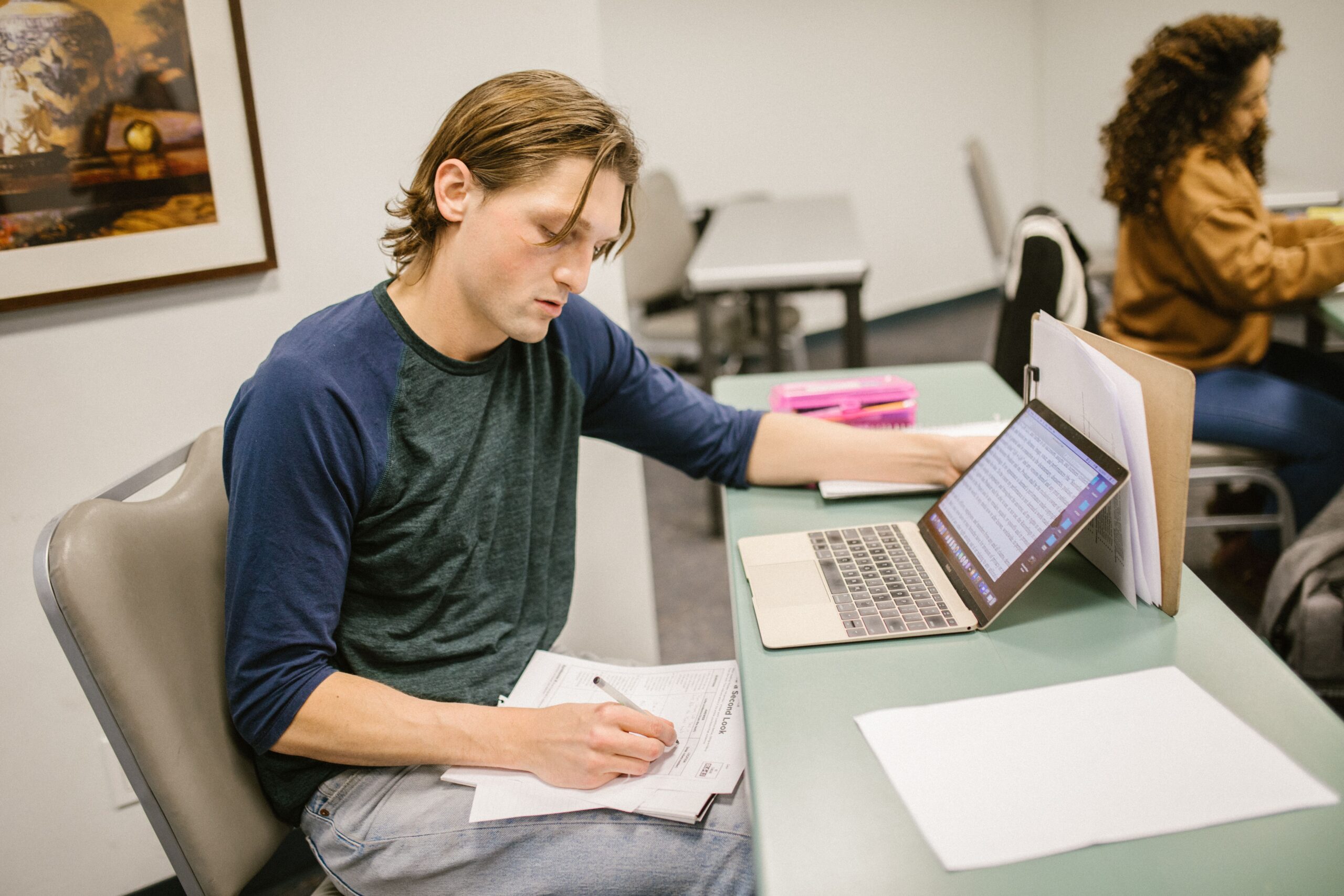
For generations, exams have stood at the centre of education.
From classrooms to universities, test papers have long been used to measure intelligence, progress, and academic success. Scores often shaped opportunities, influenced career paths, and determined how students were evaluated.
For many, exams became synonymous with education itself.
But as technology, workplaces, and learning methods rapidly evolve, an important question is beginning to emerge.
Will traditional exams continue to define education in the future?
Or is the system gradually moving toward something different?
Across the world, conversations around education are shifting. Schools, universities, and employers are increasingly questioning whether memorisation based examinations still reflect the skills students truly need in a fast changing world.
Why Traditional Exams Are Being Questioned
Traditional examinations have long focused heavily on memory and information recall.
Students often spend weeks memorising facts, theories, formulas, and definitions to perform well in limited time settings.
While examinations can measure knowledge, critics argue they do not always reflect deeper understanding, creativity, critical thinking, or real world problem solving.
Success in an exam does not necessarily guarantee the ability to apply knowledge effectively outside the classroom.
This growing concern is encouraging many educators to rethink how student performance should be measured.
The Rise of Skills Based Learning
Modern workplaces increasingly value practical skills alongside academic qualifications.
Communication, teamwork, problem solving, adaptability, digital literacy, and creativity are becoming highly sought after across industries.
As a result, some educational institutions are beginning to shift toward project based learning, presentations, portfolios, group work, and practical assessments rather than relying solely on written examinations.
In many fields, demonstrating skills may matter just as much as memorising information.
The future of education may increasingly focus on what students can do, rather than simply what they can remember.
Technology Is Changing Assessment Methods
Technology is also influencing how learning and assessments happen.
Online learning platforms now offer interactive quizzes, personalised learning paths, digital assignments, and real time feedback systems.
Artificial intelligence may eventually help track student progress more continuously rather than relying entirely on one final examination.
Some institutions are experimenting with open book assessments, collaborative projects, and practical problem solving exercises designed to reflect real world situations more accurately.
Education is becoming increasingly flexible.
And assessment methods may evolve alongside it.
Why Exams May Still Matter
Despite criticism, traditional exams are unlikely to disappear completely.
Standardised testing still offers structure and fairness in many education systems.
Exams can provide measurable benchmarks, especially in competitive environments such as university admissions and professional qualifications.
Certain fields such as medicine, engineering, law, and science may continue requiring rigorous testing to ensure knowledge and competence.
For many educators, the solution may not be removing exams entirely.
It may involve balancing examinations with practical learning experiences.
The Bigger Question: What Does Success Really Mean?
Perhaps the real conversation is not simply about exams.
It is about redefining success in education.
Should students be judged only by grades?
Or should education place greater value on curiosity, creativity, emotional intelligence, problem solving, and lifelong learning?
As industries evolve and technology reshapes workplaces, education systems may increasingly need to prepare students for challenges that cannot always be answered through memorisation alone.
Final Thoughts
Traditional exams have shaped education for generations.
But the future may demand broader ways of measuring student potential.
Rather than disappearing, exams may simply evolve.
The classroom of tomorrow may combine knowledge testing with creativity, practical skills, collaboration, and critical thinking.
Because education is no longer only about remembering information.
Increasingly, it is about learning how to think, adapt, and thrive in a rapidly changing world.