Sri Lanka’s households have lifted consumption to a record level while becoming more selective in their spending, with a new Boston Consulting Group (BCG) and Ceylon Chamber survey pointing to a smaller middle-class share and tighter room for discretionary purchases.
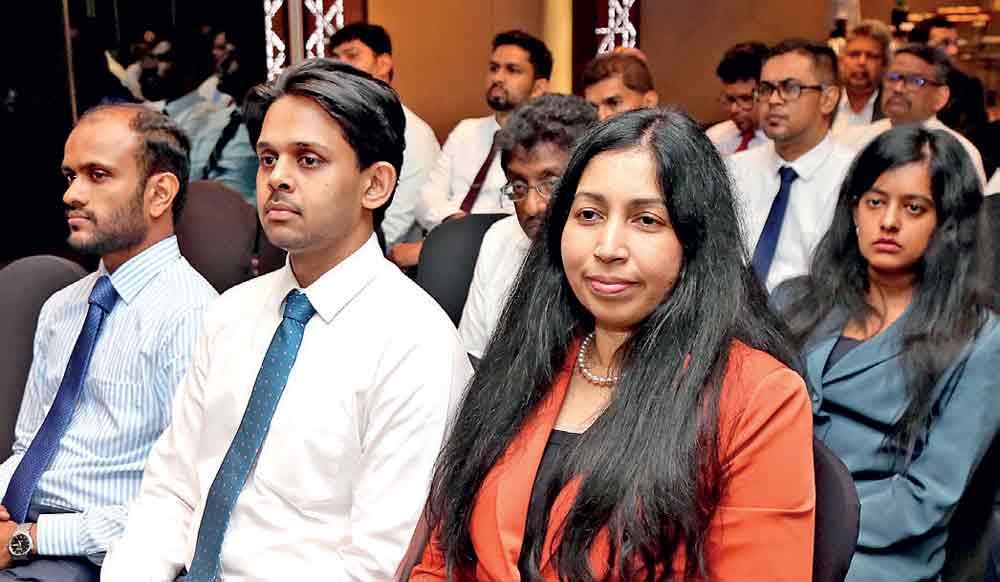
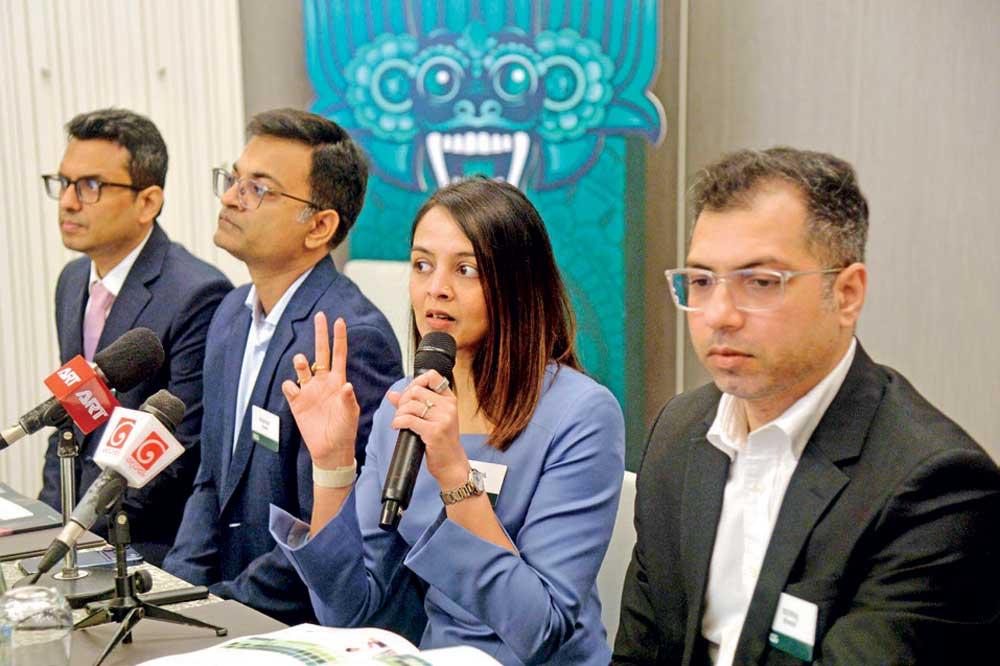
The findings, presented to editors in Colombo, highlight an uneven recovery in household purchasing power, with consumers expecting their spending to rise at a significantly faster pace than their incomes.
The report, titled ‘The Changing Path to Purchase in Sri Lanka’, found that 77 percent of consumers expected household expenditure to increase over the following six months. In comparison, only 38 percent expected their income to rise, while 35 percent anticipated no change and 27 percent expected their income to decline.
“The spending expectations that the Sri Lankan consumers have are running higher or running well ahead of income expectations,” BCG Associate Director Devraj Bharati told the briefing.
The findings are based on a nationally representative survey of 2,272 consumers across all nine provinces, conducted in June and July 2026, together with focus group discussions. The spending and income expectations relate to the six months following the survey.
Household consumption reached Rs.8.9 trillion in 2025 at constant 2015 prices, surpassing the previous peak of Rs.8.2 trillion recorded in 2019. Consumption has consistently represented between 60 and 70 percent of GDP, making household demand a key component of Sri Lanka’s economic performance.
“If we go back about 10 years and look at how the overall Sri Lankan economy has evolved, we see that, in terms of household consumption, there have been three distinct phases,” said BCG India Leader for Marketing, Sales and Pricing and Managing Director and Partner Parul Bajaj.
According to the report, average annual real consumption growth stood at 5.5 percent between 2023 and 2025, following an average annual contraction of 0.8 percent between 2019 and 2023.
However, the recovery in overall household expenditure has not been accompanied by a broad-based improvement in household income classifications.
The middle class accounted for 57 percent of households in 2026, down from 62 percent in 2020. Meanwhile, the share of households in the two lower-income categories increased to 39 percent from 34 percent, while affluent households remained at 4 percent.
BCG estimated that around 400,000 households had moved into the two lower-income categories. The income thresholds were adjusted for inflation to enable comparisons in real terms.
Under the study’s 2026 classifications, households earning between Rs.75,000 and Rs.400,000 per month were categorised as middle class. Those earning below Rs.75,000 fell into the two lower-income categories, while households earning above Rs.400,000 were classified as affluent.
Despite accounting for a smaller share of households, the middle class continues to contribute around 70 percent of total consumption, based on estimated spending across 32 categories.
The geographical distribution of demand also shows differences in household purchasing power. Rural Sri Lanka accounts for 56 percent of middle-class households, while affluent households are increasingly concentrated in the report’s urban-west segment.
“What we actually see is that affluence is sitting within the urban-west part of the country and it is rural which is anchoring the middle class,” Bajaj said.
Affluent households account for 11 percent of consumption despite representing only 4 percent of households. Their higher spending capacity therefore provides businesses with opportunities alongside the larger but more budget-conscious middle-class segment.
At the household level, essential expenditure is taking up a larger share of available spending. Food and beverages, healthcare and housing together accounted for 58 percent of expenditure in 2026, compared with 53 percent in 2020.
Food and beverages alone accounted for 32 percent of expenditure, up from 28 percent in 2020.
Consumers indicated that they expected to increase spending on essential items while maintaining expenditure across several everyday categories. Meanwhile, occasional purchases faced greater pressure, with larger purchases more likely to be postponed. Higher-income households demonstrated greater resilience in their spending patterns.
“While on the other side, if you are operating on the discretionary side of things, it is about unlocking the incremental demand because the consumer is slightly more cautious but you need to enable them to unlock this latent demand,” Bharati said.
The survey also identified changes in brand preferences, with consumers increasingly considering multiple brands rather than remaining committed to a single brand across several categories.
Single-brand preference among packaged-food buyers declined to 17 percent from 22 percent in 2020. Among staple products, it fell to 6 percent from 14 percent, while personal care declined to 29 percent from 39 percent.
“When I say brand consideration, it means people have a set of two, three, four brands in their mind when they are going to shop for a particular category,” Bharati explained.
Digital channels are playing an increasingly important role in influencing which products make it onto consumers’ consideration lists, although personal recommendations remain a major source of influence.
The study found that digital influence increased from 32 percent in 2020 to 51 percent in 2026.
Word of mouth remained the strongest influence at 66 percent, while YouTube and social media were the leading channels for digital discovery.
The survey also examined the growing role of generative artificial intelligence in consumer decision-making. It found that 55 percent of consumers were aware of the technology, while 18 percent had used it. Around one-third of users had employed GenAI for brand and product research.
“So, we’re seeing that Gen AI is now becoming important not just as a productivity tool but also as an influencing mechanism for brand research, especially for the younger urban and affluent consumers,” Bajaj said.
Payment flexibility was identified as another potential avenue for businesses seeking to convert deferred purchases into completed transactions. It ranked fourth among the factors influencing large-appliance purchases, cited by 45 percent of buyers.
Access to formal credit, however, remained concentrated among higher-income households. Credit-card ownership stood at 19 percent among consumers overall, compared with 33 percent among households earning more than Rs.150,000 per month.
Digital banking showed a similar income-based divide. Only 25 percent of account holders used mobile or internet banking, with adoption ranging from 8 percent among the lowest-income category to 47 percent among affluent households.
Among consumers who had adopted digital banking, mobile banking averaged 2.8 interactions per month, compared with 0.9 branch interactions.
The report recommended that consumer-facing businesses adapt their products, pack sizes, pricing and distribution strategies to reflect differences in household purchasing power. Retailers were encouraged to consider payment flexibility where commercially appropriate, while banks were urged to address barriers related to access, familiarity and trust to encourage wider adoption of digital banking.
Image Disclaimer: Images used in this article are the property of their respective copyright holders and rightful owners. No ownership is claimed over the images.