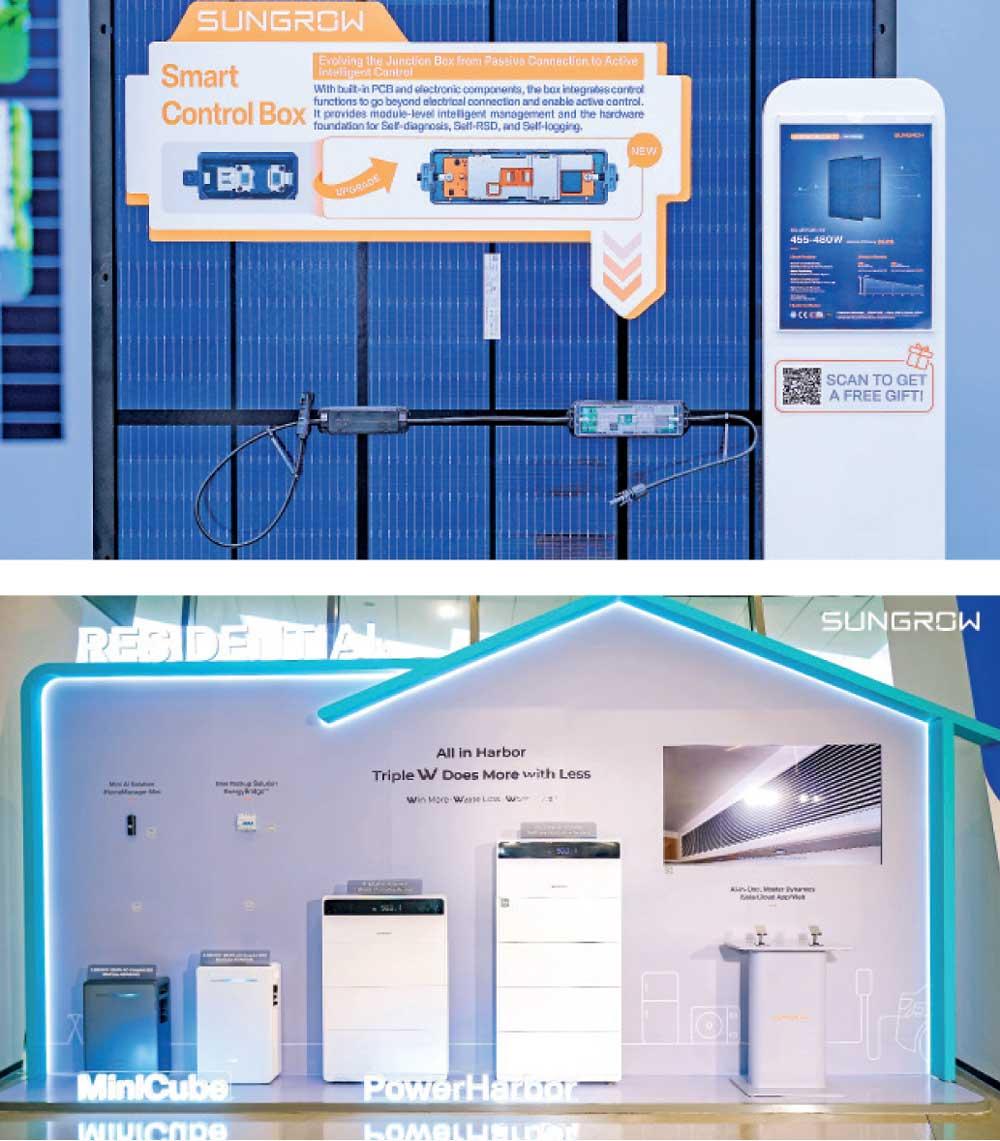
Sungrow is bringing artificial intelligence into the heart of solar energy and battery storage, introducing smart technologies designed to make renewable energy systems easier to install, manage and maintain.
At its Global Energy Pioneer Summit (GEPS) 2026 in Hefei, China, the company showcased Bubbly, an AI-powered assistant capable of designing a customised solar and battery storage system in just 30 seconds. By identifying a factory on a satellite map, the system can generate technical layouts, installation plans and financial estimates.
According to Sungrow, Bubbly can also complete system commissioning in approximately three minutes, significantly reducing the manual work traditionally required.
How AI Is Transforming Solar and Battery Storage
Bubbly combines five intelligent functions covering system design, commissioning, energy management, operations and maintenance.
Integrated into Sungrow’s newly introduced PowerStack 3.0 commercial and industrial battery storage system, the technology uses satellite imagery and 3D modelling to develop project proposals.
It can also automatically configure grid parameters, check communication systems and verify settings, helping installers reduce errors and improve efficiency.
Beyond installation, AI plays an important role in managing electricity consumption. Sungrow says its intelligent energy management system can increase financial returns by more than 12% compared with conventional self-consumption strategies.
For businesses using its PowerKeeper battery system, AI-based energy scheduling can potentially deliver 10% to 30% higher returns, according to company estimates.
What This Means for Sri Lanka
The technology could be particularly relevant to Sri Lankan businesses looking to manage rising operational costs and improve energy efficiency.
For industrial consumers, solar energy and battery storage can help reduce dependence on grid electricity, manage peak demand and provide backup power during interruptions.
AI-powered scheduling could allow businesses to determine when to store electricity, when to use it and how to make better use of their solar installations.
Although Sri Lanka does not currently have an established market for certain grid-support services, businesses could benefit from improved self-consumption and demand management.
These solutions may be especially useful for factories, commercial buildings and businesses operating large solar installations.
Smarter Maintenance and Improved Battery Safety
Sungrow has also introduced AI-powered monitoring capabilities designed to identify potential technical problems before they develop into serious failures.
Its Bubbly maintenance system continuously monitors equipment and can identify more than 30 potential risks. According to the company, it can generate a diagnostic report with maintenance recommendations for a 10 MWh battery installation within one minute.
The company has additionally upgraded its iSolarCloud platform with round-the-clock multilingual AI assistance.
Battery safety remains another major focus.
Sungrow’s PowerKeeper system uses a three-layer protection approach involving early fault detection, automatic intervention and physical containment during extreme incidents.
The company says the battery system has undergone more than 700 safety tests, including simulated flooding, physical impact and fire-related assessments.
Introducing PowerStack 3.0: A New Generation of Energy Storage
PowerStack 3.0 represents Sungrow’s latest approach to commercial and industrial energy storage.
The system uses a modular design that allows businesses to combine battery storage with solar generation, electric vehicle charging and microgrid capabilities.
This flexibility means a company could initially install a solar and battery system before adding EV charging infrastructure without replacing its existing storage equipment.
Each PowerStack 3.0 cabinet provides 551 kWh of storage, with configurations offering 125 kW or 250 kW of power.
Up to 20 units can operate together, providing approximately 11 MWh of total storage capacity.
Sungrow also reports a maximum power conversion efficiency of 99.2% and a round-trip efficiency exceeding 92%.
Designed for demanding environments, the system offers protection against dust, water and corrosion, making it potentially suitable for industrial locations in Sri Lanka, including coastal areas.
A Smarter Future for Renewable Energy
As renewable energy adoption continues to grow, Sungrow is placing greater emphasis on the software and intelligence behind its products rather than focusing solely on battery capacity and hardware performance.
The company is also introducing battery passport technology to track battery materials and components throughout their operational life, supporting more transparent recycling and end-of-life management.
With AI-powered design, intelligent energy management, remote maintenance and improved safety systems, Sungrow aims to simplify renewable energy adoption for households and businesses.
For Sri Lanka, these developments highlight how artificial intelligence could help make solar energy and battery storage more efficient, reliable and financially attractive.
As the global energy industry evolves, the next major advancement may not simply be about storing more electricity, but about using every unit of energy more intelligently.
Image Credits and Disclaimer: All photographs, product images and promotional materials accompanying this article belong to their respective copyright owners, photographers and organisations.