
Why the Future of Education Matters More to Businesses Than Ever
Education is changing—and businesses should be paying attention.
At first glance, education and business may seem like separate worlds. But in reality, the way people learn directly shapes the future workforce, customer behavior, innovation, and even market demand.
Think about it: today’s students are tomorrow’s employees, entrepreneurs, and consumers.
In Sri Lanka and around the world, education is evolving rapidly. Technology is transforming classrooms, employers are demanding new skills, and traditional learning models are being challenged. Businesses that understand these changes early will be better prepared to attract talent, adapt to workforce expectations, and stay competitive.
The big question is: What education trends will shape the future of business?
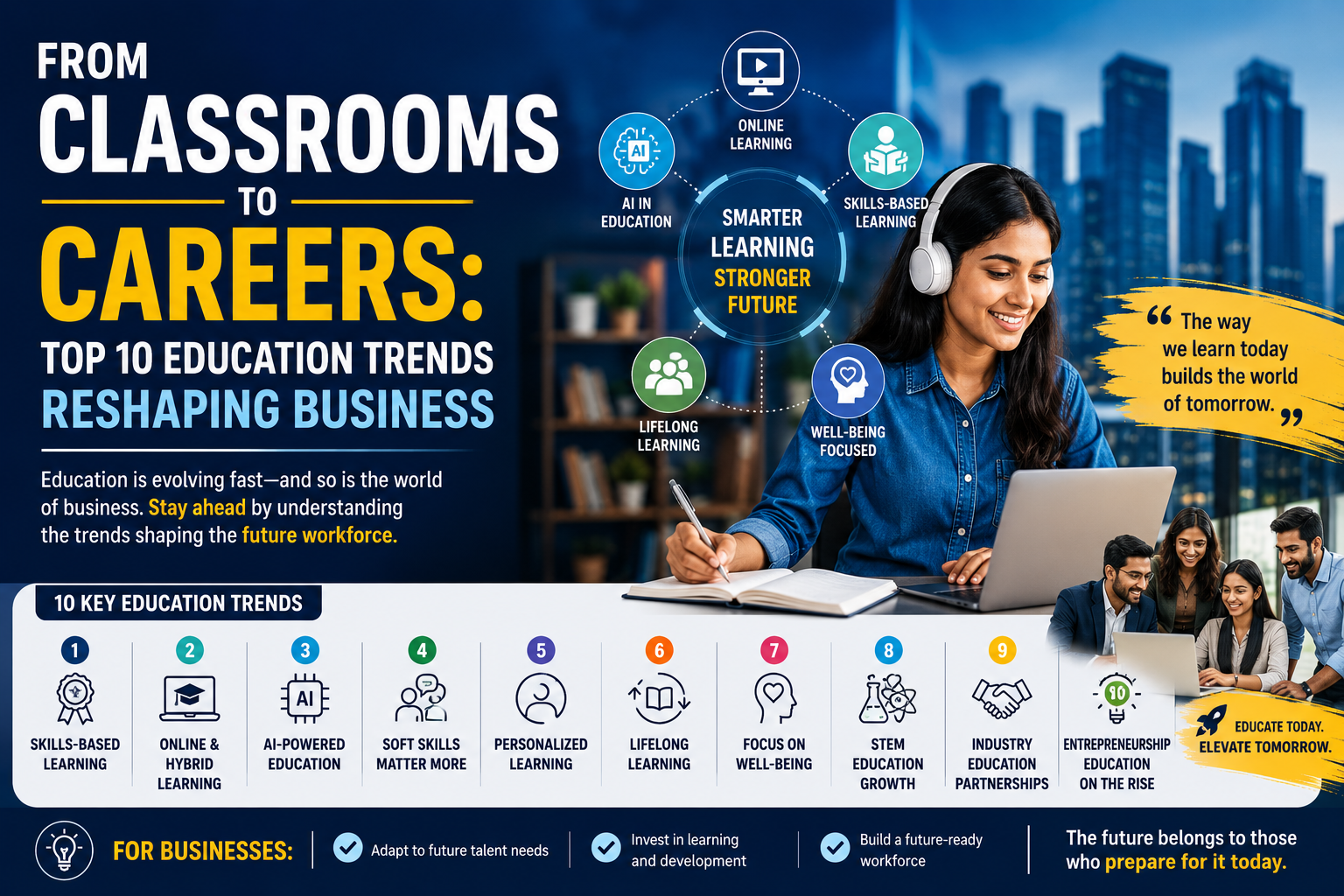
Here are the top 10 education trends every business should know in 2026.
1. Skills-Based Learning is Replacing Traditional Qualifications
Degrees still matter—but skills matter more than ever.
Employers are increasingly prioritizing practical abilities over academic qualifications alone. Companies now look for candidates who can actually perform tasks, solve problems, and adapt quickly.
In Sri Lanka, more students are turning to:
- Professional diplomas
- Online certifications
- Technical training
- Industry-specific short courses
Why This Matters for Businesses
Companies may need to rethink hiring strategies.
Instead of focusing only on degrees, businesses should prioritize practical skillsets.
Actionable Insight
Consider hiring based on portfolios, certifications, and demonstrated experience.
2. Online Learning is Becoming the New Normal
The rise of online education has completely changed learning habits.
Students and professionals are increasingly using online platforms to upskill, reskill, and learn flexibly.
Whether it is digital marketing, IT, graphic design, or business management, people want education that fits their schedules.
In Sri Lanka, institutions offering hybrid learning models are becoming increasingly popular.
What Businesses Should Do
Encourage employee upskilling through:
- Online training programs
- Digital certifications
- Flexible learning opportunities
Businesses that invest in learning often perform better long-term.
3. AI is Reshaping Education
Artificial Intelligence is transforming how people learn.
AI-powered tools now help students:
- Get personalized feedback
- Learn faster
- Access tutoring support
- Improve productivity
At the same time, educational institutions are adapting to challenges surrounding AI use.
Business Insight
Future employees will likely enter workplaces already familiar with AI-powered systems.
Companies should prepare for increasingly tech-savvy talent.
4. Soft Skills Are Becoming More Valuable
Technical knowledge alone is no longer enough.
Businesses increasingly value:
- Communication
- Leadership
- Critical thinking
- Problem-solving
- Emotional intelligence
Why?
Because automation can replace repetitive work—but human interaction still matters.
Sri Lankan Workplace Trend
Many employers now seek graduates who can collaborate effectively, communicate professionally, and adapt quickly.
Actionable Insight
Invest in soft-skills training for employees.
Strong communication improves teams and customer relationships.
5. Personalized Learning is Growing
People no longer learn the same way.
Education is becoming increasingly customized based on:
- Individual pace
- Learning style
- Career goals
Instead of one-size-fits-all systems, learners expect personalized experiences.
This shift may also influence how businesses train employees internally.
Business Takeaway
Personalized employee training can improve engagement and performance.
6. Lifelong Learning is Becoming Essential
Learning no longer ends after graduation.
Technology changes too quickly for people to stop learning.
Professionals increasingly update their knowledge through:
- Workshops
- Online courses
- Certifications
- Industry seminars
Why Businesses Should Care
Employees who continue learning help businesses stay innovative.
A culture of continuous learning often creates stronger teams.
7. Mental Health and Well-Being Are Gaining More Attention
Educational institutions are paying more attention to student well-being—and workplaces are expected to follow.
Younger generations increasingly value:
- Work-life balance
- Mental wellness support
- Healthy environments
Businesses ignoring employee well-being may struggle to attract and retain talent.
Actionable Insight
Create healthier workplace environments with flexibility and support systems.
Happy employees tend to perform better.
8. STEM Education is Growing Rapidly
Fields related to:
- Science
- Technology
- Engineering
- Mathematics
continue to expand globally.
Sri Lanka is also seeing increasing interest in IT, software engineering, cybersecurity, and tech-related education.
Business Opportunity
Companies in tech, finance, logistics, and innovation-focused sectors may gain access to stronger talent pools.
Future workforce demand will likely lean heavily toward digital skills.
9. Industry Partnerships in Education Are Increasing
Educational institutions and businesses are collaborating more than ever.
Internships, mentorship programs, workshops, and university-industry partnerships are becoming increasingly important.
This helps students gain real-world experience before entering the workforce.
Business Advantage
Partnering with universities or training institutes can help companies identify talent early.
It is recruitment—but smarter.
10. Entrepreneurship Education is Growing
More young people are exploring entrepreneurship rather than traditional career paths.
Educational institutions are increasingly teaching:
- Innovation
- Startup culture
- Financial literacy
- Business strategy
In Sri Lanka, growing startup ecosystems are encouraging students to think beyond traditional employment.
Big Question for Businesses
Will future talent want jobs—or opportunities to innovate?
Forward-thinking companies will need to create environments where creativity thrives.
Frequently Asked Questions About Education Trends
Why should businesses care about education trends?
Education trends shape the future workforce, employee expectations, and required skillsets, making them highly relevant to business growth.
What is the biggest education trend in 2026?
Skills-based learning and digital education are expected to remain among the strongest education trends.
How can Sri Lankan businesses benefit from education trends?
Businesses can adapt hiring practices, invest in employee learning, and partner with educational institutions to prepare for future workforce needs.
Final Thoughts: Why Education Trends Matter for Business
Education is no longer just about schools and universities—it is about shaping the future workforce.
The people entering workplaces tomorrow are learning differently today.
Businesses that understand these shifts early will be better prepared to attract talent, improve innovation, and adapt to changing expectations.
Whether it is AI-powered learning, skills-based hiring, or lifelong education, understanding these education trends every business should know can help companies stay ready for the future.
Because the future of business starts with the future of learning.