The FIFA World Cup final between Argentina and Spain saw Spain secure a 1-0 victory after extra time to lift their first World Cup title in 16 years.
While Spain’s defensive resilience, Ferran Torres’ extra-time winner, and a heated altercation involving Argentina’s Leandro Paredes and Spain’s Eric García dominated the football headlines, FIFA’s first-ever Super Bowl-style halftime show also emerged as one of the night’s biggest talking points.
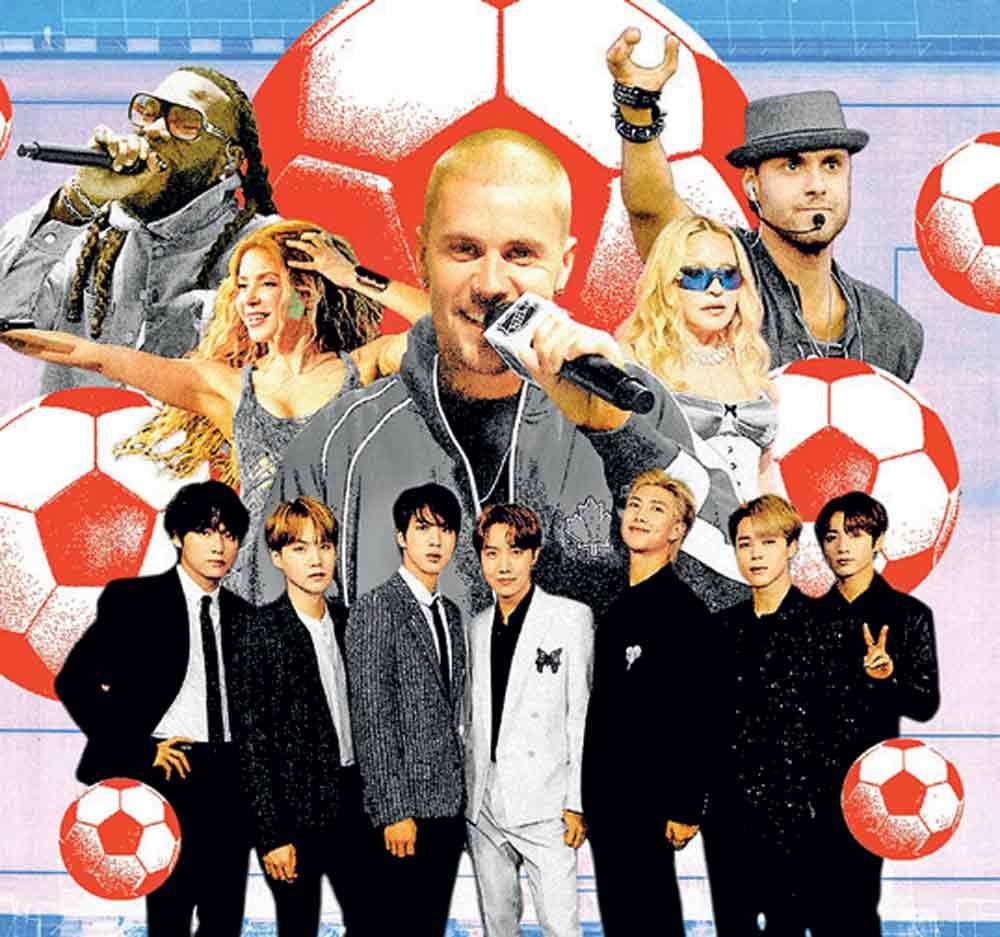
The historic 11-minute spectacle, curated by Coldplay’s Chris Martin, featured performances from global stars including Shakira, Madonna, Justin Bieber, BTS, Burna Boy, conductor Gustavo Dudamel, The Muppets, and the PS22 Chorus. Although the star-studded lineup generated significant excitement, some critics argued that the large number of performers meant none of the artists were given enough time to leave a lasting impression.
Among the performers, BTS generated the strongest online response. According to social media analytics, BTS became the most-talked-about public figures on X during the FIFA World Cup final, recording more than three million mentions, while also emerging as the most-discussed musical act of the halftime show. Fans widely praised the group’s energetic performance, with many describing it as one of the standout moments of the evening and one of the most memorable sets despite the limited stage time.
The performance also marked another historic milestone for BTS member Jungkook, who joined Shakira as one of the few artists to perform at more than one FIFA World Cup event. In doing so, Jungkook became the first and only Asian artist to perform at multiple FIFA World Cups, further cementing his place in FIFA World Cup entertainment history following his performance at the 2022 FIFA World Cup in Qatar.
However, the biggest controversy surrounded the length of the halftime interval. Under the Laws of the Game maintained by the International Football Association Board (IFAB), halftime is generally limited to 15 minutes. While FIFA had planned an 11-minute performance, the total interval lasted 27 minutes and 19 seconds, drawing criticism from fans and pundits who argued that the extended break disrupted the players’ rhythm ahead of the second half.
The halftime show itself received mixed reactions, with many feeling the entertainment became almost as significant as the match. Former England captain Wayne Rooney described the concept as “crap” and “anti-football,” arguing that the focus of the World Cup final should remain on the players and the game.
As was the case throughout much of the tournament, many supporters also viewed the halftime show as another step in the “Americanisation” of football. Critics argued that FIFA was attempting to transform the World Cup final into a Super Bowl-style entertainment spectacle, moving away from the sport’s long-standing traditions.
Despite the criticism, the halftime show proved to be a major driver of global online engagement, with BTS leading conversations across social media platforms and Jungkook adding another milestone to FIFA World Cup history. Whether the inaugural halftime show is ultimately remembered as a successful innovation or an unnecessary distraction remains open to debate, but its debut and the worldwide discussion it generated is likely to influence how FIFA approaches future World Cup finals.