
For more than a century, tea has been one of Sri Lanka’s most important agricultural exports, earning global recognition under the Ceylon Tea brand. However, behind its international reputation lies an industry grappling with a range of interconnected challenges. Declining productivity, rising production costs, labour shortages, climate-related risks and ongoing social concerns within plantation communities are placing increasing pressure on the sector.
Industry experts argue that addressing these issues requires a comprehensive strategy that looks beyond production alone and focuses equally on people, sustainability and long-term competitiveness.
Safeguarding Plantation Communities
The future of Sri Lanka’s tea industry was among the key topics discussed at a recent event organized by the Institute for Social Development (ISD) to mark International Tea Day.
ISD Executive Director Periyasamy Muthulingam, a long-time advocate for plantation workers’ rights, reflected on the origins of International Tea Day. His efforts began in the early 2000s when he highlighted the challenges faced by tea plantation workers during regional discussions on labour rights. These conversations eventually led to broader international collaboration focused on improving conditions within tea-producing communities.
The movement gained momentum through workshops and advocacy campaigns that called attention to worker welfare and labour rights. These efforts contributed to the eventual recognition of International Tea Day by the United Nations, which officially designated May 21 as the annual observance.
Speaking at the commemorative event, Muthulingam emphasized that the tea industry extends far beyond plantation workers alone. Exporters, brokers, plantation companies and numerous supporting sectors all depend on its success.
He stressed that any decline in the industry would have serious consequences for estate communities, making it essential to pursue development strategies that improve both economic performance and social wellbeing.
Smallholders Driving Production
The structure of Sri Lanka’s tea industry has changed significantly over the years. Today, smallholder growers have become the dominant force behind national production.
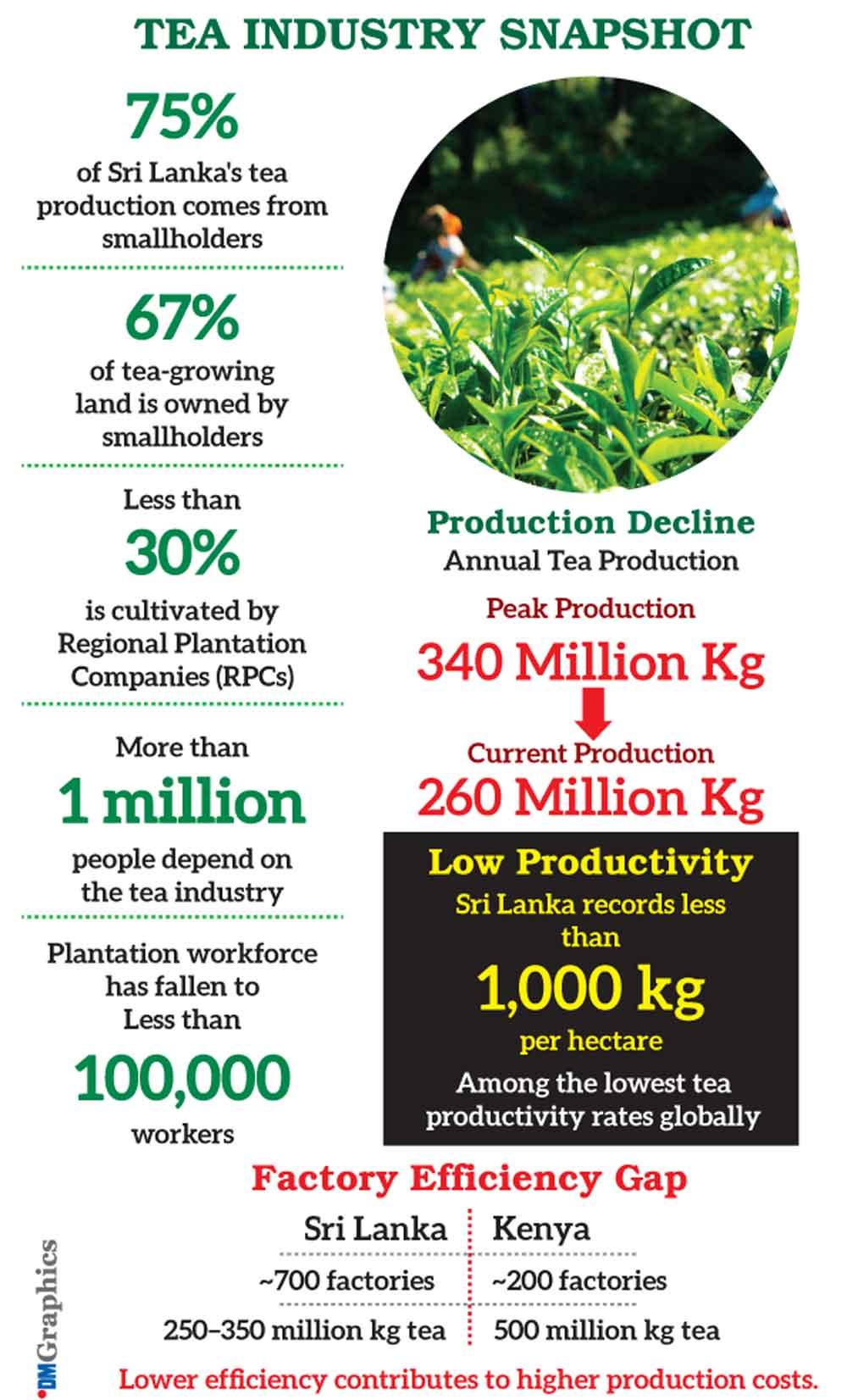
According to industry leaders, tea smallholders now account for approximately three-quarters of Sri Lanka’s total tea output and cultivate the majority of tea-growing land. This marks a substantial shift from previous decades when large plantation companies played a more dominant role.
Sri Lanka once achieved annual tea production levels exceeding 300 million kilograms. However, policy changes, fluctuating weather conditions and disruptions related to agricultural inputs have affected production levels in recent years.
Industry representatives note that while smallholders have expanded their contribution significantly, national production has struggled to return to historical highs.
At the same time, questions remain about how revenue generated by the industry is distributed throughout the value chain. Producers often shoulder most of the responsibility for cultivating tea while receiving only a small share of the final value created in international markets.
Changing Workforce Expectations
Labour shortages have emerged as one of the industry’s most pressing concerns.
Decades ago, plantation companies focused on providing sufficient employment opportunities. Today, the situation has reversed, with many estates struggling to recruit and retain workers.
The plantation workforce has gradually declined as younger generations pursue alternative career paths outside the estate sector. Many workers now seek greater independence, flexibility and working conditions that offer dignity and economic mobility.
In response, industry stakeholders have explored alternative compensation systems that place greater emphasis on productivity and revenue-sharing rather than traditional attendance-based wage models.
Advocates of these reforms argue that the plantation sector must evolve beyond structures inherited from the colonial era and adapt to modern workforce expectations if it hopes to remain viable.
Productivity Challenges Continue
While Sri Lanka remains globally recognized for the quality of its tea, productivity levels continue to lag behind those of competing tea-producing nations.
Experts point out that yields per hectare remain among the lowest in the global tea industry. Low productivity not only limits output but also contributes to higher production costs, reducing international competitiveness.
Several factors contribute to this challenge, including soil degradation, labour shortages, ageing plantations and insufficient adoption of modern agricultural practices.
Factory efficiency is another concern. Comparisons with major tea-producing countries reveal significant differences in production scale and operational efficiency.
Climate change is further complicating matters. Tea cultivation depends heavily on predictable rainfall patterns, yet changing weather conditions have made production increasingly uncertain. Extended droughts, unusually heavy rainfall and shifting monsoon cycles are creating additional risks for growers.
Producers must also meet growing sustainability and compliance requirements imposed by international buyers, adding further pressure to an already challenging operating environment.
Regenerative Agriculture as a Solution
Agricultural experts increasingly believe that long-term sustainability will depend on adopting more environmentally responsible farming methods.
Regenerative agriculture has emerged as a leading recommendation for the sector. Supporters argue that these practices can improve soil health, strengthen climate resilience, enhance yields and increase profitability over time.
Industry observers note that sustainable production is no longer simply a marketing advantage. It is becoming a prerequisite for maintaining access to global markets and meeting consumer expectations.
As a result, many believe that future growth will depend on balancing productivity gains with environmental stewardship.
Social Progress and Emerging Risks
Alongside economic challenges, the plantation community continues to undergo significant social transformation.
Researchers point to several positive developments, including stronger participation in public policy discussions, increased engagement from civil society organizations and greater recognition of plantation-related issues within mainstream political discourse.
However, new concerns are also emerging.
Demographic trends indicate lower birth rates and an ageing population within plantation communities, creating potential economic and social pressures in the years ahead.
Climate-related disasters have further exposed vulnerabilities in estate areas, particularly where poor land management and inadequate infrastructure have increased exposure to environmental risks.
Youth migration is another growing concern. Many young people are reluctant to pursue careers within the plantation sector, instead seeking opportunities in urban centres where wages and career prospects may be more attractive.
Researchers also highlight persistent issues such as food insecurity, malnutrition and household indebtedness within some plantation communities.
Addressing these challenges, they argue, requires a broader commitment to social justice, inclusive development and meaningful participation in policymaking processes.
Looking Ahead
The future of Sri Lanka’s tea industry depends on far more than market demand alone. Ensuring long-term sustainability will require coordinated action across multiple fronts, including productivity improvement, climate adaptation, labour reform and social development.
As the industry navigates these challenges, stakeholders agree on one point: protecting the wellbeing of plantation communities is inseparable from protecting the future of Ceylon Tea itself.
The decisions made today will determine whether one of Sri Lanka’s most iconic industries can successfully adapt to the demands of a rapidly changing world.