
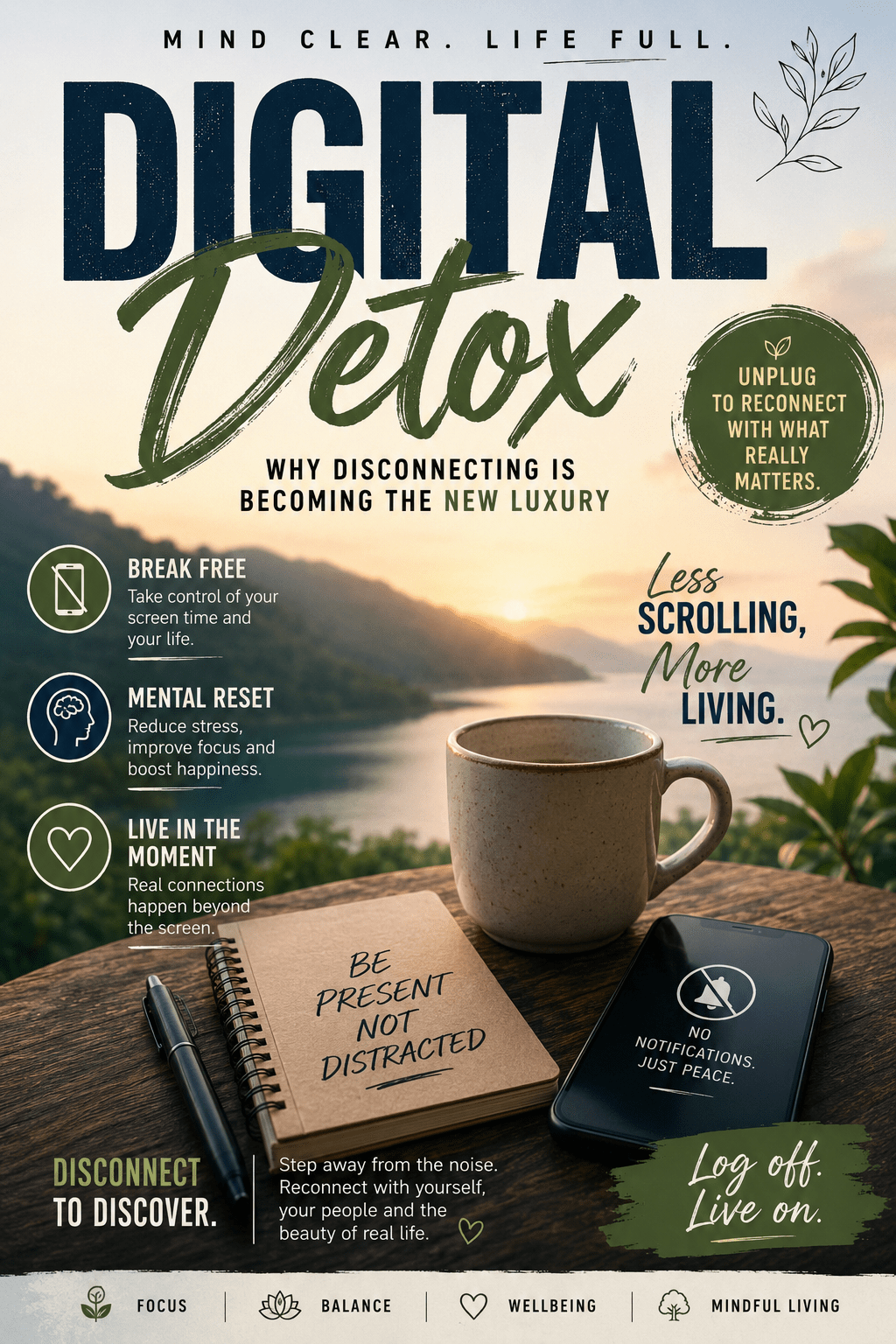
Modern life is more connected than ever before.
From the moment people wake up, screens often become part of daily routines. Notifications, emails, social media feeds, messages, online meetings, and endless scrolling shape how many people work, communicate, and relax.
Technology has brought remarkable convenience.
Yet for many, constant connectivity is beginning to feel exhausting.
In a world where being online has become normal, something unexpected is happening.
Disconnecting is becoming desirable.
Increasingly, people are embracing digital detoxes, intentionally stepping away from screens, social media, and online distractions in search of something many feel they are losing.
Peace of mind.
What Is a Digital Detox?
A digital detox refers to taking intentional breaks from digital devices, particularly smartphones, social media platforms, and online content.
For some, this may mean reducing screen time.
For others, it involves spending weekends offline, limiting notifications, avoiding social media for periods of time, or creating boundaries around technology use.
The purpose is simple.
To create healthier relationships with technology and reconnect with life beyond screens.
In many ways, digital detoxing is less about rejecting technology and more about regaining balance.
Why Are People Feeling Digitally Exhausted?
One of the biggest reasons behind this growing trend is digital fatigue.
Modern technology constantly demands attention.
Messages arrive instantly. Social media updates never stop. News cycles move endlessly. Work and personal life often overlap through devices, making it difficult to fully disconnect.
For many people, this constant stimulation creates feelings of stress, overwhelm, mental exhaustion, and reduced focus.
Ironically, despite being more connected than ever, many report feeling mentally drained.
The pressure to always respond, stay updated, or remain visible online can become emotionally exhausting.
Social Media and the Comparison Trap
Another reason people are stepping back from screens involves social media pressure.
Platforms are filled with carefully curated lifestyles, achievements, vacations, relationships, and success stories.
Constant exposure to idealised content can sometimes create unrealistic expectations and unhealthy comparisons.
People may begin measuring their lives against highlight reels rather than reality.
Digital detoxes offer temporary relief from this cycle.
Stepping away often allows individuals to reconnect with their own priorities, routines, and mental wellbeing without external pressure.
Why Disconnecting Feels Like a Luxury
Ironically, in today’s fast paced world, uninterrupted time has become increasingly rare.
Moments without notifications, emails, or endless scrolling now feel surprisingly valuable.
This is why many people increasingly view digital disconnection as a form of self care.
Reading without distractions.
Having uninterrupted conversations.
Spending time outdoors.
Sleeping better.
Being fully present.
These experiences are beginning to feel like luxuries in an always online culture.
For some, the ultimate status symbol is no longer constant productivity.
It is peace.
Finding Balance in a Digital World
Of course, completely abandoning technology is unrealistic for most people.
Devices remain essential for work, education, communication, and entertainment.
The goal is not elimination.
It is moderation.
Small habits can make meaningful differences.
Turning off unnecessary notifications, limiting screen time before bed, creating phone free spaces, or taking occasional social media breaks can help create healthier boundaries.
Technology works best when people control it.
Not when it controls them.
Final Thoughts
Digital detoxing reflects a growing desire for balance in an increasingly connected world.
People are not necessarily rejecting technology.
They are simply becoming more intentional about how they use it.
As screens continue shaping everyday life, protecting attention, peace, and mental wellbeing may become increasingly important.
Because sometimes, the most valuable thing people can do is pause the scrolling, put the phone down, and reconnect with the world around them.
After all, in a world that never stops talking, silence may be the real luxury.