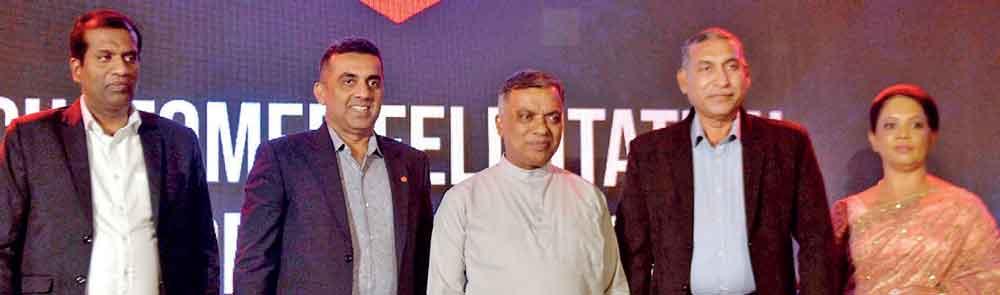
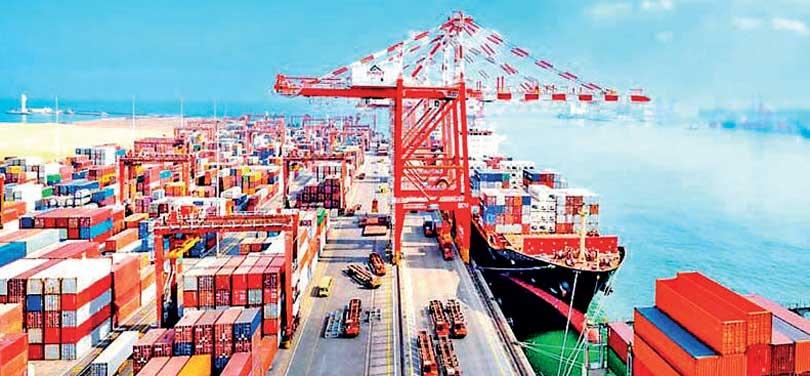
John Keells Holdings (JKH) is yet to receive direction from the government on how South Asia Gateway Terminals (SAGT) will be handled once its build-operate-transfer concession expires in 2029, with a handover, a fresh tender or an extension all still on the table, JKH Chairperson and CEO Krishan Balendra said.
“We are waiting for the Ports Authority and the ministry and the government to get back to us on how they expect to address this,” Balendra noted, speaking at the group’s investor webinar last week.
He added that the 30-year concession, signed in 1999, would end around August or September 2029.
Balendra outlined three options. Since SAGT operates under a build-operate-transfer arrangement, the terminal could revert to the government. Alternatively, the government could put it out to tender through a request for proposals, or the concession could be extended with the existing consortium.
“We have not got direction from the government on how they intend to take this forward beyond 2029,” he stressed.
JKH holds a 42.19 percent stake in SAGT, while APM Terminals, the terminal arm of shipping giant Maersk, holds 32.81 percent. JKH’s latest annual report states that the business will evaluate opportunities to extend the concession in line with the government’s policy. Asked about the potential cost of securing the terminal again, JKH Deputy Chairperson and Group Finance Director Gihan Cooray pointed out that this was not something the company could know at this stage.
Meanwhile, the Adani-led Colombo West International Terminal (CWIT), in which JKH holds 34 percent, handled 502,351 TEUs in the quarter ended 30 September, 90.9 percent more than the 263,137 TEUs handled a year earlier. SAGT’s volumes, in contrast, fell 18.6 percent to 425,882 TEUs from 523,108 TEUs. This was the second straight quarter in which the newer terminal outpaced SAGT, with CWIT’s throughput 18 percent higher than SAGT’s during the period.
At 940 metres of quay and a 15-metre draft, SAGT is the smallest and shallowest of the port’s three privately operated terminals. Colombo International Container Terminals (CICT) has 1,200 metres of quay and an 18-metre depth, while CWIT has 1,400 metres and 20 metres. JKH’s annual report concedes that the continued upsizing of vessels “presents challenges to SAGT due to draft constraints”, although it maintains that SAGT, positioned as a strategic feeder terminal, remains well placed to support rising transhipment volumes between India, the wider South Asian region and mainline routes. SAGT’s share of the port’s volumes fell to 21.6 percent in 2025/26 from 26.8 percent a year earlier, as its throughput declined 11 percent to 1.84 million TEUs while the port’s total grew 10 percent to 8.52 million TEUs.
Part of that decline stemmed from crane rail replacement works, which closed one of SAGT’s berths during the second half of 2025/26. Cooray attributed the latest drop to vessel movements disrupted by the Middle East conflict, adding that momentum had recovered in October and “that should be the trend going forward.” He also clarified that the disruption had a net positive impact on the Port of Colombo as a whole.
CWIT is already operating beyond its phase 1 capacity of 1.6 million TEUs a year. Its September quarter throughput puts it on an annualised run rate of around two million TEUs, roughly 26 percent above that capacity. The terminal became the fastest in the Port of Colombo to handle two million TEUs, reaching the milestone within 18 months of commencing operations, and full operationalisation remains on track for December. However, Cooray cautioned that depreciation and interest costs on the full investment would begin to weigh on CWIT’s profitability from the fourth quarter of 2026/27, until rising volumes absorb them.
Adani Ports and Special Economic Zone (APSEZ), which leads the CWIT consortium, reported that revenue from its international ports business rose 71 percent to INR 18.39 billion in the September quarter, while EBITDA more than tripled to INR 8.78 billion, taking the margin to 47.7 percent. APSEZ attributed the performance to the continued ramp-up of CWIT and its Tanzania operations, along with a contribution from its Australian terminal. With phase 2 now doubling CWIT’s capacity to 3.2 million TEUs, APSEZ expects the terminal to handle nearly 25 percent of the Port of Colombo’s targeted capacity of 13 million TEUs by 2028.
Listed contractor Access Engineering PLC, which was awarded the construction of CWIT’s terminal platform by APSEZ, has undertaken the ground and paving works, gantry crane rail foundations and support buildings at the 86-acre reclaimed site.
The rapid growth has also strained the port’s yard space.
“The Middle East crisis has also created some congestion in the Port of Colombo because there are some transhipment boxes that have got dropped off that have not got cleared and given that we don’t have a lot of yard space, that’s been one of the challenges,” Cooray explained, adding that volume growth could otherwise have been higher.
“If not for the CWIT capacity inducted this year, the Port of Colombo would have witnessed a negative growth,” Sri Lanka Ports Authority (SLPA) Chairman Dr. Parakrama Dissanayake remarked at the launch of CWIT’s second phase in late September.
Responding to a question on the President’s recent remarks on port investments, Balendra contended that demand for terminal capacity would keep growing, as 85 percent of the port’s volume is transhipment, mainly bound for India. He pointed out that the existing port can accommodate only one more terminal, West Container Terminal 2, beyond which the master plan points to the North Port.
“It is something that we would strongly encourage the government to do because we believe the demand will be there and the sooner we can get capacity on stream, the Port of Colombo and Sri Lanka won’t lose out,” Balendra urged.
JKH’s annual report notes that West Container Terminal 2 and the first container terminal at the Colombo North Port are planned to be operational by 2030 and 2034, respectively. Speaking at an investment summit in October, President Anura Kumara Dissanayake indicated that the breakwater required for West Container Terminal 2 was now estimated at about US$ 1.4 billion, with the Asian Development Bank’s feasibility study due by April 2027.