
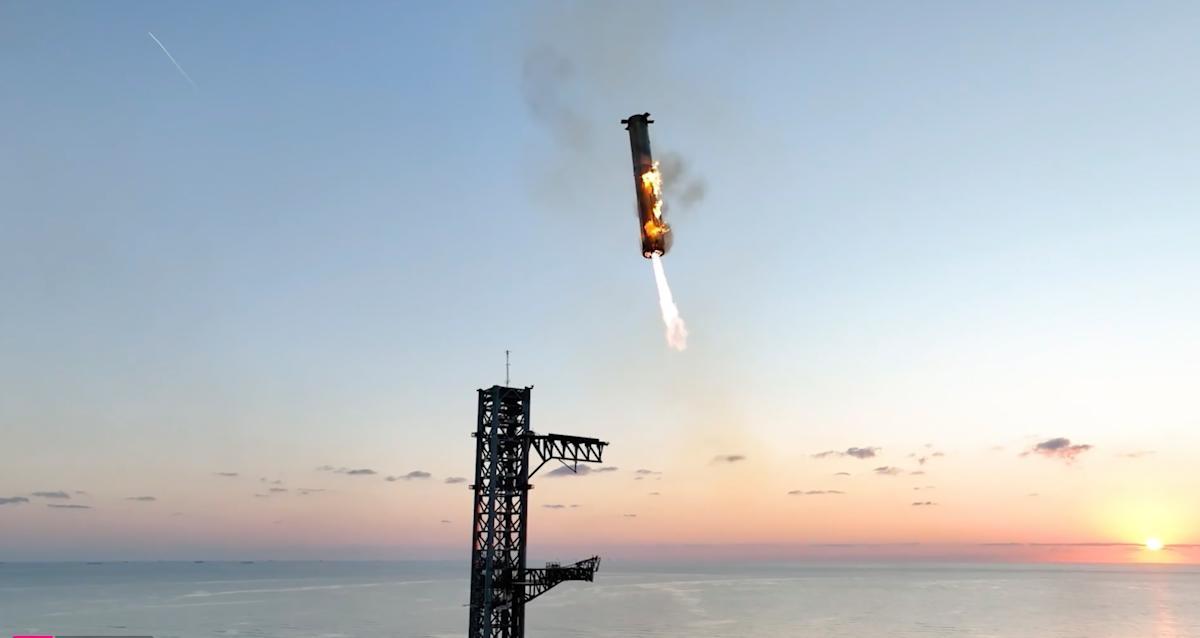
SpaceX has achieved a major breakthrough in space exploration after successfully catching its Starship spacecraft with giant mechanical arms as it returned from orbit on November 14, 2026. The historic achievement marks the first time the company has recovered a Starship upper stage using its launch tower, bringing Elon Musk’s ambition of fully reusable rockets closer to reality.
The spacecraft returned to SpaceX’s Starbase facility in South Texas after spending more than 22 hours in space, completing 14 orbits around Earth.
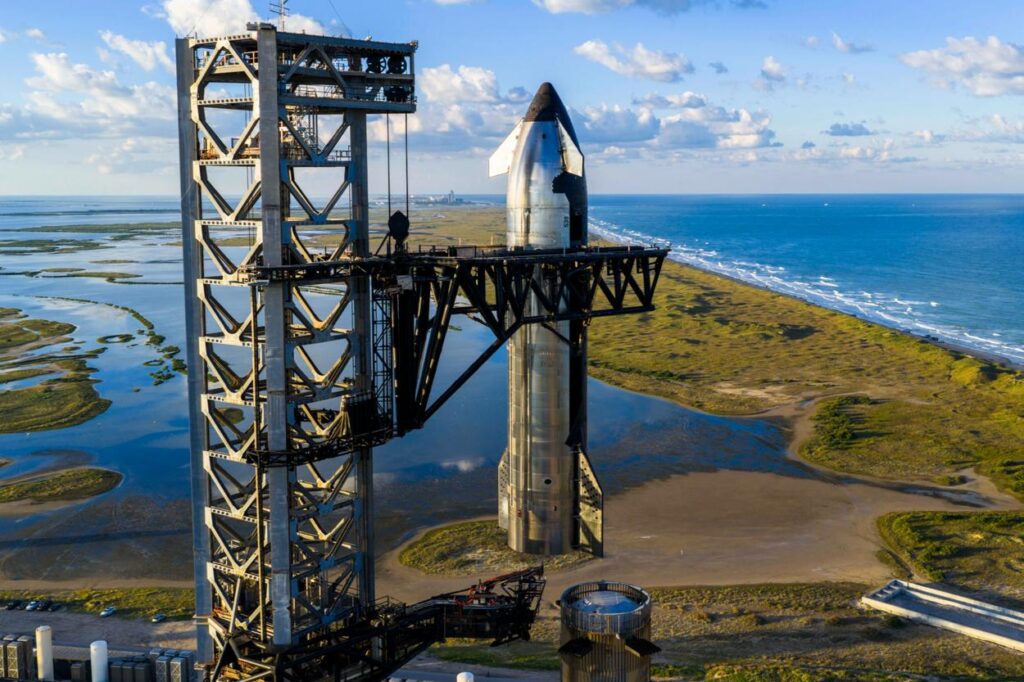
In a dramatic final manoeuvre, Starship descended through Earth’s atmosphere, reignited its engines and flipped into a vertical position before being captured by two enormous mechanical arms known as chopsticks.
The successful catch marked an important milestone in the development of reusable spacecraft.
How SpaceX Caught Starship in Midair

The historic mission began on November 13, when SpaceX launched its 407-foot-tall Starship rocket on its 15th test flight.
After separating from its Super Heavy booster, the Starship spacecraft continued into orbit and successfully deployed 26 next-generation Starlink satellites.
On November 14, the spacecraft began its journey back to Earth. During reentry, it endured extremely high temperatures before approaching its original launch site in Texas.
At approximately 4:20 p.m. Eastern Time, Starship completed its descent and was successfully captured by the launch tower’s mechanical arms.
Unlike conventional spacecraft that land in the ocean or rely on landing legs, SpaceX’s system is designed to recover rockets directly at the launch site, potentially reducing the time and expense required to prepare them for another mission.
Not Everything Went According to Plan

Despite the successful Starship recovery, the mission was not entirely successful.
SpaceX originally planned to catch both the Super Heavy booster and the Starship upper stage during the same mission.
However, the booster experienced difficulties after separating from the spacecraft, forcing the company to abandon its planned tower recovery. It was redirected towards the Gulf of Mexico, where it ultimately exploded.
SpaceX indicated that an early engine shutdown associated with a low-fuel warning may have contributed to the problem, although the exact cause remains under investigation.
Nevertheless, the successful recovery of Starship represents a significant technological achievement.
Why This Achievement Matters for Future Space Travel
One of SpaceX’s biggest ambitions is to make space travel more affordable by developing rockets that can be launched, recovered and reused repeatedly.
While the company has already demonstrated reusable technology through its Falcon 9 rockets, Starship is designed for much larger missions, including transporting cargo and eventually people to the Moon and Mars.
The successful catch demonstrates progress towards recovering the spacecraft without requiring a traditional landing.
However, a successful recovery does not yet prove that Starship can be rapidly refurbished and flown again. SpaceX must still demonstrate reliable recovery of both rocket stages and repeated reuse.
A Major Step Towards NASA’s Moon Missions
Starship also plays an important role in NASA’s future lunar exploration plans.
NASA has selected a modified version of Starship to transport astronauts to the lunar surface under its Artemis programme.
The space agency is working towards another crewed Moon landing as early as 2028, although several major technical milestones remain before Starship can carry astronauts on such a mission.
The latest achievement is therefore significant not only for SpaceX but also for the future of international space exploration.
A Historic Moment for SpaceX
With its first successful Starship upper-stage catch, SpaceX has demonstrated a technology that could fundamentally change how large spacecraft return to Earth.
Although the loss of the Super Heavy booster prevented a complete mission success, the recovery of Starship represents an important step towards developing a fully reusable launch system.
For SpaceX, November 14, 2026, will be remembered as the day its enormous Starship spacecraft returned from orbit and was caught in midair, bringing a new era of reusable spaceflight one step closer.
Image Credits and Disclaimer: All photographs and promotional images accompanying this article belong to their respective photographers, SpaceX, news agencies and copyright holders. No ownership is claimed. Appropriate licences or permissions should be obtained before publication.