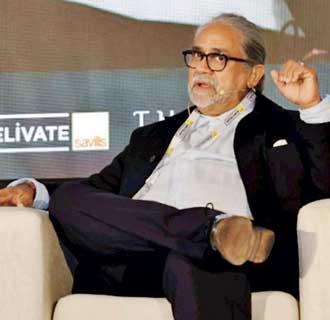
Sri Lanka needs at least one ‘hero’ luxury resort of the kind that transformed global perceptions of the Maldives, along with sharper destination branding, to capitalise on a uniqueness that is its best asset, according to Geoffrey Bawa Trust Chairperson and MICD Associates Co-Founder Channa Daswatte.
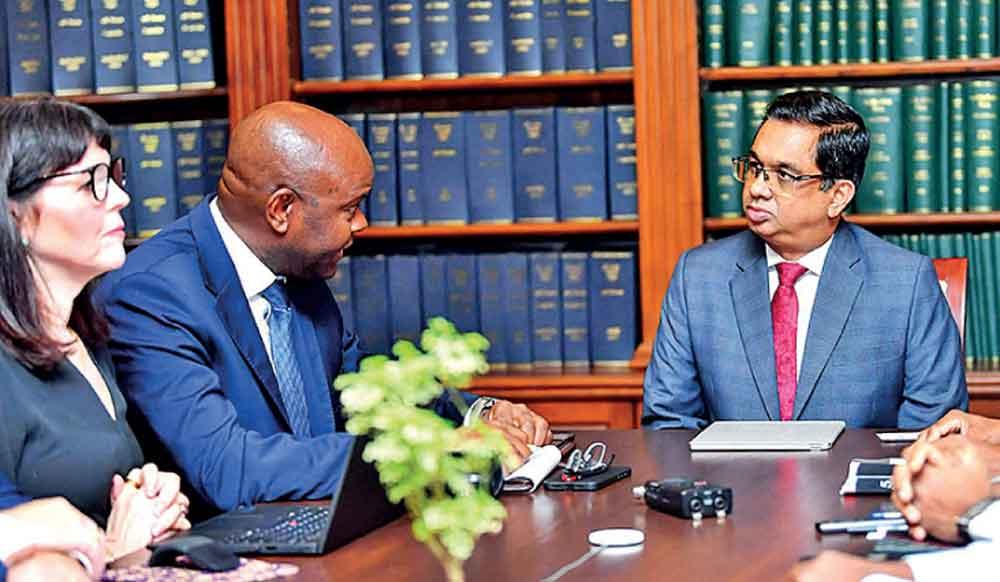
In conversation with Hotelivate-Savills Chief Strategy Officer Uttam Davé, Daswatte recently pointed to Soneva in the Maldives and the One&Only brand built under Sol Kerzner as projects whose influence reached well beyond their own islands.
“I think if there are some hero projects like resorts, luxury resorts, I think the way Soneva did in Maldives and the way Sol Kerzner did One&Only, it changed the perception of the market,” he observed.
Soneva Fushi opened in 1995 as the Maldives’ first ‘castaway’ resort and pioneered back-to-nature luxury, while One&Only Reethi Rah, which opened in 2005, set the benchmark for the luxury resorts that followed.
“Just one of those super luxury hero resorts changed the perception of the market,” Daswatte added, arguing that Sri Lanka already possesses the raw ingredients in its landscapes, people and food. “I think uniqueness is our best asset,” he remarked.
Tourism earnings of US$ 3.2 billion in 2025 remained about 27 percent below the 2018 peak of US$ 4,381 million, even though arrivals last year surpassed 2018 levels. Earnings per tourist have consequently fallen from close to US$ 1,880 to roughly US$ 1,360, underlining the yield problem facing the industry.
However, Daswatte did not regard regulation as a serious impediment, noting that much of Sri Lanka’s building bylaws are clear. He questioned whether setback requirements were excessive and left too little usable space, conceding that there was “definitely room for improvement there in terms of redefining the bylaws.” The larger gap, he argued, lay in how the country presents itself.
“What I do see needs to be done to make the experience better is that there needs to be a little more destination branding,” he stressed.
Daswatte traced the simplicity that defines Bawa’s work to the constraints of the economy in which he practiced.
“We had a really bad economy. So Bawa had the economy on his side,” he pointed out, explaining that Bawa felt no obligation to build anything beyond what was essential.
Rather than ordering furniture from the latest catalogue, Bawa would design a chair himself using the simplest materials available, an approach that Daswatte noted cost practically nothing in the end. The same reliance on simple, basic and essential elements is what clients still associate with his own practice today, he added, adopted not as a stylistic choice but because it was appropriate.
That thinking also shaped the Kandalama Hotel, which surprised many by carrying none of the traditional columns or decorative elements expected of an architect who was by then known, much to his dislike, as a vernacular architect. Daswatte recalled Bawa explaining to one of the directors that the whole place was scaled around looking at the horizon. Guests who spent their days amid 2,000 years of history and architecture, Bawa reasoned, should not return at night to be bombarded by yet more decoration. For Bawa, Daswatte explained, a hotel was a refuge for people arriving from completely stressed-out environments.
Developers who keep guests sealed indoors, he cautioned, deny them the very place they have travelled to experience, leaving them “inside an air conditioning box looking at a view on the wall.” Good architecture, he maintained, should open up, close in and let the breeze through, so that guests experience the location they have chosen.
Daswatte also warned against lifting a design element from one place and dropping it into another, insisting that context must lead. In taking Bawa’s legacy to a house he designed in Dubai, he retained ideas such as courtyards and interconnected spaces while responding to an entirely different environment and climate.
Asked which principles he would embed in a resort built today, Daswatte said the core of the concept should draw on the country’s own history, while guests should always retain the option of peace and a holiday in nature. He noted that buildings Bawa designed some 50 years ago are now being restored, urging the industry to look after them.
Bawa’s work has meanwhile drawn renewed international attention, with the Vitra Design Museum in Germany opening the first major retrospective of his work in two decades on 26 September, ahead of a run at M+ in Hong Kong from June 2027.