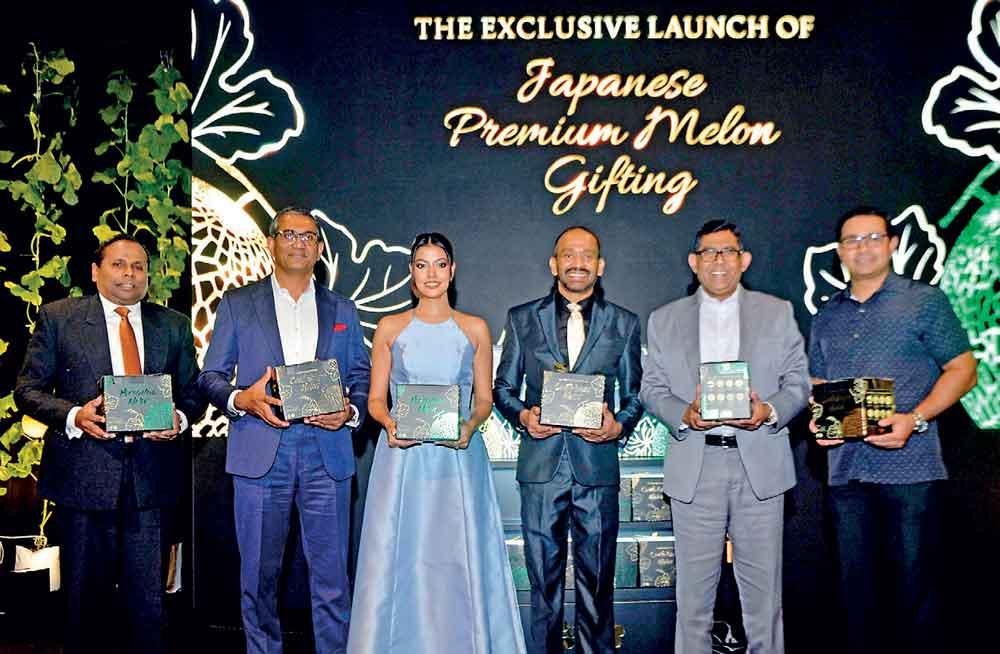
Sri Lanka’s premium gifting market is entering a new phase as Lassana Group introduces a Japanese-inspired luxury fruit gifting concept, offering carefully cultivated honeydew and cantaloupe melons as an alternative to conventional presents.
The new initiative draws inspiration from Japan’s longstanding tradition of presenting exceptionally high-quality fruits as meaningful gifts, where presentation, craftsmanship and agricultural excellence are considered important expressions of appreciation and respect.
Officially unveiled in Colombo on October 6, 2026, the concept represents an expansion of Lassana Group’s operations into premium agricultural gifting, combining advanced greenhouse cultivation, selective quality grading and the company’s established delivery infrastructure.
Lassana Group Founder, Chairman and Managing Director Dr. Lasantha Malavige introduced the initiative to an audience comprising corporate executives, medical professionals and media representatives.
He explained that the idea extends beyond the commercial value of fruit, presenting premium melons as thoughtful gifts associated with care, well-being and appreciation.
Under the new offering, customers can select specially packaged honeydew or cantaloupe melons cultivated at the company’s high-tech agricultural facility in Divulapitiya and arrange delivery directly to their intended recipients.
The concept is designed to appeal to individuals seeking distinctive personal gifts, as well as businesses interested in offering premium, health-conscious presents to employees, customers and corporate partners.
Inspired by Japan’s centuries-old fruit gifting tradition
In Japan, premium fruit occupies a distinctive position within the country’s culture of exchanging gifts.
Unlike ordinary fruit purchases intended for everyday consumption, luxury fruits are cultivated, selected and presented with exceptional attention to their appearance, texture, flavour and overall quality.
Seasonal gifting traditions have helped establish a specialised market in which carefully packaged fruit is regarded as a symbol of gratitude, respect and personal consideration.
One such tradition is ochugen, a midsummer custom involving the presentation of gifts to individuals who have provided assistance, guidance or support.
Premium fruit retailers such as Sembikiya, whose history dates back to 1834, have contributed to the development of this market by offering meticulously selected produce in sophisticated presentation packaging.
Among Japan’s most celebrated luxury fruits are premium muskmelons, particularly varieties associated with Shizuoka Prefecture.
These melons are often cultivated using specialised techniques designed to prioritise quality over harvest volume.
A widely recognised practice involves retaining only one fruit on each plant, allowing the available nutrients and growing resources to be concentrated on a single melon.
This method requires careful monitoring, skilled agricultural labour and considerable attention throughout the growing period.
The resulting products are frequently marketed as luxury gifts, with premium examples commanding prices far beyond those normally associated with everyday fruit.
Japan’s enthusiasm for exceptional melons is also reflected in the highly publicised seasonal auctions held for Yubari melons.
In May 2026, a pair of Yubari melons reportedly achieved a winning bid of approximately ¥5.8 million, equivalent to around US$36,500, at an opening auction in Sapporo.
Such extraordinary auction prices are generally associated with ceremonial significance and promotional publicity rather than the normal retail value of the fruit.
Nevertheless, the tradition demonstrates the symbolic importance that exceptionally cultivated produce can hold within Japanese gifting culture.
Lassana Group’s new initiative seeks to adapt elements of this philosophy for Sri Lankan consumers while offering the product at a substantially more accessible price point.
High-tech cultivation at Divulapitiya
The premium melons are grown at Lassana Agri Innovations’ agricultural facility in Divulapitiya, which the company describes as Sri Lanka’s largest high-tech greenhouse project.
The operation occupies a 38-acre property, incorporating approximately 770,000 square feet of protected cultivation infrastructure.
Of this area, around 550,000 square feet has been allocated to the production of two Japanese melon varieties: honeydew and cantaloupe.
The remaining cultivation space accommodates other agricultural products, including hydroponic lettuce, herbs and orchids.
More than 100,000 square feet is reportedly dedicated to orchid cultivation, reflecting the Group’s wider involvement in specialised horticulture and premium agricultural products.
The Divulapitiya facility represents a significant investment in controlled-environment agriculture, an approach that allows growers to manage important production conditions more precisely than conventional open-field cultivation.
Rather than relying exclusively on natural soil conditions, the melons are cultivated using soilless growing techniques.
Such systems can provide greater control over nutrient delivery, irrigation and other factors that influence plant development.
The use of protected agricultural infrastructure also enables closer monitoring of the growing environment, supporting the company’s objective of producing fruit with consistent characteristics.
Dr. Malavige has previously highlighted the relatively limited extent of greenhouse agriculture in Sri Lanka compared with countries that have invested heavily in advanced horticultural production.
He has estimated that Sri Lanka has fewer than 200 hectares under greenhouse cultivation, contrasting this with the Netherlands, where protected cultivation occupies tens of thousands of hectares.
The comparison illustrates the difference in scale between Sri Lanka’s developing greenhouse sector and internationally established agricultural production systems.
Within this context, Lassana’s Divulapitiya operation represents an example of private investment in modern agricultural technology and specialised crop cultivation.
A cultivation method focused on one exceptional fruit
One of the defining characteristics of Lassana’s premium melon production is its emphasis on limiting the number of fruits produced by each plant.
The company follows a cultivation approach inspired by Japanese premium melon farming, in which growers prioritise the development of a carefully selected fruit instead of maximising the quantity harvested.
Because the greenhouses operate within a controlled environment, workers carry out pollination manually rather than depending on bees.
Approximately four to five female flowers on each melon plant are hand-pollinated during the cultivation process.
As the developing melons reach approximately the size of a duck egg, agricultural workers evaluate their condition and select the most promising fruit for continued growth.
The remaining young fruits are removed, allowing the plant’s resources to be directed towards the selected melon.
According to the company, only around 5% of plants are permitted to retain a second fruit.
This highly selective approach differs considerably from conventional agricultural production, where growers generally seek to maximise marketable yield per plant or cultivation area.
For premium melon cultivation, however, uniformity, flavour development and presentation are central commercial considerations.
Dr. Malavige explained that allowing multiple fruits to develop on the same plant can produce differences in maturity and quality.
By concentrating cultivation on a single fruit, growers aim to achieve greater consistency in the characteristics valued by premium consumers.
Water management also plays an important role in the final stages of production.
The company regulates irrigation towards the end of the growing cycle as part of its efforts to develop the desired fruit characteristics while allowing the melons to mature on the vine.
This approach requires technical knowledge and careful agricultural management because changes in water availability can influence fruit development and plant health.
The method also introduces a commercial trade-off.
Removing most developing fruits reduces the potential harvest volume, meaning the remaining produce must achieve sufficient market value to justify the additional cultivation effort.
Lassana’s strategy therefore relies on differentiating its products through quality, presentation and specialised agricultural practices rather than competing exclusively on price.
Only the finest melons qualify for premium gifting
The company’s quality control process continues after cultivation, with only a small proportion of harvested fruit considered suitable for its premium gifting range.
According to Lassana Group, approximately 5% of the melon harvest is selected for potential inclusion in its specialised gift boxes.
Each candidate undergoes an individual assessment conducted by the company’s chief agronomist.
The evaluation considers multiple characteristics, including fruit maturity, sweetness, weight, shape, skin condition and aroma.
Sweetness is measured using the Brix scale, a standard method of assessing soluble solids in fruit juice, commonly used as an indicator of sugar concentration.
By combining measurable criteria with visual and sensory assessments, the company seeks to ensure that melons selected for gifting meet its established quality expectations.
Following inspection, qualifying fruits are pre-cooled and placed in presentation packaging before delivery.
This selective grading process allows Lassana to create separate commercial categories from the same agricultural harvest.
Melons meeting the highest standards are reserved for the premium gifting range, while the remaining marketable produce is distributed through other retail channels.

Customers can purchase the company’s melons through Lassana.com, its physical showrooms and selected supermarket outlets.
These include Cargills, Keells, Arpico and SPAR locations in Colombo and surrounding areas.
The approach allows the company to serve customers seeking premium gifts while maintaining broader retail distribution for its agricultural products.
Combining luxury gifting with established delivery expertise
The introduction of premium melon gifting builds on Lassana Group’s experience in delivering flowers, cakes and other gift products.
Founded in 1998 by Dr. Malavige while he was a second-year medical student at the University of Colombo, the business has developed a recognised presence in Sri Lanka’s gifting and delivery industry.
The company is now applying its existing distribution capabilities to the premium fruit category.
An important component of the service is the use of temperature-controlled logistics to help preserve product quality during transportation.
Customers can select a preferred delivery period, allowing gifts to reach recipients at a convenient time.
According to Dr. Malavige, the company achieves approximately 97% delivery accuracy within customer-selected time slots.
Recipients are informed on the morning of delivery about the expected one-hour arrival window, reducing the need to remain available throughout the day.
This system is intended to address a common inconvenience associated with receiving gifts and perishable products.
The service is also designed to accommodate corporate customers who require scheduled deliveries for multiple recipients.
For example, businesses can provide employee birthday information and arrange for premium melon gifts to be delivered on the relevant dates.
Such arrangements could appeal to organisations looking for alternatives to conventional corporate gifts while maintaining a personalised approach to employee appreciation.
Lassana has also introduced a product satisfaction arrangement intended to strengthen customer confidence.
According to the company, recipients who are dissatisfied with the sweetness or crispness of their melon can request a replacement involving two fruits, one from each variety.
Each premium gift box includes a batch identification number and harvest date, allowing the product to be traced to its production records.
The company advises that the fruit can remain suitable for consumption for up to 14 days when stored under appropriate refrigerated conditions.
These measures are intended to reinforce the emphasis on freshness, traceability and service reliability within the premium gifting experience.
A healthier approach to meaningful gifting
Another important aspect of the launch was the nutritional value of melons and their potential as an alternative to more calorie-dense conventional gifts.
Drawing on his medical background, Dr. Malavige compared the calorie content of fresh melons with that of popular bakery products, including butter ribbon cake.
According to the figures presented, a 100-gram serving of cantaloupe contains approximately 34 calories, while the same quantity of honeydew provides around 36 calories.
In comparison, 100 grams of butter ribbon cake can contain approximately 350 to 425 calories, depending on its ingredients and preparation.
This means that the cake may contain around ten to twelve times as many calories by weight as the melons.
The comparison was particularly relevant because Lassana Group also operates a bakery business that produces cakes and other confectionery products.
Dr. Malavige nevertheless emphasised that the intention was not to discourage conventional gifting but to introduce another option for customers interested in making more health-conscious choices.
Melons contain substantial amounts of water and provide nutrients that contribute to a balanced diet.
Cantaloupe is a source of vitamin C and beta-carotene, which the body can convert into vitamin A, while honeydew also provides vitamin C and other nutrients.
These compounds contribute to normal physiological functions, including immune health and the protection of cells from oxidative stress.
However, Dr. Malavige was careful to distinguish the nutritional benefits of fruit from claims that a particular food can prevent or treat disease.
He stressed that melons should not be regarded as a miracle food or medical treatment.
Their potential benefits are best understood within the broader context of a varied, balanced diet containing different fruits, vegetables and other nutritious foods.
The company’s emphasis on wellness therefore focuses on encouraging healthier gifting choices rather than presenting the fruit as possessing extraordinary medicinal properties.
A gifting tradition that could resonate with Sri Lankan culture
Lassana.com brand ambassador and former Miss World Sri Lanka Anudi Gunasekara also participated in the launch, discussing the cultural meaning of presenting gifts.
She referred to the familiar Buddhist saying Arogya Parama Labha, commonly understood as expressing the value of good health.
Gunasekara suggested that meaningful gifts should reflect genuine consideration for the recipient rather than being selected primarily for their appearance or monetary value.
She also highlighted Sri Lanka’s longstanding traditions of generosity and hospitality, noting that exchanging food and gifts forms an important part of everyday social relationships.
The familiar custom of returning a borrowed food container with something inside reflects the cultural importance placed on reciprocity and thoughtful gestures.
Against this background, the company believes that presenting premium fruit as a gift could appeal to Sri Lankan consumers seeking alternatives to conventional gift baskets, confectionery and decorative products.
By combining cultural familiarity with inspiration from Japanese agricultural traditions, Lassana aims to introduce a new category within the country’s gifting market.
Premium pricing and plans for greater accessibility
Affordability emerged as an important subject during the launch, particularly regarding whether premium greenhouse-grown melons could appeal to consumers beyond the luxury gifting segment.
Dr. Malavige indicated that the premium melon gift box would be priced at approximately Rs. 2,900.
Although this positions the product above many conventional fruit options available locally, he argued that Lassana’s pricing remains competitive when compared with premium melons sold in several other Asian markets.
According to his assessment, comparable premium melons in countries such as Thailand and Vietnam can command considerably higher prices.
He also acknowledged that the company’s products remain more expensive than commonly available fruits such as watermelon.
However, he emphasised that the price reflects specialised greenhouse cultivation, manual agricultural processes, controlled growing conditions and selective quality grading.
The company maintains that its premium melons should be evaluated within the specialised fruit category rather than compared solely with ordinary open-field produce.
At the same time, Lassana is exploring opportunities to make its melon products accessible through more convenient retail formats.
One planned introduction is a 175-gram cup of freshly cut melon, intended for distribution through supermarket outlets.
With an estimated energy content of approximately 60 calories, depending on the melon variety, the product is being positioned as a convenient fresh-fruit snack.
This development could enable customers to experience the company’s produce without purchasing an entire premium melon or gift box.
The smaller packaging format may also appeal to consumers looking for ready-to-eat fruit suitable for workplace breaks, school refreshments or everyday consumption.
For Lassana, the introduction of cut-fruit portions represents an opportunity to expand beyond premium gifting into the broader convenience food market.
Bringing innovation to Sri Lanka’s agricultural and gifting industries
The premium melon initiative reflects an intersection of modern agriculture, consumer preferences and specialised retail services.
By introducing Japanese-inspired cultivation techniques and presentation standards, Lassana Group is seeking to establish a distinct market position for locally produced premium fruit.
Its investment in protected agriculture also demonstrates how controlled-environment farming can be used to develop specialised products for customers willing to pay more for consistency, appearance and carefully managed quality.
The commercial viability of such production will depend on balancing the costs of greenhouse operations, labour-intensive cultivation and quality selection against demand for premium products.
The company’s existing retail and delivery networks provide a distribution channel through which it can introduce the new offering to both individual and corporate customers.
Meanwhile, the planned expansion into ready-to-eat fruit products could create additional opportunities to reach a wider consumer base.
Lassana’s approach also highlights the potential for agricultural businesses to generate greater value through product differentiation, branding and presentation instead of competing exclusively through production volume.
For Sri Lanka’s agricultural sector, such initiatives provide examples of how technological investment and specialised cultivation can support the development of higher-value consumer products.
The company is effectively adapting an established Japanese gifting tradition to a Sri Lankan market where food, hospitality and thoughtful gestures already play an important cultural role.
Whether premium melon gifting becomes a widely adopted practice will depend on consumer acceptance, perceived value and the company’s ability to maintain consistent product quality.
Nevertheless, the launch represents a new direction in Lassana Group’s continuing expansion from flowers, cakes and conventional gifts into specialised agricultural products.
By presenting carefully cultivated fruit as a symbol of appreciation and well-being, the company hopes to encourage customers to reconsider what makes a gift meaningful.
The initiative ultimately combines an international luxury gifting tradition with locally grown produce, advanced agricultural methods and Sri Lanka’s established culture of sharing.
Image Disclaimer: All photographs and images featured in this article belong to their respective copyright owners. They are included solely for illustrative and informational purposes. We do not claim ownership of any third-party photographs, images or visual materials.