Sri Lanka has significant potential to strengthen its position as a leading tourism destination, but realising that opportunity will require hotel development beyond Colombo and the southern coast, better connections between existing attractions and more targeted marketing to Indian travellers, according to senior executives from Hilton, Marriott International, Wyndham Hotels & Resorts and Sterling Holiday Resorts.
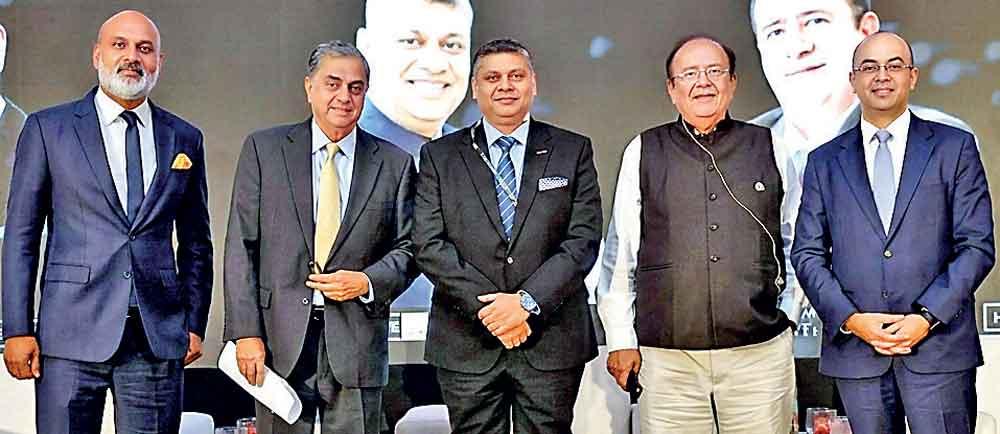
Speaking during a leadership panel at the fourth edition of the THINC Sri Lanka & Maldives conference at Hilton Colombo, the hospitality leaders discussed the island’s growth prospects, opportunities to increase tourism earnings and the strategies needed to expand hotel capacity across the country. The session was moderated by Hotelivate-Savills Founder Chairman Manav Thadani.
While the panellists agreed that Sri Lanka has considerable untapped tourism potential, they expressed differing views on whether franchising or management contracts would be the most effective way to accelerate hotel sector expansion.
Marriott International Senior Vice President South Asia Kiran Andicot, who first visited Sri Lanka as a developer in 2006, described the island as his favourite holiday destination. He acknowledged that the country had faced repeated challenges over the past two decades, noting that Marriott currently operates five hotels in Sri Lanka compared with 11 in the Maldives, a market he began covering around the same time.
Despite these setbacks, Andicot remained optimistic about the country’s future, pointing to 11 consecutive quarters of positive GDP growth.
“Fingers crossed, because I think the best time for Sri Lanka is yet to come,” he said.
He cautioned against treating Sri Lanka and the Maldives as interchangeable tourism markets, arguing that each destination has a distinct identity and growth trajectory. In his view, Sri Lanka should look towards established destinations such as Thailand, which attracts more than 30 million tourists, as well as rapidly expanding markets such as Vietnam, when considering its long-term tourism ambitions.
“We shouldn’t put Sri Lanka and Maldives in the same bucket. They’re two very different markets,” he said.
Marriott already has a presence in Colombo through brands including Courtyard and Sheraton, alongside its affiliation with ITC. Looking ahead, Andicot identified experiential resorts, collection brands, wellness tourism and smaller boutique properties as promising areas for expansion.
He emphasised that the island’s strongest tourism appeal extends well beyond the commercial capital.
“The real potential and the real beauty of Sri Lanka lies outside of Colombo,” Andicot said, adding that future hotel development should focus on thoughtful expansion that connects beaches, wildlife experiences, the Cultural Triangle and the hill country into a more comprehensive visitor experience.
Hilton Senior Vice President and Regional Head South Asia Zubin Saxena similarly highlighted the need to broaden tourism development across the country. Hilton recently reorganised its regional structure to bring Sri Lanka under its South Asia operations alongside India, Nepal and Bangladesh.
The group currently operates four properties in Sri Lanka: Hilton Colombo, Hilton Colombo Residences, DoubleTree by Hilton Weerawila and Hilton Yala, with further developments in the pipeline. Saxena observed that hotel supply remains concentrated in established destinations, particularly Colombo and Galle, leaving considerable scope to develop other parts of the island.
“Sri Lanka as a destination is yet to spread its wings,” he said.
Saxena identified opportunities across Hilton’s portfolio, ranging from luxury offerings under Conrad to upscale properties under DoubleTree by Hilton. He also pointed to lifestyle collection brands such as LXR and Curio, which can enable independently operated properties to access the benefits of an international hotel group’s reservation network.
Beyond accommodation, he stressed the importance of improving destination marketing. Despite visiting Sri Lanka regularly, Saxena said it was not always easy to identify additional experiences beyond the country’s most familiar attractions.
“It is not clear what, beyond the obvious, are the incremental things that I can add to my itinerary in this destination when I visit here,” he explained.
He called for Sri Lanka to increase its visibility in India and improve road connectivity to make less accessible regions, including the east coast, easier to explore. In his view, road infrastructure could play a particularly important role in opening up destinations and encouraging visitors to travel beyond established tourism centres.
“I would prefer roadways more than airports, because when you build a road, you actually open up a destination as well,” he said.
Sterling Holiday Resorts Managing Director and CEO Vikram Lalvani focused on the opportunity to increase tourism revenue by encouraging visitors to explore more of the island during a single trip.
He noted that Sri Lanka and the Maldives each attract approximately 2.5 million tourists annually, while Sri Lanka generates around US$3 billion in tourism earnings compared with close to US$5 billion for the Maldives. Lalvani attributed much of this difference to the Maldives’ emphasis on premium tourism experiences and higher visitor spending.
Rather than concentrating solely on developing new attractions, he argued that Sri Lanka should create stronger connections between the destinations it already has.
“Sri Lanka has this tremendous opportunity, not to create new destinations, but actually to connect existing destinations,” Lalvani said. “The circuit connection is what Sri Lanka needs.”
According to Lalvani, visitors currently spend an average of five nights in Sri Lanka. By combining experiences across coastal areas, the hill country and wildlife destinations into integrated travel circuits, the country could encourage tourists to extend their stays to eight or nine nights.
He suggested that increasing the length of visits and improving spending per traveller could help narrow the tourism earnings gap with the Maldives. Based on the figures he cited, Sri Lanka currently earns approximately US$1,200 per visitor, compared with around US$2,000 in the Maldives.
At those respective spending levels, achieving Sri Lanka’s US$8 billion tourism earnings target by 2030 would require approximately 6.7 million arrivals at the current estimated yield, compared with four million visitors if the country achieved the Maldives’ estimated per-visitor spending level.
Lalvani, whose company operates 85 resorts and hotels across 70 destinations in India, also highlighted the importance of the Indian market. With approximately one in every four tourists arriving in Sri Lanka coming from India, he described the relationship between the two countries as a natural source of tourism growth.
He called for Sri Lanka to position itself as a year-round destination by promoting the seasonal advantages of the east coast and the south-west coast at different times of the year.
“In the Maldives, the opportunity there is to protect its premiumisation. The opportunity here is connection,” he said, summarising the contrasting priorities of the two destinations.
Wyndham Hotels & Resorts Market Managing Director Eurasia Rahool Macarius also identified India as a major growth opportunity for Sri Lanka. He described the island as a natural extension of the Indian tourism market, where outbound travel is estimated at around 30 million trips annually.
Against this backdrop, Sri Lanka’s approximately 625,000 Indian arrivals represent only around 2% of that outbound travel market, suggesting considerable room for expansion.
Macarius also highlighted opportunities to develop accommodation in smaller urban centres and emerging destinations, rather than concentrating growth in established hubs such as Colombo, where Wyndham is represented by Ramada by Wyndham.
“You cannot confine a country or a destination to a certain class. It has to be tasted by everyone,” he said.
He advocated franchising as an effective way to accelerate international hotel brand expansion, noting that more than 70% of international hotel brands globally operate through franchise arrangements. Such partnerships, he argued, could help expand brand presence more quickly across a wider range of destinations.
Lalvani, however, favoured management contracts supported by a strong risk-reward structure. He argued that direct operational oversight was important in a destination such as Sri Lanka, where connected travel circuits and consistent guest experiences could play a central role in increasing visitor stays and spending.
Saxena and Andicot said direct management remained their primary approach to growth in Sri Lanka, although both were open to franchise partnerships with established local operators capable of maintaining high standards across their properties.
The discussion concluded with a rapid-fire question asking each panellist to choose between Sri Lanka and the Maldives. Andicot and Lalvani selected Sri Lanka, Saxena chose both destinations, while Macarius placed the Maldives first, followed by Sri Lanka.
The discussion highlighted several priorities for Sri Lanka’s tourism sector: expanding accommodation beyond traditional hotspots, improving connectivity between attractions, developing more targeted campaigns for Indian travellers and encouraging longer stays. Together, these measures could help the country increase visitor spending while making better use of its diverse coastal, cultural, wildlife and highland experiences.